Indoor Air Quality in Langley, BC
Is Your Home’s Air Safe? Know the Signs
Worried about the air you breathe at home? Discover the potential indicators of poor indoor air quality and why it matters for your health, or contact us immediately to discuss financing options and schedule an assessment.
Many homeowners in Langley, BC, assume that their walls protect them from pollution, yet indoor air can often be significantly more contaminated than the air outside. Dust, allergens, volatile organic compounds (VOCs), and excess humidity can accumulate silently, leading to respiratory issues, fatigue, and exacerbated allergy symptoms. Ignoring these signs does not make them disappear; it simply allows contaminants to cycle continuously through your HVAC system and into your lungs.
- Receive a professional air quality test within 24 hours.
- Gain clear, actionable insights with our detailed air quality report.
- Implement solutions that significantly improve air purity and your health.
All services are fully licensed with up-to-date compliance on health and safety standards.

Effective Solutions to Enhance Your Indoor Air Quality
Improving the air inside your home requires a multi-faceted approach that targets the specific contaminants present in your living space. Standard furnace filters are designed primarily to protect the heating equipment, not to purify the air you breathe to a medical-grade standard. To truly control the indoor environment, you must move beyond basic filtration and address the three main categories of indoor pollutants: particulates, biological growth, and chemical vapors.
Rep-Air Heating and Cooling provides a range of integrated solutions designed to tackle these specific issues. High-efficiency particulate air (HEPA) filtration systems capture microscopic solids like dust mites, pollen, and pet dander that standard filters miss. For biological contaminants such as mold spores, bacteria, and viruses, ultraviolet (UV) germicidal lights are installed directly into the ductwork to sterilize surfaces and neutralize airborne pathogens before they circulate.
Ventilation is equally critical. In modern, tightly sealed homes, stale air becomes trapped, leading to a buildup of carbon dioxide and odors. Heat Recovery Ventilators (HRVs) and Energy Recovery Ventilators (ERVs) are mechanical ventilation systems that exchange stale indoor air for fresh outdoor air without sacrificing energy efficiency. These systems transfer heat (and moisture, in the case of ERVs) from the outgoing air to the incoming stream, ensuring your home receives a constant supply of fresh, filtered oxygen while maintaining temperature control.
Humidity control completes the air quality strategy. Excess moisture breeds mold and dust mites, while overly dry air causes cracked skin and increases susceptibility to viruses. Whole-home humidifiers and dehumidifiers work in tandem with your thermostat to maintain optimal relative humidity levels between 35% and 50%, creating an environment that is hostile to pests and comfortable for humans.
Comprehensive Air Quality Testing and Immediate Results
You cannot fix a problem if you do not know it exists. Professional air quality testing moves beyond guesswork to provide hard data regarding the invisible particles in your home. This process is distinct from a general HVAC inspection; it utilizes specialized sensors and monitoring equipment to detect contaminants that are imperceptible to the naked eye or nose.
The testing process focuses on identifying the concentration of Particulate Matter (PM2.5 and PM10), which are fine inhalable particles that can penetrate deep into the lungs. Technicians also measure levels of Volatile Organic Compounds (VOCs)—gases emitted from solids or liquids like paints, cleaning supplies, and building materials. Carbon monoxide and carbon dioxide levels are checked to ensure proper ventilation and combustion safety. Additionally, the assessment maps out humidity and temperature variances throughout the house to identify stagnant zones where biological growth may be proliferating.
Upon completion of the assessment, you receive a detailed report outlining the findings. This is not a generic summary but a specific breakdown of your home’s environmental health. The data will show exactly which pollutants are spiking and where the sources likely are.
- Baseline Establishment: The technician establishes a baseline reading to compare against health standards.
- Source Identification: The report pinpoints whether the issue stems from ventilation deficits, internal sources like off-gassing furniture, or infiltration from outside.
- Prioritized Recommendations: You receive a list of solutions ranked by impact, allowing you to address the most critical health risks first.
- Immediate Clarity: Results are explained clearly, helping you understand the gap between your current air quality and the ideal healthy home standard.
Step-by-Step Guide to Improving Your Indoor Environment
Transforming your home’s air quality is a structured process that ensures the right equipment is matched to your specific ductwork and lifestyle needs. This is not a one-size-fits-all product purchase; it is a system integration.
- Initial Consultation and Assessment: The process begins with the testing mentioned above. A technician evaluates the square footage of the home, the layout of the ductwork, and the current HVAC system's capacity. This stage determines if a bypass humidifier, a steam humidifier, or a duct-mounted air purifier is the correct fit.
- System Selection and Design: Based on the data, specific equipment is selected. For example, if Rep-Air Heating and Cooling identifies high VOC levels, a carbon-based filtration system may be recommended over a standard media filter. The design phase ensures that adding new resistance to the airflow does not choke the furnace or air conditioner.
- Professional Installation: Technicians cut into the supply or return plenums to install the units. This involves precise sheet metal work to ensure airtight seals. For UV lights, electrical connections are hardwired into the HVAC system’s power supply so the lights operate automatically with the blower fan.
- Calibration and Testing: Once installed, the equipment is not just turned on; it is calibrated. Ventilation rates on HRVs are balanced to ensure positive or neutral pressure. Humidistats are set according to the current outdoor temperature to prevent window condensation.
- User Education: Finally, you are shown how to operate the new systems. This includes instruction on reading the new thermostat controls, understanding maintenance intervals for UV bulbs or filter media, and recognizing signs that the system is working effectively.
When to Opt for System Replacement Over Simple Repairs
Homeowners often debate whether to patch an existing ventilation component or invest in a completely new air quality system. While repairs can fix mechanical failures, they cannot upgrade the fundamental capabilities of outdated technology. Making the decision to replace or upgrade is usually driven by the age of the equipment and the persistence of air quality issues — view our promotions today.
- Persistent Health Symptoms: If family members continue to suffer from allergies, asthma, or headaches despite having a standard filter and regular duct cleaning, the current system is insufficient. Repairing an old fan or cleaning a standard filter housing will not remove the microscopic triggers causing the reaction. Replacement with a HEPA or UV system is necessary to change the outcome.
- Age of Existing Units: Humidifiers and ventilators have a finite lifespan. If a whole-home humidifier is over 10 to 12 years old and leaking or failing to maintain humidity, the water panels and solenoids are likely corroded. Replacement offers better water efficiency and more precise digital control compared to older analog models.
- Inefficient Airflow: If an old HRV is noisy, rattling, or failing to defrost in winter, the motor bearings or core may be compromised. Repair costs for these specific parts often approach the cost of a new, higher-efficiency unit that recovers more heat and uses less electricity.
- Renovations and Home Upgrades: If you have recently upgraded insulation or installed new windows, your home is now more airtight. An older ventilation system designed for a drafty house may now be inadequate, leading to stale air buildup. Upgrading to a modern HRV/ERV is required to match the new building envelope.
Understanding Langley’s Climate and Its Impact on Air Quality
The climate in Langley and the surrounding temperate oceanic regions presents unique challenges for indoor air quality. The region is characterized by mild, wet winters and warm, dry summers. This specific weather pattern dictates which air quality systems are most essential for local homes.
During the long, wet winter months, humidity infiltration is a constant threat. While heating systems dry out the air to some degree, the damp outdoor environment can lead to condensation on windows and in attics if ventilation is poor. This creates a breeding ground for mold and mildew. Conversely, in the summer, humidity levels can spike, making the air feel heavy and sticky. An air conditioning unit alone may not remove enough moisture to ensure comfort and prevent biological growth in the ducts.
- Seasonal Mold Risks: The lack of deep freezes allows mold spores to survive year-round outdoors, entering the home whenever doors or windows are opened. UV purification is particularly effective in this climate to sterilize the air and prevent colonization in the HVAC coils.
- Forest Fire Smoke: In recent years, summers have brought smoke from regional wildfires. This fine particulate matter (PM2.5) is hazardous to health. Standard fiberglass filters offer zero protection against smoke. Homes in this region benefit immensely from high-MERV or HEPA filtration upgrades during the summer season.
- Pollen and Allergens: The lush vegetation in the area results in high pollen counts in spring and early summer. An airtight home with mechanical ventilation ensures that you get fresh air without letting the pollen drift in through open windows.
- Local Codes and Standards: Installation of these systems must adhere to local electrical and building codes. This includes proper drainage for dehumidifiers and dedicated circuits for high-powered purification units. Professional installers ensure that all modifications to the ductwork maintain the static pressure requirements mandated by equipment manufacturers.
Why Choose Us: Our Certifications and Customer Success Stories
Selecting the right partner for air quality improvements is a decision that impacts the long-term health of your household. The industry is filled with off-the-shelf gadgets that promise miracles but deliver little measurable change. True air quality management requires a scientific approach backed by certified expertise and professional-grade hardware.
We prioritize technical accuracy and measurable results. Our technicians are trained not just in HVAC mechanics, but in the principles of building science and environmental health. This ensures that every recommendation is based on how air moves, how moisture interacts with building materials, and how pollutants affect human physiology. We utilize industry-leading diagnostic tools to verify that the equipment we install is performing to the manufacturer’s specifications.
Furthermore, we understand the local infrastructure. We know the common ductwork configurations found in area homes and how to retrofit modern air quality systems into older builds without compromising airflow. Our commitment is to transparency; we explain the "why" behind every recommendation, ensuring you understand the value and the expected outcome of the installation. Whether it is mitigating seasonal allergy triggers or protecting a newborn from airborne viruses, our focus remains on creating a safer, cleaner indoor environment for you.
When you are ready to take control of your indoor environment, Rep-Air Heating and Cooling is prepared to deliver the expertise you need.
Call Us Now!
Take the first step toward a healthier home environment—schedule your comprehensive air quality assessment today.
hear what our satisfied clients have to say
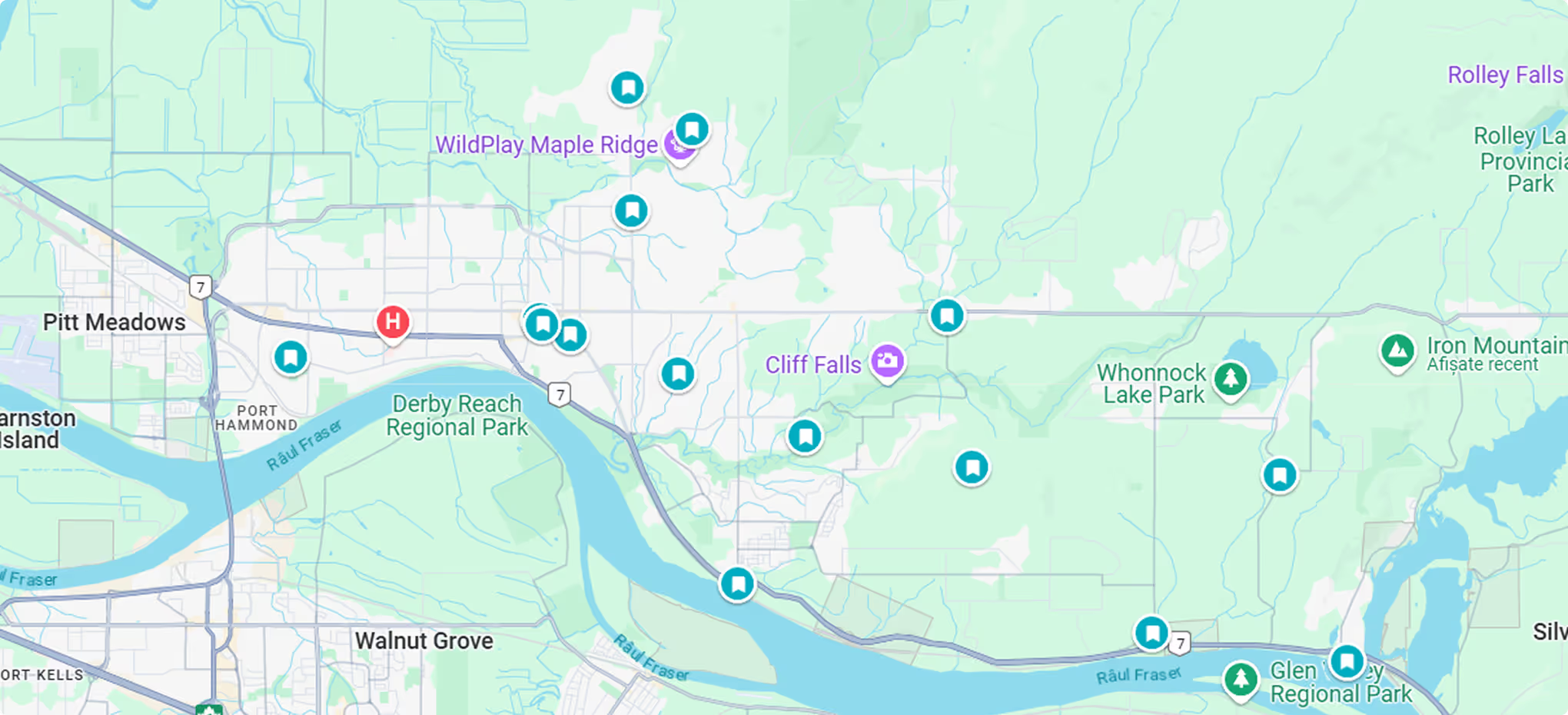
Neighbourhoods in the Fraser Valley