Indoor Air Quality in McKee, BC
Is Your Home’s Air Safe? Find Out What’s Lurking in Your Indoor Environment
Concerned about the air you breathe at home? You're not alone—many residents in areas like McKee, BC face indoor air quality issues, especially during the cold, closed-window months. If you are experiencing persistent allergies, excessive dust, or stale odors, contact our team immediately to schedule a comprehensive air quality assessment or discuss financing options for new ventilation equipment.
Your home should be a sanctuary, but tight insulation combined with seasonal weather patterns can trap pollutants inside, making the indoor air significantly more polluted than the air outside. Addressing these invisible threats requires more than a standard furnace filter; it demands a strategic approach to ventilation, filtration, and humidity control.
- Professional air quality testing and tailored solutions based on specific pollutant loads.
- Fast response times with same-day service availability to restore safe breathing conditions.
- Comprehensive assessments including pollutant identification and remediation strategies.
All services are compliant with local regulations and come with a satisfaction guarantee to ensure your peace of mind.
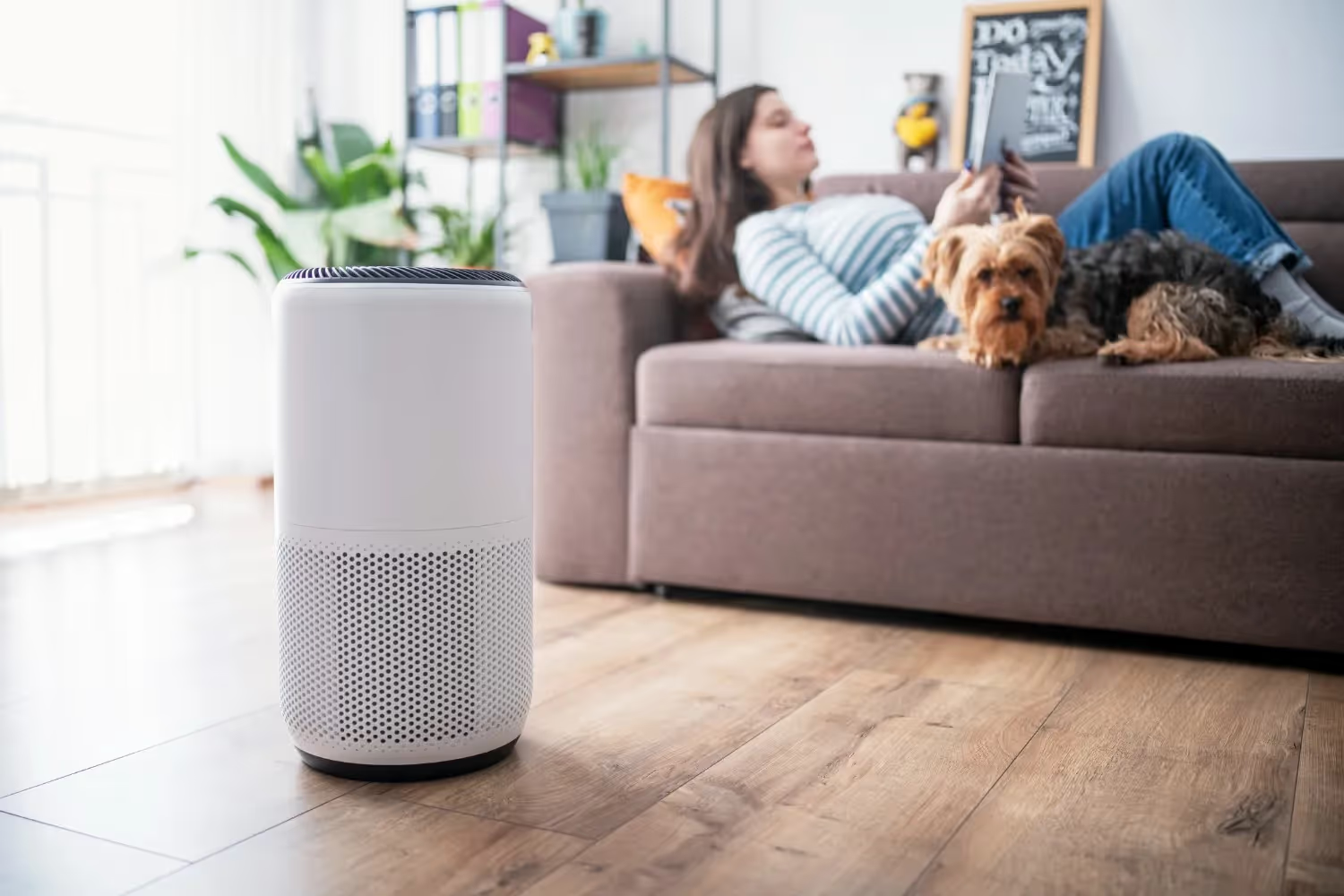
Comprehensive Indoor Air Quality Solutions Tailored to Your Home
Improving the air inside your home involves a multi-faceted approach. Most homeowners in McKee rely on forced-air heating systems, which circulate air throughout the house. Without proper intervention, these systems also circulate dust, dander, volatile organic compounds (VOCs), and biological contaminants. Rep-Air Heating and Cooling provides targeted solutions designed to integrate seamlessly with your existing HVAC infrastructure to capture contaminants and introduce fresh, filtered air.
Whole-Home Filtration Systems
Standard one-inch furnace filters are designed primarily to protect the furnace equipment, not your lungs. To effectively remove microscopic particles, upgrading to a high-efficiency media air cleaner is often necessary. These systems utilize thick, pleated filters (often 4 to 5 inches wide) with high MERV ratings. They create a dense barrier that traps smaller particulates like mold spores, bacteria, and fine dust without restricting airflow to the point of damaging your heating equipment.
Heat Recovery Ventilation (HRV)
In colder climates, homes are built to be airtight to conserve heat. While this improves energy efficiency, it prevents the natural exchange of stale indoor air with fresh outdoor air. An HRV system solves this by mechanically exchanging air. It pulls fresh air from outside and transfers the heat from the stale outgoing air to the incoming stream. This ensures your home receives a constant supply of fresh oxygen without placing a heavy load on your furnace.
UV Germicidal Lights
Biological contaminants such as mold, bacteria, and viruses often thrive in the dark, damp environment of an HVAC coil. Installing UV germicidal lights directly within the ductwork or above the coil neutralizes these pathogens. The ultraviolet energy penetrates the cell walls of microorganisms, rendering them unable to reproduce. This is particularly effective for households concerned with seasonal illnesses or mold sensitivity.
Humidity Control Systems
Air quality is not just about purity; it is also about moisture balance. During the winter months, heating systems can dry out indoor air, leading to cracked wood flooring, static electricity, and irritated respiratory tracts. Whole-home humidifiers integrate with your furnace to add precise amounts of moisture. Conversely, during humid summers, dedicated dehumidification prevents the moisture buildup that allows dust mites and mold to colonize.
The Process: From Assessment to Cleaner Air
Achieving optimal indoor air quality is a systematic process. It begins with data and ends with verified performance. Professional technicians do not guess at the problem; they use diagnostic tools to measure particulate levels, humidity, and airflow.
Initial Consultation and Assessment
The process starts with a detailed evaluation of your current HVAC system and a discussion regarding specific symptoms or concerns. Technicians inspect the ductwork for leaks, check the condition of existing filters, and look for signs of biological growth near the evaporator coil.
Air Quality Testing
Advanced monitoring equipment is used to detect levels of VOCs, carbon dioxide, carbon monoxide, and particulate matter. This data provides a baseline to determine exactly which pollutants are present and at what concentrations.
System Design and Recommendation
Based on the test results and the cubic footage of the home, a custom solution is designed. This may involve a single upgrade, such as a better filter cabinet, or a complete system overhaul involving an HRV and UV purification. The goal is to select equipment that matches the static pressure capabilities of your current furnace fan.
Professional Installation
Technicians cut into the existing sheet metal to install new filtration cabinets or mount UV lights. For HRV installations, dedicated ducting is often run to pull stale air from bathrooms and kitchens while delivering fresh air to living areas. All electrical connections are hardwired to code, ensuring the IAQ equipment runs in tandem with the blower motor.
Verification and Education
Once installed, the system is tested to ensure it does not restrict airflow or negatively impact the furnace's temperature rise. The homeowner is then walked through the maintenance requirements, such as filter replacement schedules and humidity settings.
Improving Your Current System vs. Installing New IAQ Equipment
Homeowners often wonder if their air quality issues can be solved by simply cleaning their ducts or changing filters more frequently, or if a capital investment in new equipment is required. The decision typically comes down to the severity of the symptoms and the limitations of the existing hardware — check our promotions for upgrades.
When to Modify or Maintain
If the primary complaint is visible dust, and the current system uses a standard one-inch filter, simply upgrading the quality of that filter (checking the MERV rating) and sealing leaky return ducts may suffice. Routine duct cleaning can also remove accumulated debris that hinders airflow. If humidity levels fluctuate only slightly, portable units might handle the load without requiring a whole-home installation.
When to Install Dedicated Equipment
If members of the household suffer from asthma, severe allergies, or compromised immune systems, passive filtration is rarely enough. In these cases, active purification (UV lights) and high-efficiency filtration (HEPA or media cabinets) are required. Furthermore, if the home has persistent condensation on windows in winter or feels "stuffy" despite the furnace running, this indicates a ventilation deficiency that only an HRV can fix. Relying on opening windows in a continental climate results in massive energy loss; mechanical ventilation is the only viable long-term solution.
Critical Factors for Air Quality Management in Northern Climates
Managing indoor air quality in regions like McKee, BC presents specific challenges due to the stark difference between indoor and outdoor conditions throughout the year. The climate dictates that homes remain sealed for extended periods, turning the home into a trap for internally generated pollutants.
Winter Ventilation Challenges
From November through March, opening windows is not a practical option for ventilation. During this time, indoor CO2 levels can spike, causing headaches and fatigue. Additionally, the operation of gas furnaces and water heaters creates a need for makeup air. Without a mechanical intake, negative pressure can draw soil gases like radon into the living space.
Wildfire Smoke and Summer Particulates
In recent years, summer brings the potential for wildfire smoke to settle in the valley. During these events, outdoor air quality drops to hazardous levels. Homes equipped with standard filters offer little protection against the fine particulate matter (PM2.5) in smoke. Systems must be capable of filtering extremely small particles and, in some cases, require carbon filtration to adsorb the smoke odors.
Humidity Management and Structural Health
The drastic swing from dry winters to potentially humid summers stresses wooden structures and furniture. Maintaining an indoor humidity level between 35% and 50% is critical. Dropping below this range in winter increases susceptibility to respiratory infections, while rising above it in summer encourages mold growth in basements and crawl spaces.
Ductwork and Thermal Loss
In many local homes, ductwork runs through unconditioned spaces like attics or crawl spaces. If these ducts leak, the system pulls in dirty air from these zones—fiberglass insulation fibers, dust, and crawl space odors—and distributes them into the bedrooms. Sealing these ducts is a foundational step in any air quality strategy.
Why Professional IAQ Service Matters
Investing in indoor air quality is different from buying a plug-in appliance. The effectiveness of the equipment depends entirely on proper sizing and installation. A unit that is too small will fail to clean the air volume of the house, while a unit that is too large or improperly installed can create pressure imbalances that damage the furnace blower.
Professional technicians understand the physics of airflow (CFM) and static pressure. They ensure that adding a high-density filter does not choke the furnace, which could lead to overheating and heat exchanger failure. They also ensure that UV lights are positioned correctly to sanitize the coil without degrading internal plastic components of the HVAC system.
Furthermore, safety is a primary concern. Improperly installed HRVs can depressurize a house, potentially causing back-drafting of combustion appliances like water heaters. Professionals use manometers to balance the air intake and exhaust, ensuring the home remains neutral or slightly positive in pressure. This prevents the infiltration of unfiltered outdoor air through cracks and crevices.
When selecting equipment, professionals also distinguish between marketing hype and proven technology. They steer homeowners away from ozone-generating devices that can irritate the lungs and toward filtration and purification methods that are certified to be ozone-free and effective against specific local pollutants.
Breathe Easier with Verified Air Quality Solutions
The quality of the air inside your home has a direct impact on your health, sleep quality, and the longevity of your home's interior. In a climate where windows stay closed for half the year, relying on passive air exchange is insufficient for a healthy environment. By implementing a strategy that includes proper ventilation, high-efficiency filtration, and humidity control, you can drastically reduce the presence of allergens, viruses, and chemical pollutants.
Take control of your indoor environment today. Whether you need to address a specific respiratory concern or simply want to ensure your home is as healthy as possible, professional intervention provides the metrics and the machinery to make it happen. Rep-Air Heating and Cooling is ready to assist you in creating a cleaner, safer home environment for you and your family.
Contact Us Now!
Ready to improve your home’s air quality? Contact us today to schedule your comprehensive indoor air assessment.
hear what our satisfied clients have to say
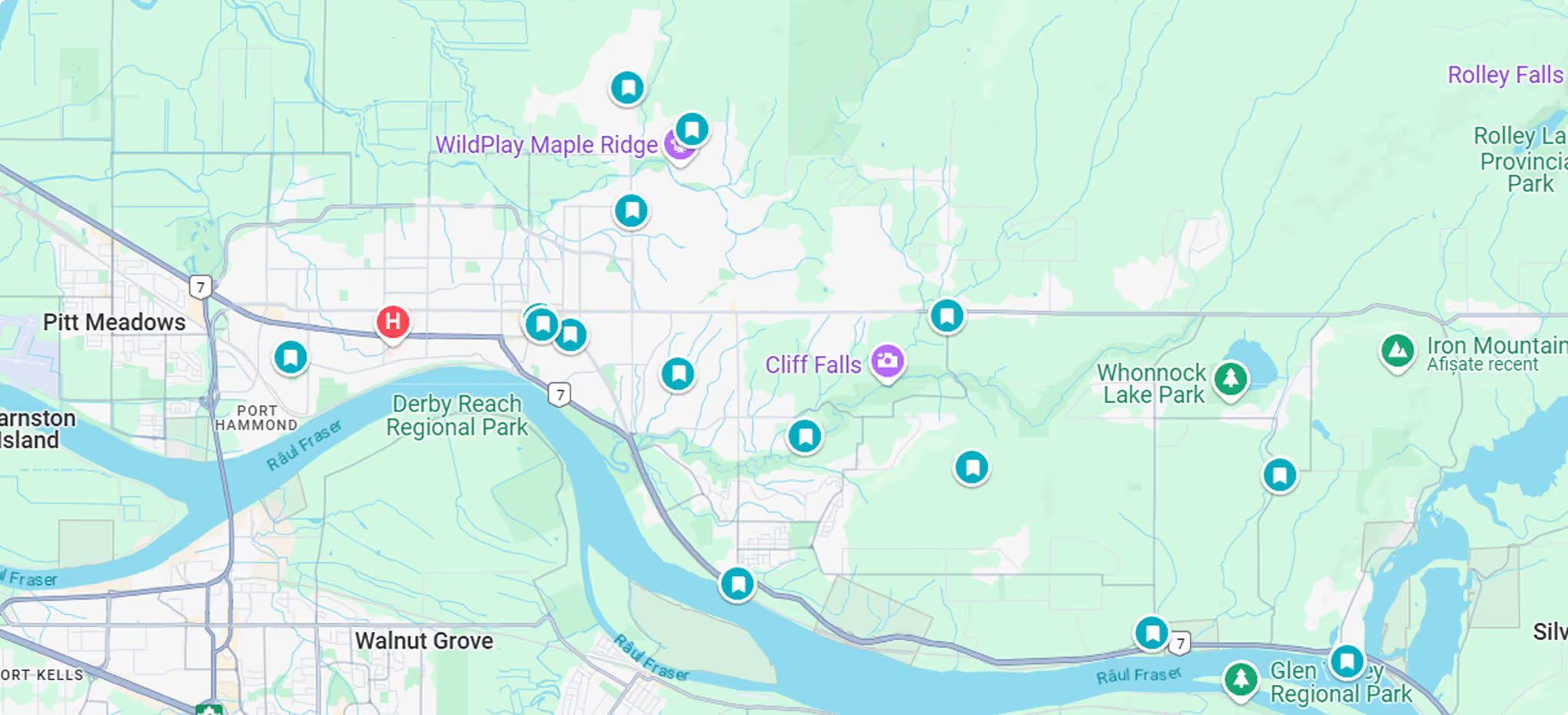
Neighbourhoods in the Fraser Valley