Indoor Air Quality in Milner, BC
Resolve Indoor Air Quality Concerns Today
Struggling with allergies, asthma, or just want to ensure your indoor environment is safe? Indoor air quality testing and remediation is an essential step towards a healthier home for residents in Milner and the surrounding British Columbia region. Contact us immediately to schedule a comprehensive air quality assessment or apply for financing to upgrade your system. Rep-Air Heating and Cooling provides the technical expertise required to diagnose invisible airborne threats and implement permanent solutions.
- Quickly identify and address pollutants like mold, pollen, and VOCs using advanced monitoring equipment.
- Custom solutions ranging from humidity control and ventilation to advanced air purification systems.
- Expert installation and maintenance performed by certified technicians with seasonal checks and updates.
All services are performed by certified experts with comprehensive warranties and flexible financing options.
Your Path to Better Indoor Air Quality
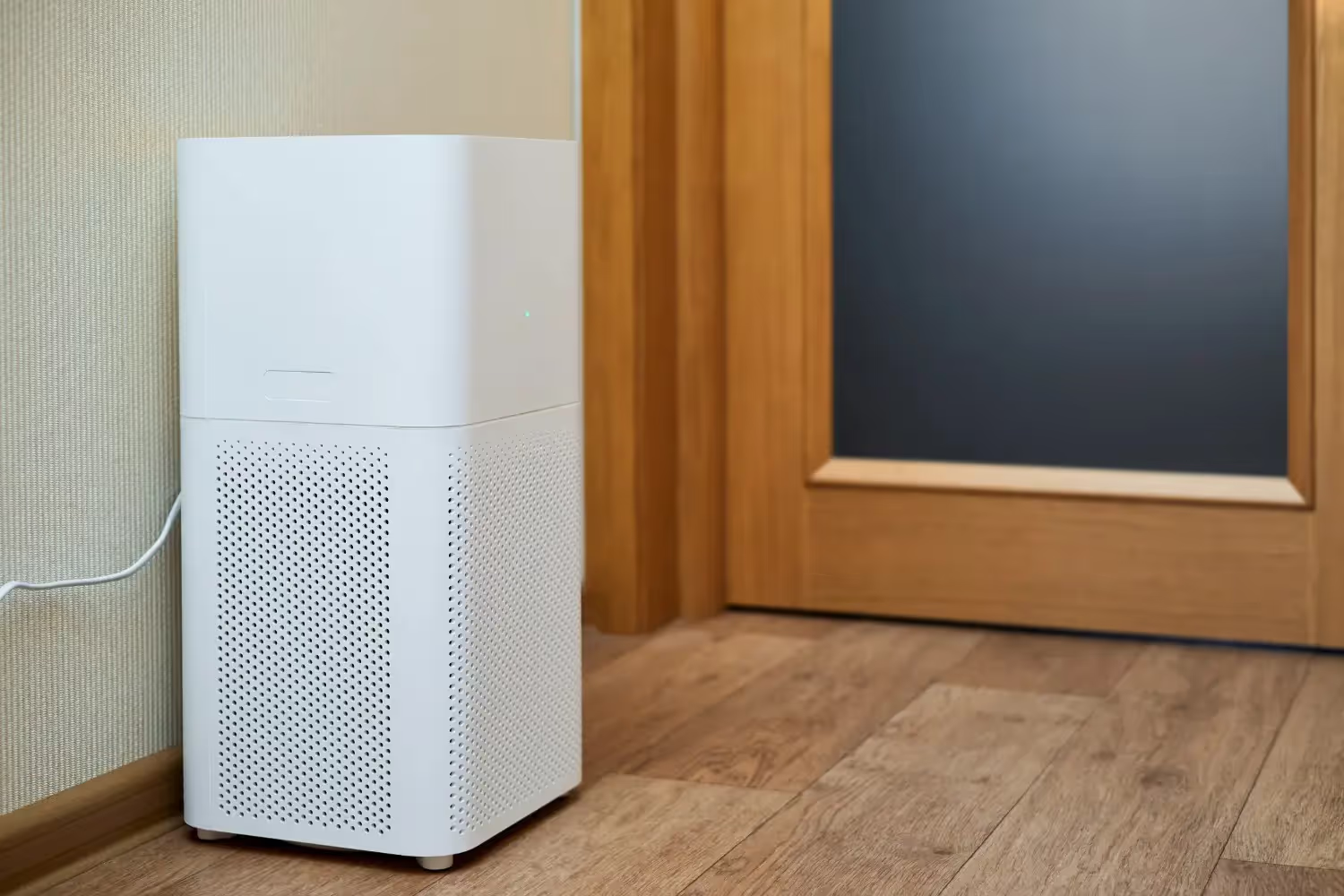
The air inside a modern home is often significantly more polluted than the air outside. As homeowners in British Columbia tighten their building envelopes to improve energy efficiency and retain heat during cooler months, they inadvertently trap contaminants inside. Without mechanical ventilation or purification, biological growth, chemical vapors, and particulate matter accumulate to hazardous levels. This accumulation leads to "Sick Building Syndrome," manifesting as persistent headaches, respiratory issues, fatigue, and aggravated allergy symptoms.
Addressing these issues requires a shift from passive reliance on standard furnace filters to active air management. Standard one-inch fiberglass filters are designed primarily to protect HVAC equipment from large debris, not to protect human lungs from microscopic irritants. True air quality management involves a multi-barrier approach: source removal, dilution through ventilation, and active filtration.
Homeowners frequently underestimate the impact of humidity on air quality. Excess moisture creates breeding grounds for mold and dust mites, while overly dry air damages mucous membranes and increases susceptibility to viruses. A professional approach integrates humidity control directly into the central heating and cooling system, ensuring consistent levels throughout the home without the need for portable units. By treating the air as a vital component of the home’s infrastructure, you protect both the health of the occupants and the longevity of the building materials.
What Our Indoor Air Quality Services Include
Achieving optimal indoor environments requires a suite of specialized technologies working in concert with your existing HVAC infrastructure. We assess the specific pollutant load in your home to recommend the correct combination of hardware. Rep-Air Heating and Cooling integrates these systems seamlessly into your ductwork to treat 100% of the air circulating through the property.
Whole-Home Air Purification Systems
- Media Air Cleaners: These high-efficiency media filters capture particulate matter far smaller than standard filters. We install cabinets that accommodate MERV 11 to MERV 16 rated filters, capable of trapping dust, pollen, pet dander, and smoke particles.
- Electronic Air Cleaners: Utilizing electrostatic attraction, these systems charge particles as they enter the unit and trap them on oppositely charged collector plates. This technology is effective for removing microscopic contaminants that pass through traditional media.
- UV Germicidal Lights: Installed directly within the ductwork or near the evaporator coil, UV-C lamps neutralize biological contaminants. This spectrum of light destroys the DNA of mold spores, bacteria, and viruses, preventing them from reproducing and circulating through the home.
- Photocatalytic Oxidation (PCO): This advanced oxidation technology combines UV light with a catalyst (usually titanium dioxide) to break down Volatile Organic Compounds (VOCs) and odors at a molecular level, converting them into harmless water vapor and carbon dioxide.
Ventilation Solutions
- Heat Recovery Ventilators (HRV): Ideal for colder climates and tightly sealed homes, HRVs replace stale indoor air with fresh outdoor air. The system transfers heat from the outgoing exhaust stream to the incoming fresh stream, retaining energy efficiency while diluting indoor pollutants.
- Energy Recovery Ventilators (ERV): Similar to HRVs, these units transfer both heat and moisture. In climates with specific humidity concerns, an ERV helps keep indoor humidity levels stable while providing necessary air exchange.
Humidity Control Systems
- Whole-Home Dehumidifiers: In regions prone to dampness, dedicated dehumidifiers work independently of the air conditioner to remove significant moisture loads. This prevents mold growth in basements and crawl spaces and reduces the load on the cooling system.
- Steam and Bypass Humidifiers: During winter, heating systems dry out the air. Integrated humidifiers add precise amounts of moisture to the supply air, protecting wood flooring from cracking and improving respiratory comfort.
Ductwork Services
- Duct Cleaning: Over time, ducts accumulate pounds of dust, debris, and construction refuse. Professional cleaning removes this reservoir of contaminants.
- Duct Sealing: Leaky ducts can pull dirty air from attics or crawl spaces into the living environment. Sealing these leaks improves system pressure and prevents pollutant infiltration.
Streamlined Installation Process for Immediate Relief
Implementing an indoor air quality strategy is a technical process that involves load calculation, airflow measurement, and precise integration with high-voltage electrical systems. We follow a rigid protocol to ensure the equipment performs according to manufacturer specifications.
- Initial Air Quality Assessment: The process begins with data collection. Technicians use laser particle counters, hygrometers, and airflow manometers to measure particulate levels, relative humidity, and static pressure. This baseline data determines exactly which pollutants are present and identifies the severity of the issue.
- System Design and Product Selection: Based on the assessment, the engineering team designs a solution tailored to the home’s square footage and the existing HVAC system's capacity. We select equipment that offers the necessary CFM (Cubic Feet per Minute) ratings to ensure adequate air turnover rates without restricting airflow to the furnace or air conditioner.
- Strategic Integration: Installation involves cutting into existing plenums and return drops to mount purifiers and ventilators. Technicians ensure airtight seals around all new equipment to prevent pressure loss. Electrical connections are hardwired to code, often interlocked with the furnace blower so that air quality accessories run in tandem with the central fan.
- Calibration and Verification: Once installed, the equipment is calibrated. For ventilation systems, this means balancing the intake and exhaust airflows. For humidifiers, it involves setting the humidistat to the appropriate dew point. Technicians perform a post-installation test to verify the reduction in airborne particles and proper system operation.
- Owner Orientation: Finally, the homeowner receives instruction on maintenance requirements, such as filter replacement schedules and UV bulb lifecycles, ensuring the system remains effective for years to come.
Deciding Between Air Quality Improvement and Complete System Overhaul
Homeowners often face a decision between retrofitting air quality devices onto an existing system or replacing the entire heating and cooling plant. This decision depends largely on the age and capabilities of the current equipment.
When to Retrofit:
- The existing furnace and air conditioner are under 10 years old and operating efficiently.
- The ductwork is sized correctly and can handle the slight increase in static pressure caused by high-efficiency filtration.
- The primary concerns are specific, such as seasonal allergies or humidity control, which can be addressed with add-on components like a bypass humidifier or a UV light setup.
- Budget constraints prioritize immediate pollutant reduction over total system efficiency upgrades — see our current promotions.
When to Replace and Upgrade:
- The existing furnace utilizes a standard PSC (Permanent Split Capacitor) motor. These older motors cannot adjust their speed and may overheat when facing the resistance of dense MERV 16 filters. upgrading to a system with an ECM (Electronically Commutated Motor) or variable-speed blower allows for continuous, low-level air circulation, which is critical for constant filtration.
- The system is nearing the end of its lifespan (15+ years). Installing expensive air quality peripherals on a failing unit often leads to higher labor costs when the main unit eventually dies and the peripherals must be re-installed.
- The ductwork requires significant modification to accommodate ventilation. If the plenums are too small or damaged, a full system replacement offers the opportunity to redesign the air distribution network for optimal IAQ performance.
- Energy costs are a major concern. Modern variable-speed systems are designed specifically to work with IAQ products, running at low speeds 24/7 to scrub the air while consuming minimal electricity.
Adapting to British Columbia's Unique Climate
Local climate conditions in Milner and the broader British Columbia area dictate specific requirements for indoor air quality hardware. A "one-size-fits-all" approach fails here because of the region's distinct weather patterns and environmental factors.
- High Humidity Management: The coastal influence brings significant moisture, particularly in the fall and winter. While heating dries the air somewhat, the baseline humidity in BC homes can remain high enough to support dust mite populations and mold growth in thermal bridges (cold spots on walls). IAQ systems here must prioritize dehumidification and ventilation strategies that do not introduce excess moisture.
- Shoulder Season Pollen: Spring and early summer in the region result in high pollen counts. During these "shoulder seasons," homeowners often shut off their heating but haven't yet turned on cooling. Without the HVAC system running, air stagnation occurs. Systems configured for the local climate utilize "fan-only" circulation modes combined with high-MERV filtration to continuously scrub pollen even when temperature control isn't active.
- Wildfire Smoke Preparedness: In recent years, wildfire smoke has become a significant summer threat in British Columbia. Standard filters are ineffective against the fine particulate matter (PM2.5) in wood smoke. Residents require robust purification capabilities, such as HEPA-grade media or intense electronic filtration, specifically designed to handle heavy smoke loads during fire season.
- Ventilation in Cool Climates: Because BC winters can be chilly, simply opening a window for fresh air is energy-inefficient. Heat Recovery Ventilators (HRVs) are particularly effective in this region. They capture the thermal energy from the warm indoor air before ejecting it and use it to pre-heat the fresh, cold air coming in from outside, ensuring ventilation standards are met without spiking heating bills.
Why Choose Us? Certified Excellence in Air Quality Management
Selecting the right partner for indoor air quality involves more than purchasing a product; it requires building science expertise. We approach air quality as an engineering challenge, utilizing diagnostic tools to prove the existence of problems and verify the effectiveness of solutions.
- Technical Certification: Our team holds certifications relevant to HVAC and indoor air quality management. We understand the physics of airflow, the biology of mold, and the chemistry of VOCs.
- Holistic Approach: We do not sell standalone products that act as band-aids. We analyze the entire building envelope, identifying moisture intrusion points and pressure imbalances that contribute to poor air quality.
- Code Compliance: All installations adhere to local building codes and safety standards. This includes proper electrical tie-ins and venting requirements for combustion appliances, ensuring your safety is never compromised.
- Data-Driven Results: We rely on measurements, not guesswork. By quantifying particle counts and humidity levels, we provide objective evidence of improved air quality following our services.
Take Control of Your Indoor Air Quality Today
The air you breathe inside your home should be a source of health, not a hidden hazard. Whether you are dealing with persistent humidity, seasonal smoke, or allergens, professional intervention provides the control and peace of mind you need. Take control of your indoor environment today.
Contact Rep-Air Heating and Cooling to schedule your indoor air quality assessment and breathe easier in your own home.
hear what our satisfied clients have to say
Neighbourhoods in the Fraser Valley