Indoor Air Quality in Salmon River Uplands, BC
Breathe Easy with Professional Indoor Air Quality Solutions
Concerned about the air quality in your home? You’re not alone—many residents in BC face issues with indoor pollutants during both wet and dry seasons, leading to health concerns and discomfort. Whether you are dealing with persistent humidity in Salmon River Uplands or looking to filter out seasonal allergens and wildfire smoke, ensuring your home is safe requires professional intervention. Contact us today for a comprehensive air quality assessment.
- Get accurate and fast air quality testing within 24 hours.
- Expert solutions to improve air filtration and reduce pollutants.
- Seasonal maintenance services to ensure year-round optimal air quality.
All services come with a certified guarantee and flexible financing options to fit your budget.
Comprehensive Air Quality Management for Your Home
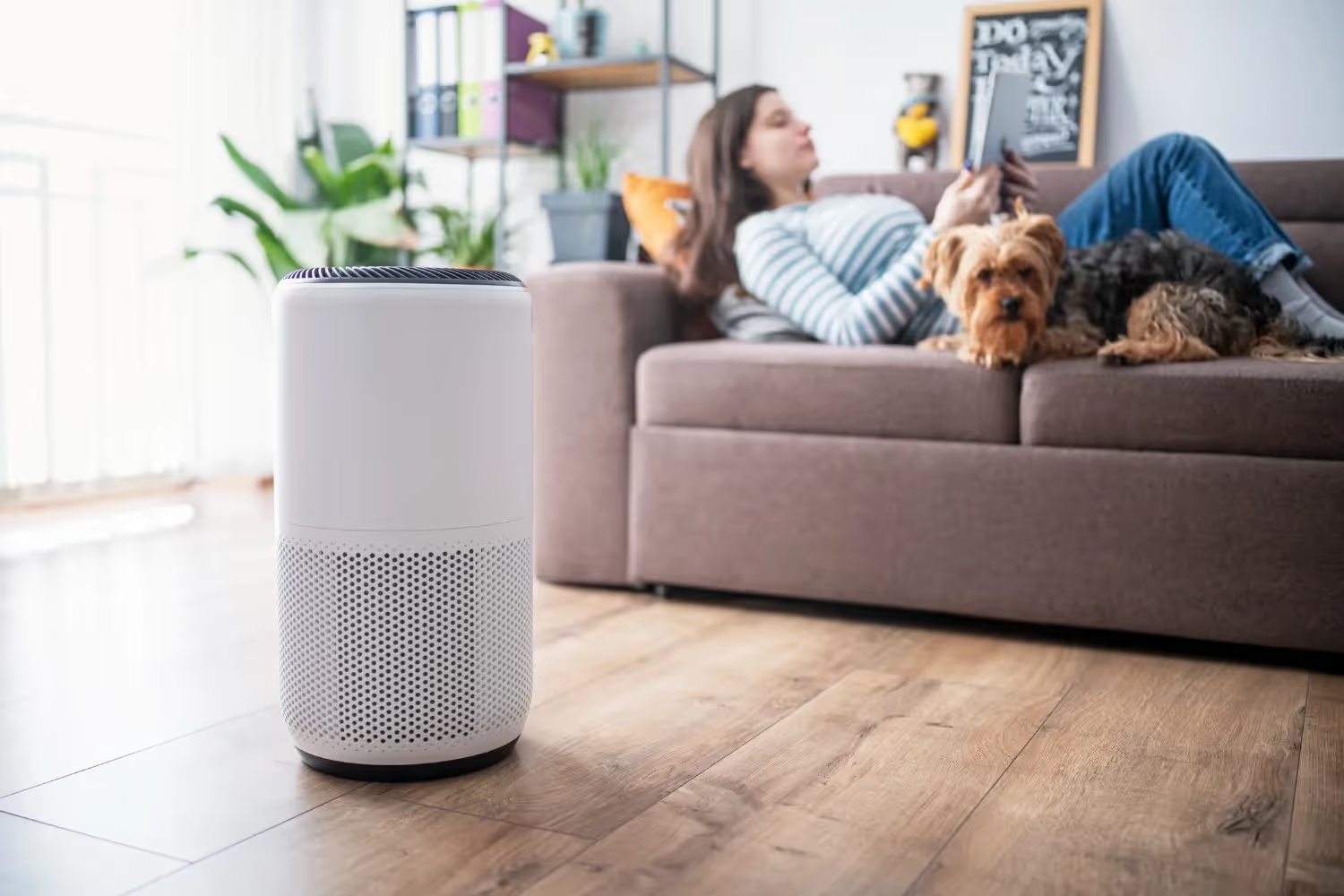
Indoor air quality (IAQ) is often more polluted than the air outside. Modern homes are built to be energy efficient, meaning they are tightly sealed to keep heat in during the winter and out during the summer. While this is excellent for energy bills, it creates a "tight envelope" where pollutants, moisture, and allergens become trapped. Without a dedicated strategy to manage the air you breathe, these contaminants recirculate through your HVAC system effectively trapping you with them.
We provide a systematic approach to cleaning and balancing your indoor environment. This goes beyond simple filter changes. It involves integrating advanced air purification, ventilation, and humidity control systems directly into your existing heating and cooling infrastructure. The goal is to turn your central air system into a whole-home defense against airborne threats.
When you schedule an evaluation, the focus is on identifying the specific composition of your air. Different homes face different threats. A basement suite may struggle with mold spores and volatile organic compounds (VOCs) from dampness, while a second-story bedroom may be plagued by dust mites and pollen. We deploy commercial-grade diagnostics to pinpoint these issues and recommend the specific hardware required to neutralize them.
The Process of Assessing and Improving Your Indoor Air
Improving your home's health is a technical process that requires precise calculation and installation. We do not use guesswork; we use data to determine exactly what equipment will provide the highest standard of air purity for your square footage and layout.
Initial Air Quality Audit
First, a technician arrives to perform a detailed audit of your current environment. This involves checking humidity levels, particulate matter density, and airflow restrictions. We inspect the ductwork for leaks where unfiltered air from attics or crawlspaces might be entering the system.
System Design and Recommendation
Based on the audit, we design a solution tailored to your home’s specific needs. If the primary issue is lack of fresh air, we may recommend a Heat Recovery Ventilator (HRV). If the issue is biological contaminants like viruses or mold, UV germicidal lights may be the solution. We present you with clear options that address the root causes found during the audit.
Professional Integration and Installation
Rep-Air Heating and Cooling technicians integrate the new equipment with your existing furnace or heat pump. This is a critical step; improper installation can restrict airflow, causing your heating system to overheat or your air conditioner to freeze. We ensure that air purifiers, humidifiers, and ventilators are wired correctly into the control board so they operate in tandem with the blower motor.
Verification and Air Balancing
Once installed, we test the system to ensure it is effectively capturing pollutants and introducing the correct amount of fresh air. We verify that static pressure levels within the ductwork remain within manufacturer specifications to prevent strain on your HVAC equipment.
Determining When You Need Specialized IAQ Equipment
Many homeowners rely solely on the standard one-inch filter located in their furnace. While these filters protect the equipment from large debris, they are largely ineffective at stopping microscopic particles, bacteria, smoke, and chemical vapors. Upgrading to dedicated IAQ equipment is a decision based on health requirements, comfort levels, and the physical condition of the home — view our promotions.
Persistent Respiratory Issues
If members of the household suffer from asthma, allergies, or chronic congestion, standard filtration is insufficient. Standard filters capture particles down to a certain size, but lung-damaging particles and allergens often pass right through. Installing a whole-home HEPA filtration system or a high-MERV media cabinet can capture up to 99.97% of these particles.
Visible Mold or Musty Odors
A persistent musty smell often indicates high humidity levels or active mold growth within the ductwork or home structure. In climates with heavy rainfall, moisture management is not optional. If you see condensation on windows or feel "sticky" air, a whole-home dehumidifier is necessary to pull excess moisture out of the air before it circulates, preventing mold spores from colonizing.
Lingering Odors and Chemical Vapors
New furniture, carpets, cleaning products, and cooking can release VOCs (Volatile Organic Compounds) that linger in a tightly sealed home. If odors from dinner last until the next day, or if the house smells stale, it indicates a lack of ventilation. An Energy Recovery Ventilator (ERV) or air purifier with activated carbon filtration is required to adsorb these chemicals and exchange stale indoor air for fresh outdoor air without losing energy.
Excessive Dust Accumulation
If you find yourself dusting surfaces daily only to see a new layer appear hours later, your current filtration system is being bypassed or is too porous. This suggests that the air is saturated with particulate matter. Upgrading to an electronic air cleaner can electrically charge these particles, trapping them more effectively than passive filters.
Local Factors Influencing Air Quality in British Columbia
Operating in Salmon River Uplands and the surrounding regions requires a specific understanding of the local climate and environmental factors. The interplay between the local geography and the weather patterns creates unique challenges for indoor air quality that generic solutions often miss.
Managing High Precipitation and Humidity
The region experiences significant rainfall, particularly in the late autumn and winter months. This external moisture exerts pressure on the home, often leading to elevated indoor humidity levels even when the heating is on. Without proper dehumidification or ventilation, this moisture accumulates in cooler areas of the home, promoting the growth of mold and dust mites. We size humidity control systems to handle these specific regional loads.
Combatting Wildfire Smoke Seasons
In recent years, dry summers have brought periods of intense wildfire smoke. This introduces fine particulate matter (PM2.5) into the home, which is hazardous to health. Standard filtration cannot stop smoke. For homes in this area, we often recommend installing high-efficiency media air cleaners or HEPA bypass systems specifically designed to scrub smoke particles from the air intake during these seasonal events.
Ventilation in Temperate Zones
Because our winters are generally temperate compared to the rest of Canada, homes here do not experience the extreme "stack effect" that drives natural ventilation in colder climates. This means mechanical ventilation is even more critical. Heat Recovery Ventilators (HRVs) are particularly effective here, allowing you to bring in fresh oxygenated air while recovering the heat from the outgoing stale air, keeping your heating bills low while ensuring the air is breathable.
The Technology Behind Clean Air
Understanding the hardware is essential for making an informed decision. We offer a range of technologies that tackle different aspects of air contamination.
- Media Air Cleaners: These are thick, pleated filters installed in a dedicated cabinet attached to your furnace. They offer a much larger surface area than standard filters, allowing for higher filtration efficiency (MERV 11 to MERV 16) without restricting airflow. They create a physical barrier against pollen, pet dander, and dust.
- UV Germicidal Lights: Installed directly inside the ductwork or above the evaporator coil, these lights emit UV-C energy. This energy destroys the DNA of biological contaminants like mold, bacteria, and viruses. This is particularly important for keeping the AC coil free of mold slime, which improves both air quality and system efficiency.
- Heat and Energy Recovery Ventilators (HRV/ERV): These are the lungs of the home. They consist of two fans and a heat exchange core. One fan pushes stale air out; the other pulls fresh air in. The core transfers heat (and moisture in the case of ERVs) from the outgoing stream to the incoming stream. This dilutes indoor pollutants like CO2 and VOCs without wasting the energy you paid to heat or cool the air.
- Whole-Home Humidifiers and Dehumidifiers: Unlike portable units, these are plumbed directly into your system. A steam or bypass humidifier adds moisture during dry cold snaps to protect wood floors and soothe dry throats. Conversely, a dedicated dehumidifier removes massive amounts of water from the air during the wet season, draining it automatically so you never have to empty a bucket.
Why Professional Installation Matters
It is possible to buy standalone air purifiers at a retail store, but they rarely solve the root problem for an entire house. A portable unit can only clean the air in the room it occupies, and often quite noisily. Integrated solutions address the entire volume of air in the home, treating it at the source—the central HVAC system.
Professional installation ensures that the equipment is sized correctly. A ventilation system that is too small will not effectively dilute pollutants, while one that is too large can cause uncomfortable drafts and energy waste. Furthermore, installing these systems requires modifications to ductwork and electrical connections. Our team ensures that all work complies with local building codes and safety standards, protecting your home insurance and equipment warranties.
We also verify that the new components do not negatively impact the static pressure of your heating and cooling system. Adding high-efficiency filtration to a system not designed for it can choke the airflow, leading to premature failure of the furnace blower. We measure and adjust to ensure your air is clean and your equipment is safe.
Why Choose Us
Choosing the right indoor air quality provider makes all the difference.
- Experience: Years of hands-on experience designing and installing whole-home air quality systems.
- Certified Technicians: Our team is fully trained, licensed, and certified for residential and light commercial HVAC integration.
- Customized Solutions: Every home receives a tailored plan based on detailed air quality audits.
- Local Expertise: We understand the unique climate and environmental challenges in Salmon River Uplands and BC.
- Reliable Service: We ensure on-time service, transparent pricing, and lasting results.
- Flexible Financing: Options available to fit every budget, making professional air quality solutions accessible.
Secure Your Home’s Health Today
The air inside your home should be a source of comfort, not a hidden health risk. Whether you are battling seasonal allergies, worrying about mold from the damp climate, or simply want to ensure your family breathes the cleanest air possible, the solution lies in a properly designed and installed air quality system.
Don't leave your health to chance or rely on ineffective portable units. Invest in a permanent, whole-home solution that operates silently and efficiently in the background. Rep-Air Heating and Cooling is ready to help you assess your needs and implement a strategy that delivers results.
hear what our satisfied clients have to say
Neighbourhoods in the Fraser Valley