Indoor Air Quality in South Clearbrook, BC
Unexplained Allergies or Respiratory Irritation Inside Your Home?
Notice unusual headaches, persistent fatigue, or worsening respiratory issues when you are spending time indoors? These symptoms often point to high levels of invisible pollutants or biological contaminants circulating through your ductwork, directly impacting your family's well-being. For homeowners in South Clearbrook, BC, managing the indoor environment is critical due to the region's specific humidity levels and seasonal allergen shifts. Contact us today to schedule a comprehensive air quality assessment or ask about our flexible financing options for system upgrades.
Improving your indoor air quality is not just about changing a filter; it requires a systematic approach to identify and eliminate contaminants.
- Get real-time air quality monitoring for immediate awareness of pollutant levels.
- Implement proven solutions like UV purification and HEPA filtration to reduce indoor pollutants effectively.
- Enhance your home's air quality with expert guidance and tools designed for the local climate.
Our services are fully licensed, ensuring compliance with local health standards and building codes for proper ventilation.

Comprehensive Indoor Air Quality Solutions: What Is Included
When you decide to invest in indoor air quality (IAQ) services, you are purchasing a healthier living environment, not just a piece of equipment. The scope of professional IAQ services goes far beyond standard dust removal. It involves a multi-tiered strategy to attack the three main categories of indoor pollution: particulates (dust, pollen), biologicals (mold, bacteria, viruses), and volatile organic compounds (chemical odors, gases).
A professional service appointment begins with a thorough evaluation of the existing HVAC infrastructure. Technicians examine the airflow, humidity levels, and the physical condition of the ductwork to locate sources of contamination. Following the assessment, the implementation phase may include the installation of several key technologies depending on the specific needs of the home.
- Whole-Home Filtration Systems: Unlike standard one-inch furnace filters that primarily protect the heating equipment, media air cleaners and HEPA filtration systems are designed to protect the lungs of the occupants. These high-efficiency units trap microscopic particles as small as 0.3 microns, capturing dust mites, pet dander, and fine particulate matter.
- Ultraviolet (UV) Germicidal Lights: Filtration captures solid particles, but UV lights neutralize biological contaminants. Installed directly into the ductwork or near the evaporator coil, these systems use specific wavelengths of light to destroy the DNA of mold spores, bacteria, and viruses, preventing them from reproducing and circulating through the home.
- Heat Recovery Ventilators (HRV) and Energy Recovery Ventilators (ERV): Modern homes are built to be airtight for energy efficiency, but this traps stale air inside. HRVs and ERVs mechanically exchange stale indoor air with fresh outdoor air while retaining the energy used to heat or cool the home. This ensures a constant supply of oxygen without skyrocketing utility bills.
- Whole-Home Dehumidification and Humidification: Humidity control is vital for preventing mold growth (too wet) or dried-out mucous membranes (too dry). Integrated systems automatically maintain humidity levels between 30% and 50%, the optimal range for human health and structural integrity.
The Installation and System Integration Process
Integrating air quality systems into an existing HVAC setup requires precision and an understanding of airflow dynamics. The goal during installation is to enhance air purity without restricting the airflow that your furnace or air conditioner needs to operate efficiently. Improperly installed filters or purifiers can create static pressure drops, which may damage heating and cooling equipment.
The process follows a strict protocol to ensure safety and efficacy.
- Diagnostic Testing: The first step involves using specialized tools to measure particle counts and identify specific pollutants. This data dictates whether the home needs better filtration, sterilization, or ventilation.
- System Sizing and Selection: Technicians select equipment that matches the tonnage and airflow capacity of the existing HVAC system. For example, installing a filter that is too restrictive for the blower motor can cause the furnace to overheat.
- Physical Installation: This stage involves modifying the return air drop or the supply plenum to accommodate new hardware. Technicians cut sheet metal precisely to fit media cabinets or mount UV lamps.
- Electrical Integration: Many IAQ systems, such as UV lights and powered humidifiers, require hardwiring into the HVAC system’s electrical board. This ensures the IAQ equipment only runs when the blower fan is active, saving energy and extending bulb life.
- Calibration and Verification: Once installed, the system is tested. Technicians verify that the static pressure remains within manufacturer specifications and that the air exchange rates meet the calculated requirements for the square footage of the home.
Deciding Between Standard Maintenance and Advanced IAQ Systems
Many homeowners assume that their standard furnace filter is sufficient for maintaining good air quality. However, standard fiberglass filters are only designed to catch large debris that could clog the furnace motor; they do very little to improve the air you breathe. Recognizing when to move from basic maintenance to a dedicated air quality solution is a key decision for household health.
You should consider upgrading to advanced IAQ systems if specific triggers are present in your daily life.
- Persistent Allergy Symptoms: If family members wake up with congestion or suffer from allergies year-round regardless of the season, standard filtration is likely missing the allergens causing the reaction.
- Visible Dust Accumulation: If you find yourself dusting surfaces multiple times a week only to see it return immediately, it indicates that the current system is recirculating particulate matter rather than capturing it.
- Lingering Odors: Cooking smells, pet odors, or chemical fumes that stay in the air for hours suggest a lack of ventilation and an inability to neutralize volatile organic compounds (VOCs).
- Condensation on Windows: Frequent condensation inside windows during the winter months in South Clearbrook is a sign of excess humidity, which breeds mold. A standard furnace cannot rectify this; a ventilation or dehumidification system is required.
- Recent Renovations: Construction dust from drywall and sawing is incredibly fine and damaging to lungs. Post-renovation, a standard system often fails to clear the air effectively without a high-efficiency upgrade.
When Rep-Air Heating and Cooling evaluates a home, we look beyond basic dust collection to understand how these factors interact, providing a recommendation that targets the root cause of the discomfort rather than just masking symptoms.
Regional Factors Impacting Air Quality in the Fraser Valley
Operating an HVAC system in the Fraser Valley presents specific environmental challenges that dictate which air quality solutions are most effective — see our current promotions. The local climate is characterized by mild, wet winters and increasingly warm, dry summers. These seasonal extremes create a dual-threat environment for indoor air quality.
- Moisture and Biological Growth: The significant rainfall experienced from October to March creates high ambient humidity. Without proper mechanical ventilation or dehumidification, this moisture infiltrates the home, creating ideal conditions for mold and mildew growth within walls and ductwork. This biological growth releases spores that are potent allergens.
- Wildfire Smoke and Seasonal Pollen: In recent years, summers have brought smoke from regional wildfires. Standard filters cannot stop the fine particulate matter (PM2.5) found in wood smoke. Carbon-based filtration or high-MERV HEPA systems are necessary to scrub these dangerous particles from the air during smoke events. Additionally, the lush vegetation in the region leads to high pollen counts in spring, requiring filtration that can trap distinct plant allergens.
- Permitting and Building Codes: In British Columbia, building codes regarding ventilation are strict, particularly for newer construction or legal suites. Installations involving HRVs or significant ductwork modification must adhere to these codes to ensuring safe air exchange rates.
- Radon Awareness: Certain pockets of the region can have elevated radon levels. While standard IAQ equipment focuses on particulates and biologicals, ensuring positive pressure and proper ventilation is part of a holistic approach to mitigating soil gas entry.
The Long-Term Value of Professional Air Quality Management
Opting for professional air quality services is a preventative health measure. Indoor air can be two to five times more polluted than outdoor air due to the concentration of contaminants in a sealed space. By addressing these issues with commercial-grade equipment, homeowners protect their respiratory health, improve sleep quality, and preserve the integrity of their home’s interior.
Professional installation ensures that the substantial investment in IAQ equipment actually delivers the promised results. Store-bought portable units often lack the power to treat the volume of air in an entire house and operate independently of the central HVAC system, leading to uneven coverage. Integrated solutions treat 100% of the air as it cycles through the furnace or air handler.
Furthermore, these systems protect the HVAC equipment itself. By removing dust and debris before it hits the blower motor or evaporator coil, the strain on the system is reduced. This leads to fewer breakdowns, longer equipment lifespan, and maintained energy efficiency over time.
Why Choose Us
Choosing Rep-Air Heating and Cooling means trusting a team committed to your family's health and comfort.
- Experienced Technicians: Our certified professionals have years of experience diagnosing and improving indoor air quality.
- Customized Solutions: Every home is unique; we design IAQ solutions tailored to your specific needs and local climate challenges.
- Advanced Technology: We install commercial-grade filtration, UV lights, and ventilation systems for comprehensive air purification.
- Licensed and Insured: All work complies with local building codes and health standards, providing peace of mind.
- Proven Results: Our clients enjoy measurable improvements in air quality, reduced allergens, and healthier living environments.
Secure Your Home’s Health and Comfort
Breathing clean air is fundamental to your quality of life. Whether you are battling seasonal allergies, concerned about mold due to local rainfall, or simply want to ensure your family is breathing the purest air possible, professional intervention provides the control and results you need. Don't let invisible pollutants compromise your sanctuary.
Rep-Air Heating and Cooling is ready to help you navigate the options and install a system tailored to your specific needs.
Take the first step toward a healthier home environment—call our team now to book your indoor air quality assessment.
hear what our satisfied clients have to say
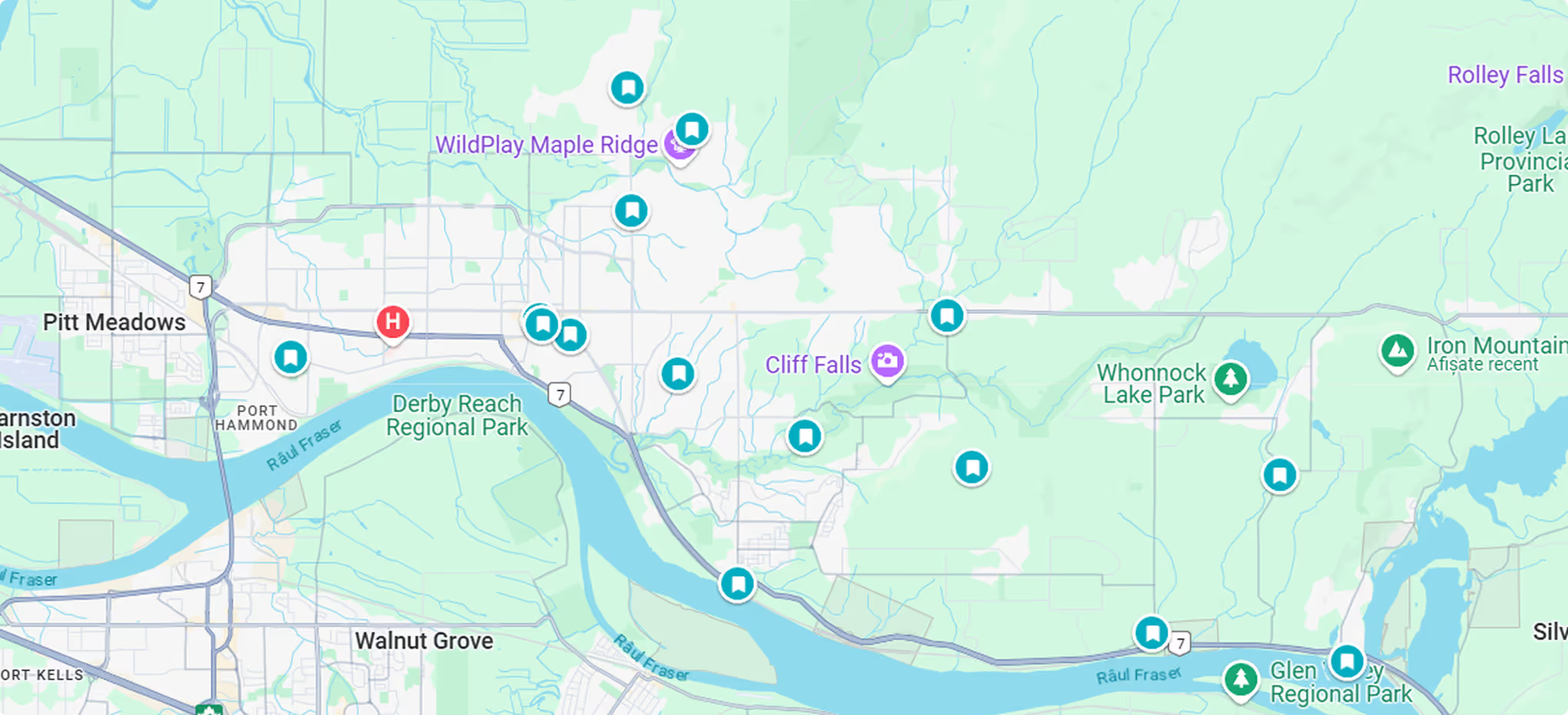
Neighbourhoods in the Fraser Valley