Indoor Air Quality in South Meadows, BC
Breathe Easy with Professional Indoor Air Quality Solutions
Struggling with lingering allergies or concerned about the invisible pollutants circulating in your home? You are not alone, especially in regions like South Meadows where high humidity levels and pollen-rich seasons can turn your HVAC system into a reservoir for allergens and mold spores. Call us today to schedule a comprehensive air quality assessment or ask about our flexible financing options.
Homeowners in South Meadows often discover that standard furnace filters are insufficient for trapping microscopic particles that affect respiratory health. Rep-Air Heating and Cooling provides advanced, integrated solutions designed to neutralize contaminants and regulate humidity levels effectively.
- Expert installation of state-of-the-art filtration systems and UV purifiers.
- Year-round indoor air quality monitoring and system adjustments.
- Advanced solutions tailored to your specific environmental needs and home layout.
All services come with a full warranty and strict compliance with local health and safety standards.
Why Clean Air at Home Matters More Than Ever
Modern homes are built for energy efficiency. While tight insulation and double-paned windows are excellent for keeping heat in during a chilly British Columbia winter, they also trap pollutants inside. Without proper mechanical ventilation, the air inside your home can be significantly more polluted than the air outside. In areas like South Meadows, where the climate involves moderate annual rainfall and distinct pollen seasons, this "sealed envelope" effect can lead to a buildup of biological growth, volatile organic compounds (VOCs), and allergens.
The impact of poor indoor air quality (IAQ) goes beyond unpleasant odors. It directly correlates with the comfort and health of the occupants. High humidity levels, common in the Pacific Northwest fall and winter, create ideal breeding grounds for mold and dust mites. Conversely, running a furnace constantly can dry out the air, irritating nasal passages and throats. A balanced approach to IAQ addresses filtration, ventilation, and humidity control simultaneously to create a neutral, safe environment.
Identifying the invisible threats is the first step toward resolution. Common indoor pollutants include:
- Biological Contaminants: Mold spores, pollen, bacteria, viruses, and pet dander that circulate through ductwork.
- Chemical Pollutants: VOCs released from cleaning products, paints, carpets, and building materials.
- Combustion Gases: Carbon monoxide or nitrogen dioxide from gas appliances if not properly vented.
- Particulate Matter: Dust, smoke, and microscopic debris that standard filters miss.
What You Get: Complete IAQ Services Explained
Achieving optimal indoor air quality requires more than a plug-in air freshener; it demands a systematic approach integrated into your home’s heating and cooling infrastructure. We provide a range of solutions that work continuously to purify, humidify, or ventilate your living space without requiring constant manual intervention.
Whole-Home Air Purification Systems
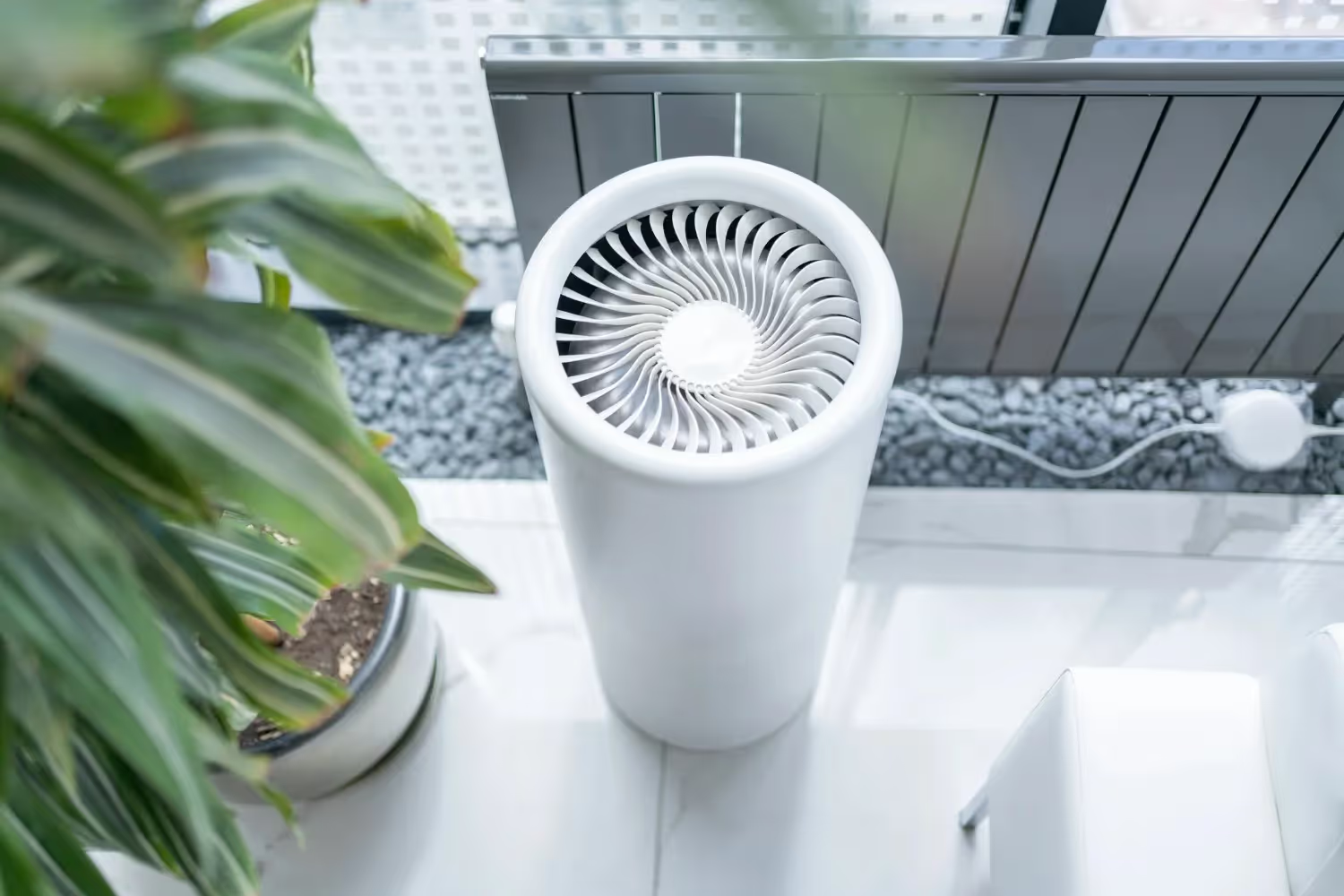
Portable air purifiers only clean the air in a single room. Whole-home systems are installed directly into your existing HVAC ductwork. As air cycles through your furnace or air handler, it passes through advanced media filters or electronic precipitators.
- Media Air Cleaners: These distinct units use deeply pleated filters with high surface areas. They trap significantly smaller particles than standard one-inch furnace filters, capturing dust, pollen, and pet dander before they recirculate.
- UV Light Purifiers: Installed within the ductwork or near the evaporator coil, ultraviolet light systems destroy the DNA of bacteria, viruses, and mold spores, preventing them from reproducing. This is particularly effective for keeping the HVAC coil free of biological growth.
Ventilation Systems (HRVs and ERVs)
Because opening a window isn't always practical during a rainy November or a freezing January day, mechanical ventilation is essential.
- Heat Recovery Ventilators (HRVs): These systems exchange stale indoor air for fresh outdoor air. Crucially, they transfer heat from the outgoing stream to the incoming stream. This means you get fresh air without losing the warmth you have paid to generate. In cooler climates, HRVs are efficient at keeping air fresh while retaining heat.
- Energy Recovery Ventilators (ERVs): Similar to HRVs, these units transfer both heat and moisture. They are useful in maintaining humidity balance, preventing the house from becoming too dry in winter or too humid in summer.
Humidity Control Solutions
Balancing moisture is critical for both structural integrity and health.
- Whole-Home Humidifiers: During the heating season, humidity levels can drop drastically. A bypass or steam humidifier adds moisture directly into the supply air, relieving dry skin and static electricity while protecting wood flooring from cracking.
- Dehumidifiers: In contrast, excess moisture during the damp seasons can overwhelm a standard air conditioner. Dedicated whole-home dehumidifiers run independently of the cooling cycle to remove gallons of water from the air daily, inhibiting mold growth.
How We Ensure Top Air Quality in Your Home
Implementing an IAQ strategy is technical work that involves airflow calculations, load sizing, and precise installation. Simply buying a product off the shelf often leads to poor performance if the unit restricts airflow to your furnace or is undersized for the square footage of the home.
Comprehensive Air Assessment
The process begins with diagnostics. We do not guess what is in your air; we measure it. Technicians evaluate the current particle count, humidity levels, and airflow patterns in your home. This data highlights whether the primary issue is filtration, ventilation, or moisture imbalance.
Custom System Design and Integration
Once the problem is diagnosed, the solution is engineered to fit your existing HVAC equipment.
- Technicians verify that your furnace blower has the static pressure capability to handle high-efficiency filters without straining the motor.
- Placement of UV lights is calculated to maximize exposure time to the coil and passing air.
- Ventilation intake and exhaust ports are positioned to prevent cross-contamination from driveways or garbage areas.
Professional Installation and Commissioning
Installation involves cutting into the return or supply plenum, wiring controls to the thermostat, and ensuring airtight seals.
- Sheet metal modifications are made to accommodate new filter cabinets or humidifiers.
- Electrical connections are hardwired safely to code.
- Drain lines for humidifiers and dehumidifiers are routed to floor drains or condensate pumps.
- The system is tested to ensure it activates in sync with the blower motor.
User Education and Maintenance Plans
Rep-Air Heating and Cooling ensures you understand how to operate the new equipment. You will learn how to monitor filter life, adjust humidity settings based on outdoor temperatures, and recognize when the UV bulb requires replacement — ask about our maintenance plan.
Choosing Between Air Quality Solutions and Upgrades
Homeowners often ask whether they need to replace their entire HVAC system to improve air quality or if retrofitting is an option. In most cases, IAQ solutions can be added to existing systems, but the age and condition of your current ductwork and furnace play a role in this decision.
When to Retrofit (Add-On Services)
If your furnace and air conditioner are functioning well and are relatively new, retrofitting is the standard path.
- Existing Ductwork: If your ducts are sized correctly and sealed, we can cut in media cabinets or humidifiers with minimal disruption.
- Duct Cleaning: Before installing new filtration, it is often wise to perform professional duct cleaning to remove years of accumulated dust. This gives the new filters a fresh start.
- Thermostat Upgrades: Installing a smart thermostat allows you to control humidifiers and ventilators from a single interface, rather than managing separate dials in the basement or utility room.
When to Upgrade the HVAC Unit
Sometimes, the goal of perfect air quality requires a change in the primary equipment.
- Variable Speed Motors: Older, single-stage furnaces blast air at full speed or not at all. This short cycling doesn't allow enough time for air to pass through filters effectively or for dehumidification to occur. Upgrading to a furnace with a variable-speed blower allows for constant, low-level air circulation, which continuously scrubs the air through the filtration system — view current promotions.
- Zoning Issues: If air is stagnant in certain bedrooms, simply adding a filter won't help. You may need ductwork modification or a zoning system to ensure fresh, filtered air reaches every corner of the house.
Your Local IAQ Experts: Understanding Community Standards
Managing indoor air quality in South Meadows requires an understanding of the local environment. The Pacific Northwest climate presents specific challenges that generic solutions often miss. The persistent dampness during the long rainy season means that moisture control is not just a comfort issue—it is a property preservation issue.
Local building codes and energy standards also influence how IAQ systems are installed. Newer homes in the area are built with high airtightness standards, making mechanical ventilation (HRVs) mandatory in many cases to meet building codes. In older housing stock, natural infiltration (drafts) provided fresh air, but as homeowners upgrade windows and siding, they inadvertently cut off that fresh air supply, necessitating the addition of ventilation units.
We navigate these requirements daily. We ensure that any installation not only improves your health but also meets all municipal requirements regarding ventilation rates and energy consumption. From handling the electrical requirements for a steam humidifier to properly venting an HRV through an exterior wall, we manage the logistics so you do not have to worry about compliance — read our reviews.
Addressing Seasonal Shifts
Your strategy must change with the seasons.
- Spring/Summer: Focus shifts to pollen removal and humidity control. High-efficiency filtration captures allergens entering from outside, while dehumidification keeps the home cool and dry.
- Fall/Winter: The focus moves to preventing condensation on windows (a sign of poor ventilation) and adding moisture back into the air if the heating system causes dryness.
Proof & Differentiators: Why Choose Us
The difference between a functional system and a high-performance system lies in the installation quality. Indoor air quality equipment is sensitive; improper airflow calibration can render a high-end HEPA filter useless or cause a furnace to overheat. We approach IAQ as a science, using precise instrumentation to verify that your air is actually cleaner after our work is done.
- Certified Technicians: Our team holds certifications relevant to heating, refrigeration, and air distribution. We understand the physics of airflow and psychrometrics (the study of moist air).
- Holistic Approach: We do not push a single product. We look at the house as a system. If your humidity is high because of a crawlspace issue, we identify that rather than just selling you a dehumidifier that will run continuously without solving the root cause.
- Transparent Solutions: We explain exactly what each component does, the maintenance it requires, and the expected lifespan. You will know the cost of replacement media and bulbs upfront, so there are no surprises down the road.
Take Action Today
Ensure your home’s air is safe, healthy, and comfortable year-round. Contact Rep-Air Heating and Cooling now to schedule a full indoor air quality assessment and discover the solutions that will keep your family breathing easy.
hear what our satisfied clients have to say
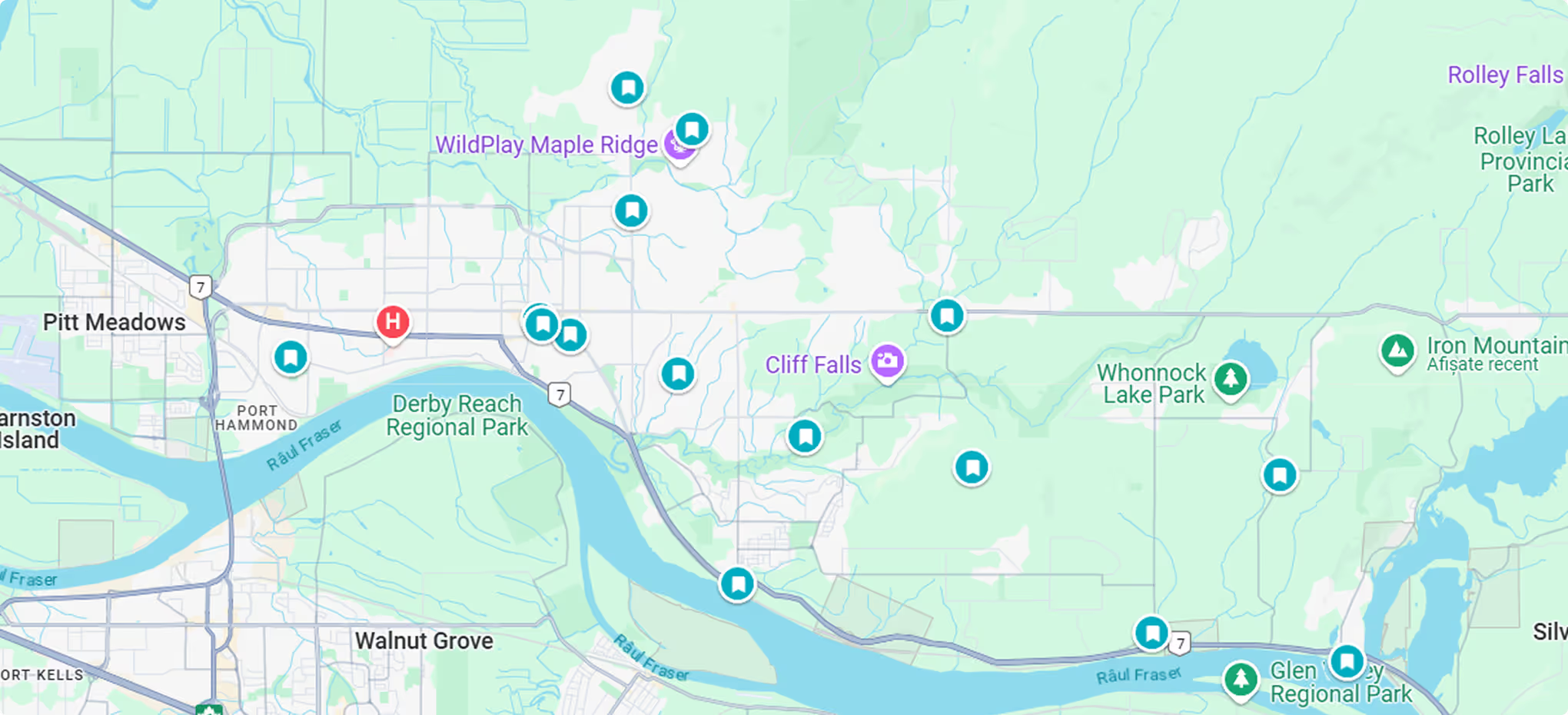
Neighbourhoods in the Fraser Valley