Indoor Air Quality in Stave Falls, BC
Is Your Home's Air Safe? Find Out Now
Unseen contaminants, allergens, and humidity imbalances in your home can silently impact your family's health and comfort, often requiring immediate professional assessment. Wonder if the air inside your living space is truly safe for your household? Discover how our certified air quality inspections can help you breathe easier today by contacting our team for a comprehensive evaluation or financing options.
We provide the following outcomes for homeowners in Stave Falls:
- Comprehensive air quality testing with same-day results to identify specific pollutants.
- Tailored solutions to improve your indoor environment effectively, from filtration to humidity control.
- All services meet local regulatory and safety standards for residential ventilation.
Guaranteed services backed with industry-standard warranties and flexible financing options.
Ensuring Your Indoor Air is Healthy and Safe
Many homeowners in British Columbia assume that because their windows are closed, their air is clean. However, indoor air can be significantly more polluted than outdoor air due to the accumulation of dust, pet dander, volatile organic compounds (VOCs), and biological contaminants like mold spores. In areas like Stave Falls, the specific climate conditions contribute to these issues. The damp, maritime winters create an ideal breeding ground for mold and mildew within ductwork and basements, while the increasingly hot, dry summers often bring wildfire smoke that infiltrates the home.
Ignoring these warning signs leads to aggravated allergies, respiratory issues, and long-term strain on your HVAC equipment. Simply changing a standard furnace filter is rarely enough to combat microscopic particulates or chemical off-gassing. You require a systematic approach that addresses the root cause of the pollution. Whether you are dealing with stale air, persistent odors, or excessive humidity, the goal is to establish a neutral, healthy baseline for your indoor environment.
Rep-Air Heating and Cooling employs advanced diagnostic tools to detect what the naked eye cannot see. We move beyond guesswork to provide data-driven recommendations. By identifying the exact composition of your indoor air, we can implement targeted strategies that neutralize threats rather than just masking odors. This ensures that your home remains a sanctuary, regardless of the seasonal challenges occurring outside.
Our Services: Fast Testing and Reliable Solutions
When you schedule an indoor air quality service, you need immediate clarity on what is circulating through your vents. Our service scope covers the entire spectrum of air quality management, from initial detection to the installation of mitigation systems. We do not offer one-size-fits-all packages; instead, we provide specific hardware and services based on the unique architecture of your home and your current HVAC setup.
Air Quality Testing and Monitoring
The first step is always accurate data collection. We utilize industrial-grade monitors to test for a variety of indoor pollutants. This includes checking for carbon monoxide, carbon dioxide levels (which indicate poor ventilation), radon, VOCs from household products, and particulate matter (PM2.5 and PM10). This testing happens on-site, providing you with a clear picture of your current air quality status.
Filtration and Purification Systems
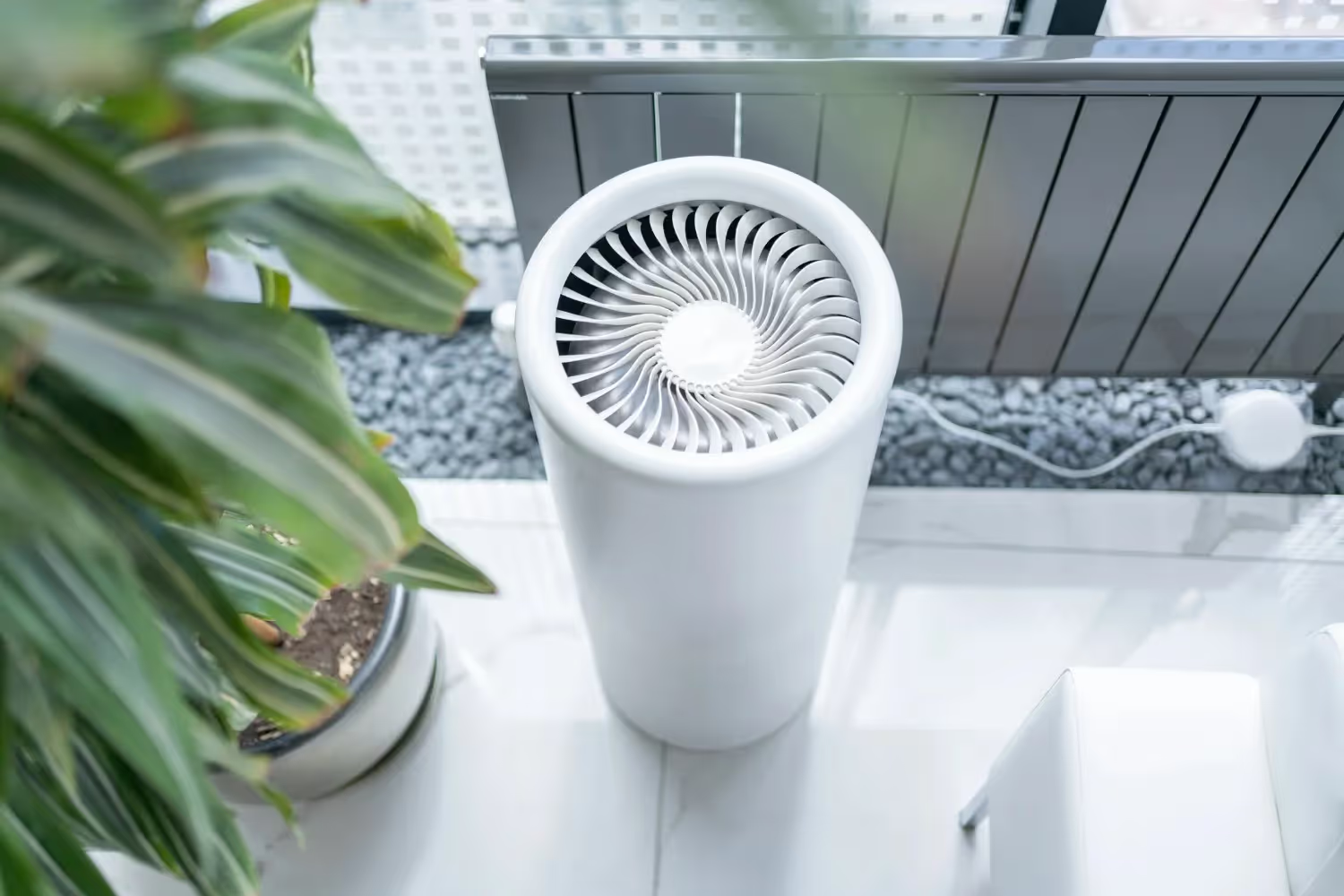
Standard filters capture large dust bunnies, but they often miss the microscopic particles that cause health issues. We specialize in the installation of high-efficiency media air cleaners and HEPA filtration systems that integrate directly into your existing ductwork. For biological contaminants like viruses, bacteria, and mold spores, we install UV germicidal lights and air scrubbers. These devices work actively to neutralize pathogens as they pass through your central air system, ensuring that the air delivered to your rooms is sanitized.
Ventilation and Humidity Control
Modern homes are built to be airtight for energy efficiency, but this often traps stale air inside. To combat this, we install Heat Recovery Ventilators (HRVs) and Energy Recovery Ventilators (ERVs). These systems exchange stale indoor air with fresh outdoor air without losing the heat you’ve already paid for. Furthermore, managing humidity is critical in our coastal climate. We provide whole-home dehumidifiers to prevent mold growth during wet months and humidifiers to protect your sinuses and wood flooring during dry spells.
How We Test and Improve Your Air Quality
Improving your indoor environment is a technical process that requires a structured approach. We follow a strict protocol to ensure that every potential source of contamination is investigated and addressed. This systematic workflow ensures that we do not miss hidden issues that could compromise your air quality later.
Initial Assessment and Audit
The process begins with a visual inspection of your HVAC system, ductwork, and living areas. Technicians look for visible signs of mold, excess moisture on windows, and dust buildup on vents. We also discuss specific symptoms you may be experiencing, such as headaches or congestion, which can help narrow down the potential pollutants.
Diagnostic Testing
Next, we deploy specialized air quality monitors in key areas of the home. These devices sample the air over a set period to measure temperature, humidity, and pollutant concentrations. We look for visible spikes in VOCs or particulate matter that indicate an active source of pollution.
Data Analysis and Solution Design
Once the data is collected, we analyze the results to determine the primary issues. If humidity is too high, the solution focuses on dehumidification and ventilation. If particulate counts are high, we focus on filtration upgrades. We design a custom solution that integrates with your current heating and cooling infrastructure.
Installation and Calibration
Technicians proceed to install the selected equipment. This may involve cutting into the return air drop to install a media cabinet, mounting UV lights in the coil, or ducting an HRV system. All equipment is hardwired and calibrated to run automatically with your blower motor, ensuring seamless operation.
Verification and Walkthrough
Finally, we re-test the air to verify that the systems are working as intended. We walk you through the operation of the new equipment, explaining maintenance requirements such as filter change schedules or bulb replacements.
Deciding Between Solutions: Repair or Upgrade?
Homeowners often struggle to determine if they need a simple repair, a cleaning service, or a hardware upgrade. Making the right decision depends on the severity of the air quality issue and the age of your current system. Understanding when to invest in new technology versus maintaining existing components is key to long-term satisfaction and health.
When to Maintain or Repair
If your air quality issues are minor—such as occasional dust or slight stuffiness—routine maintenance may be the answer. This involves professional duct cleaning to remove accumulated debris and sealing duct leaks to prevent attic or crawlspace air from entering the system. If you already have an air purifier or humidifier that isn't performing well, a repair might be sufficient. This could involve replacing a burnt-out UV bulb, changing a saturated media filter, or replacing a solenoid valve on a humidifier. Maintenance is typically the right path when the equipment is less than five years old and the symptoms are mild.
When to Upgrade or Install New Systems
Repairing existing components is ineffective if the underlying technology is insufficient for your needs. If you suffer from severe allergies, asthma, or live in an area prone to wildfire smoke, a standard 1-inch furnace filter will never provide adequate protection. In these cases, upgrading to a whole-home HEPA filtration system or an electronic air cleaner is necessary. Similarly, if you are battling persistent mold growth in Stave Falls due to high interior humidity, a portable dehumidifier will not keep up. Installing a dedicated whole-home dehumidification system is the only way to permanently alter the dew point in the home and stop mold growth. If your home feels stuffy and smells stale regardless of cleaning, an HRV upgrade is required to mechanically introduce fresh air — view our promotions online.
The Cost of Inaction
Delaying an upgrade often results in higher costs down the line. Poor air quality can lead to health expenses, and unchecked humidity can cause structural damage to your home, such as warping wood floors or rotting window sills. Investing in the right IAQ hardware prevents these issues and protects the value of your property.
Navigating Local Air Quality Regulations
In British Columbia, and specifically in the Stave Falls area, air quality solutions must align with regional building codes and climate realities. While there are few permits required for standalone air purification devices, integration into the HVAC system involves specific regulatory considerations.
Ventilation Codes
The BC Building Code has specific requirements for ventilation in residential properties, particularly regarding the "Step Code" for energy efficiency. As homes become more airtight to meet energy targets, mechanical ventilation (like HRVs) becomes mandatory to ensure adequate air exchange rates. Our installations comply strictly with these ventilation rates to ensure your home meets legal occupancy standards and maintains safe oxygen levels.
Electrical and Safety Permits
Installing hardwired indoor air quality equipment, such as UV lights or powered dehumidifiers, often requires connection to your home’s electrical panel. These connections must be performed according to the Canadian Electrical Code. We handle the necessary checks to ensure that your electrical system can support the additional load and that all wiring is grounded and safe.
Climate-Specific Considerations
The local climate heavily dictates the type of equipment needed. The high rainfall in the region means that humidity control is not optional—it is a necessity for preventing structural rot and mold. Conversely, the wildfire season requires systems capable of filtering ultra-fine smoke particles (PM2.5). We select equipment rated specifically to handle these extremes, ensuring that your system is not overwhelmed during peak seasonal events.
Why Choose Us: Our Expertise and Commitments
Selecting a partner for your indoor air quality needs is a decision that directly affects the health of your household. You need a team that prioritizes technical accuracy over aggressive sales tactics. We focus on providing measurable improvements to your environment through science-backed solutions.
- Certified Technicians: Our team holds certifications relevant to HVAC and indoor air quality assessment. We stay updated on the latest filtration technologies and ventilation codes to provide compliant, effective service.
- Data-Driven Approach: We do not guess. We use industrial monitoring equipment to diagnose your specific issues, ensuring that the solutions we propose are directly targeted at the pollutants present in your home.
- Holistic Solutions: We look at the house as a system. We understand how heating, cooling, and ventilation interact, ensuring that adding an air purifier does not negatively impact your furnace’s airflow or static pressure.
- No-Nonsense Service: We provide clear explanations of what is wrong, how we fix it, and what it costs. There are no hidden fees or vague promises — read our reviews.
Call Now
Ready to breathe clean, healthy air and keep your home safe and comfortable? Schedule a comprehensive indoor air quality inspection with Rep-Air Heating and Cooling. Our certified technicians will identify hidden contaminants and provide tailored solutions to improve your air quality and overall comfort. Don’t wait—take control of your home’s air today.
hear what our satisfied clients have to say
Neighbourhoods in the Fraser Valley