Indoor Air Quality in Steelhead, BC
Is Your Indoor Air Safely Breathing?
Worried about the air quality in your home as the seasons change? From cool damp winters to hot humid summers, your indoor environment faces numerous air quality challenges, and you can contact us right now to schedule an immediate assessment or discuss our flexible financing options. Whether it is hidden mold spores triggered by heavy rainfall or dry, stagnant air caused by constant heating, the invisible atmosphere inside your home directly impacts your respiratory health and comfort. Homeowners in Steelhead, BC, often face a unique battle against both excess moisture and particulate matter, requiring professional intervention to ensure the air you breathe is clean and safe.
- Rapid response teams ready for same-day assessments and interventions.
- Comprehensive solutions from air purification to humidity control.
- Maintenance packages ensuring year-round, optimal indoor air quality.
Certified installations with extensive warranties and flexible financing options ensure your upgrade is secure and affordable.
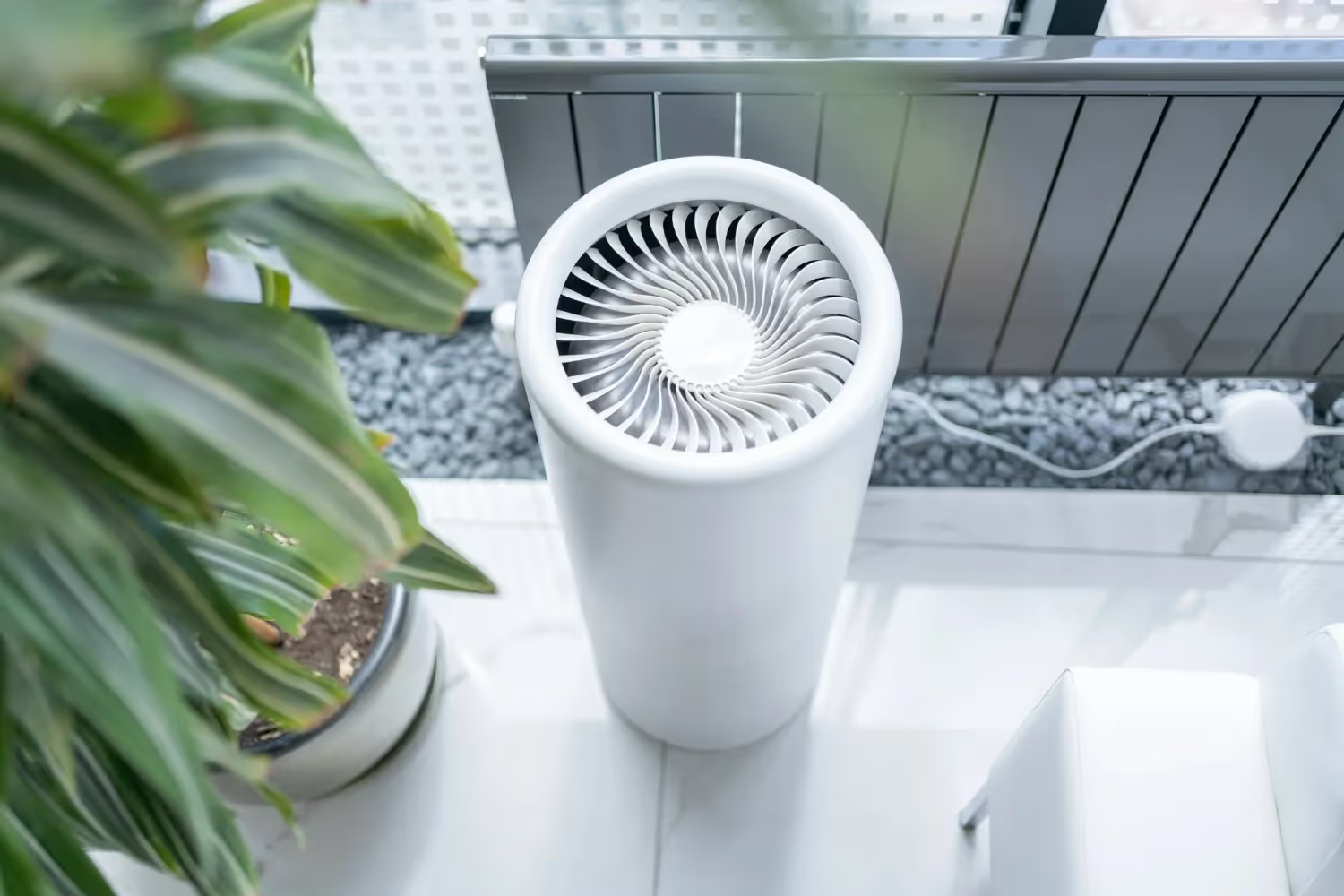
Tackling Indoor Air Quality Challenges Head-On
Modern homes are built for energy efficiency, which means they are tightly sealed to prevent heat loss. While this is excellent for your utility bills, it creates a distinct problem: your home stops "breathing." Without proper ventilation and filtration, pollutants get trapped inside. In areas like Steelhead, where atmospheric conditions fluctuate heavily between damp autumns and dry winters, this creates a compounding effect on your indoor environment — view our promotions.
Rep-Air Heating and Cooling understands that poor indoor air quality (IAQ) manifests in various ways. You might notice condensation on windows, lingering odors, static electricity shocks, or an increase in allergy symptoms when inside the house. These are not merely annoyances; they are indicators of unbalanced humidity, poor ventilation, or high concentrations of airborne contaminants.
The primary adversaries in your home usually fall into three categories:
- Biological Pollutants: This includes mold spores, bacteria, pollen, and dust mites. These thrive in environments where humidity is uncontrolled.
- Chemical Pollutants (VOCs): Volatile Organic Compounds come from household cleaners, paints, carpets, and even building materials. In a sealed home, these chemicals accumulate to dangerous levels.
- Particulate Matter: Dust, pet dander, and smoke particles that circulate through your HVAC system and are re-inhaled continuously.
Addressing these issues requires a systemic approach. It is not enough to simply open a window, as this introduces untreated outdoor air that may be too humid or filled with outdoor allergens. Professional IAQ services focus on mechanical solutions that filter, purify, and ventilate your home automatically.
Our Today’s Services: From Testing to Complete Air Quality Management
When you engage professional services for indoor air quality, the goal is to diagnose the specific composition of your air and implement targeted hardware solutions. The scope of service covers everything from initial detection to the final calibration of air treatment systems.
Diagnostic Air Testing
Before any equipment is recommended, technicians must understand what is in your air. Professional testing involves using advanced sensors to measure humidity levels, particle counts, and the presence of Carbon Monoxide or VOCs. This data provides a baseline to determine exactly which pollutants are prevalent in your living space.
Air Filtration Systems
Standard furnace filters often miss microscopic irritants. Upgrading to high-efficiency media air cleaners or HEPA filtration systems captures particles as small as 0.3 microns. This service involves retrofitting your existing ductwork to accommodate thicker, more dense media cabinets that trap significantly more dust and dander than standard 1-inch filters.
Humidity Control Solutions
Balancing moisture is critical.
- Whole-Home Humidifiers: During winter, heating systems dry out the air, leading to dry skin and cracked wood. Technicians install bypass or steam humidifiers directly into your HVAC system to add precise moisture levels.
- Dehumidifiers: In contrast, wet seasons require moisture removal to prevent mold growth. Integrated dehumidifiers work in tandem with your air conditioner to keep relative humidity below the mold-growth threshold (typically 50%).
Ventilation Systems (HRV and ERV)
Heat Recovery Ventilators (HRV) and Energy Recovery Ventilators (ERV) are mechanical lungs for your home. This service involves installing a dedicated unit that exhausts stale, contaminated indoor air and replaces it with fresh, filtered outdoor air. Crucially, these systems transfer heat between the air streams, ensuring you do not lose energy efficiency while gaining fresh air.
UV Light Purification
For biological contaminants, technicians install Ultraviolet (UV) lamps inside your ductwork or near the evaporator coil. This spectrum of light neutralizes bacteria, viruses, and mold spores on contact, preventing them from multiplying within your HVAC system and spreading throughout the home.
Installation & Maintenance Explained: Step-by-Step
Understanding the workflow of an IAQ upgrade helps you prepare for the service. The process is designed to be minimally invasive while delivering maximum impact on your home's environment — browse our gallery.
- Site Assessment and Engineering: The process begins with a technician reviewing your current HVAC setup. They calculate the square footage, check duct sizing, and identify the best location for new equipment (such as an HRV or air purifier) to ensure optimal airflow.
- System Selection: Based on the assessment, specific units are selected. If the goal is virus protection, UV lights and HEPA filters are prioritized. If the goal is fresh air exchange, an HRV is selected.
- Ductwork Modification: To integrate new systems like whole-home humidifiers or media cabinets, the existing sheet metal around your furnace often needs modification. Technicians cut and seal new transitions to ensure airtight connections.
- Electrical and Drainage Connections: Systems like steam humidifiers or dehumidifiers require dedicated electrical circuits and drainage lines. Licensed professionals ensure these connections meet safety codes and route drainage effectively to floor drains or condensate pumps.
- Control Integration: The new equipment is wired into your existing thermostat or a new dedicated IAQ controller. This allows for automated operation—for example, the humidifier running only when the furnace is on.
- Testing and Calibration: Once installed, the system is tested. Airflow is measured to ensure the static pressure in the ducts remains within safe limits for your blower motor.
- Walkthrough: Finally, the technician demonstrates how to operate the controls, how to change filters or UV bulbs, and establishes a maintenance schedule.
Deciding Between Replacement or Repair: What to Consider
Existing air quality equipment, such as older humidifiers or first-generation air exchangers, can eventually fail or become obsolete. Deciding whether to repair a malfunctioning unit or replace it with modern technology involves several factors.
- Age and Efficiency: If your HRV or humidifier is over 10 to 15 years old, parts may be scarce, and the motor efficiency is likely poor compared to modern DC-motor units. Replacement often yields lower energy costs and quieter operation.
- Changes in Health Requirements: If a household member has recently developed asthma, allergies, or respiratory issues, an old standard filter is likely insufficient. In this case, repairing an old system is less effective than replacing it with a higher-MERV rated system or adding UV purification.
- Cost of Repair vs. Replacement: If a repair involves a major component like a compressor in a dehumidifier or the core of an HRV, the cost may approach 50% of a new unit. At this tipping point, replacement is the financially sound choice due to the new warranty coverage.
- Mold Contamination: If an existing humidifier or ventilation unit has been neglected and is heavily contaminated with mold inside the insulation or core, cleaning is often impossible or ineffective. Replacement is necessary to ensure the unit itself doesn't become a source of pollution.
Local Guidelines and Seasonal Advice for Optimal Air Quality
Operating air quality systems in Steelhead requires specific attention to the local climate and regulatory environment. The geography dictates distinct strategies for different times of the year.
- Winter Strategy: As temperatures drop, heating systems run frequently. This lowers indoor humidity significantly. In this region, it is vital to monitor humidity levels to prevent damage to hardwood floors and furniture. However, setting a humidifier too high during extreme cold snaps can cause window condensation. Professional calibration ensures the "dew point" is managed correctly.
- Fall and Spring Rain: The Pacific Northwest sees substantial rainfall. During these shoulder seasons, outdoor air is damp. Using an HRV is effective, but homeowners must ensure the intake vents are clear of debris and that the system is balanced so it doesn't pull in excessive moisture without proper removal.
- Summer Operations: While summers are generally pleasant, heat waves force air conditioning usage. A sealed house running AC recirculates the same air. This is when VOCs build up the fastest. Running the ventilation system on an intermittent "summer" setting ensures fresh air exchange continues even when windows are closed for cooling.
Permits and Codes:
Any significant alteration to your home’s ventilation or electrical systems requires adherence to local building codes. Installing an HRV or ERV, for instance, often requires balancing reports to prove the airflow meets the specific ventilation requirements calculated for your home’s size. Ensuring your service provider pulls the necessary permits protects your home’s value and insurance compliance.
Why Choose Us: Our Credentials and Commitment
Selecting a service provider for indoor air quality goes beyond finding someone who can install a box. It requires a team that understands the science of airflow and psychrometrics (the study of moist air) — read customer reviews.
- Technical Expertise: Technicians are trained to analyze the entire building envelope. They do not just look at the furnace; they look at how the house operates as a system.
- Verified Results: The focus is on measurable improvements. Whether it is a reduction in particle counts or achieving a specific relative humidity percentage, the results are quantifiable.
- High-Standard Equipment: Only equipment with proven reliability records and widely available parts is utilized. This ensures that future maintenance is straightforward and cost-effective.
- Safety and Compliance: All electrical and gas connections associated with air quality systems are handled by certified professionals, ensuring strict adherence to safety standards.
Your home is your sanctuary, and the air within it should contribute to your health, not detract from it. From eliminating winter dryness to filtering out summer smoke and allergens, taking control of your indoor atmosphere is one of the best investments you can make for your family's long-term well-being. Rep-Air Heating and Cooling is dedicated to providing the technical solutions necessary to create a cleaner, safer breathing environment.
Take the First Step Toward Cleaner Air Today
Contact our team at Rep-Air Heating and Cooling to schedule your comprehensive indoor air quality assessment. We will evaluate your home, identify any air quality issues, and recommend solutions to improve your comfort and health. Learn more about our team and expertise in About Us. Breathe easier knowing your indoor air is clean, safe, and properly managed year-round.
hear what our satisfied clients have to say
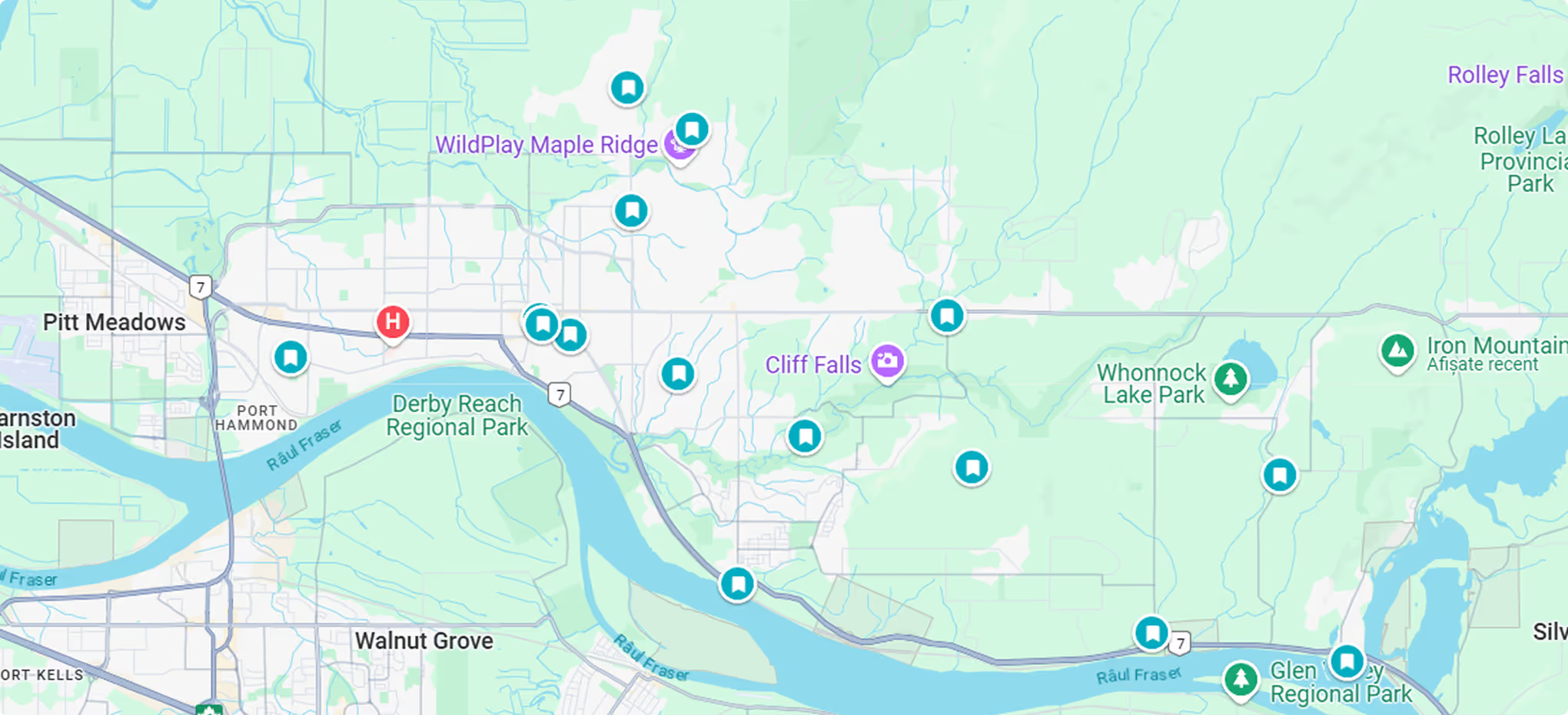
Neighbourhoods in the Fraser Valley