Indoor Air Quality in Abbotsford, BC
Worried About Your Indoor Air Quality?
Notice unusual odors, persistent dust buildup, or a consistent increase in allergy symptoms while you are at home? In Abbotsford and the surrounding Fraser Valley regions, environmental factors ranging from high humidity to seasonal wildfire smoke can significantly degrade the air you breathe inside your own house. Contact us today or apply for financing to schedule a comprehensive air quality assessment.
Poor indoor air quality is often invisible, yet its effects on health and home infrastructure are tangible. Pollutants, allergens, and excess moisture can circulate through your HVAC system, turning your sanctuary into a source of respiratory stress. Addressing these issues requires more than just opening a window; it demands a strategic approach to filtration, ventilation, and humidity control.
- Identify and mitigate hidden air quality issues with our comprehensive, diagnostic assessment.
- Enhance your home comfort and health with professional air purification and ventilation solutions tailored to your specific layout.
- Receive actionable insights and equipment recommendations specific to your family’s health needs and budget.
Backed by certified expertise and manufacturer warranties, we provide peace of mind that your home environment is safe and clean.

Breathing Issues at Home? Let’s Clear the Air
Your home should be a safe haven, but for many homeowners in British Columbia, indoor air pollution is a silent disruptor of daily life. Modern homes are built to be energy-efficient, meaning they are tightly sealed to keep heat in during the winter and out during the summer. While this is excellent for your utility bills, it can be detrimental to air quality. Without proper ventilation, pollutants such as volatile organic compounds (VOCs) from cleaning products, pet dander, dust mites, and mold spores become trapped inside, recirculating endlessly through your ductwork.
The symptoms of poor indoor air quality often mimic the common cold or seasonal allergies, making them difficult to diagnose without professional help. You might experience frequent headaches, dry eyes, throat irritation, or fatigue that seems to improve only when you leave the house. For households with asthma sufferers, young children, or the elderly, these triggers can escalate from minor annoyances to serious health risks.
In our region, the external environment plays a massive role in internal conditions. During the damp winter months, moisture infiltration can lead to hidden mold growth within walls or ducts. Conversely, summer brings the threat of wildfire smoke, introducing fine particulate matter (PM2.5) into the home that standard furnace filters cannot capture. Rep-Air Heating and Cooling understands the specific biological and chemical stressors common to this area, providing targeted interventions that neutralize threats rather than masking them.
Your Path to Better Air Quality: Services and Solutions Offered
Improving the air inside your home is rarely a one-size-fits-all endeavor. It involves a combination of filtration, purification, and humidity control. We offer a suite of services and products designed to tackle specific contaminants and structural challenges.
High-Efficiency Filtration Systems
Standard fiberglass filters are designed primarily to protect your furnace, not your lungs. To truly improve air quality, we install high-efficiency media air cleaners. These advanced filtration systems have a much larger surface area and denser media, capable of trapping microscopic particles including bacteria, smoke, and pollen. Unlike standard 1-inch filters, these systems fit directly into your ductwork and require less frequent changing while providing superior capture rates.
Ultraviolet (UV) Air Purifiers
Biological contaminants thrive in the dark, damp environment of an HVAC coil. UV air purifiers utilize germicidal ultraviolet light to sterilize surfaces and the air passing through your system.
- UV lights penetrate the cell walls of bacteria, viruses, and mold spores, rendering them unable to reproduce.
- This technology is particularly effective at keeping the evaporator coil clean, which prevents the "dirty sock" syndrome smell often associated with moldy HVAC systems.
- It adds a layer of protection against airborne illnesses, sanitizing the air as it cycles through your home.
Heat Recovery Ventilators (HRVs) and Energy Recovery Ventilators (ERVs)
Ventilation is the process of replacing stale indoor air with fresh outdoor air. However, opening a window in the middle of winter wastes heat, and opening one during wildfire season introduces smoke. HRVs and ERVs solve this paradox.
- HRVs: ideal for tighter homes in cooler climates, these systems transfer heat from the stale outgoing air to the fresh incoming air. This allows you to ventilate your home without losing the thermal energy you have paid to generate.
- ERVs: These function similarly to HRVs but also transfer moisture. This is critical for maintaining balanced humidity levels, preventing the indoor air from becoming too dry in winter or too humid in summer.
Whole-Home Humidifiers and Dehumidifiers
Humidity control is synonymous with air quality control.
- Dehumidifiers: Essential for basements and crawl spaces, or for the entire home during damp shoulder seasons. Reducing excess moisture prevents dust mites from reproducing and stops mold spores from germinating.
- Humidifiers: During cold snaps when the furnace runs constantly, indoor air can become desert-dry. This dries out mucous membranes, making you more susceptible to infection, and can damage wood flooring. A whole-home humidifier adds precise amounts of moisture to the air stream to maintain optimal saturation.
From Evaluation to Installation: Our Hassle-Free Process
We believe in a methodical approach to air quality. Guesswork leads to wasted money and unsolved problems. Our process ensures that the solutions we implement are directly addressing the root causes of your air quality concerns.
- Initial Consultation and Assessment: The process begins with a thorough evaluation of your current HVAC system and living environment. Technicians use specialized tools to measure particulate levels, humidity, and airflow. We discuss your specific concerns, such as pet allergies, asthma, or lingering odors.
- Customized Recommendation: Based on the data collected, we design a strategy tailored to your home. This may involve a single upgrade, like a better filter, or a multi-layered approach involving UV lights and humidity control. We explain clearly how each component works and why it is recommended for your specific situation.
- Professional Installation: Our certified installers integrate the new equipment seamlessly with your existing heating and cooling infrastructure. Whether it involves cutting into the return plenum for a media filter or running drain lines for a dehumidifier, the work is done to code and with respect for your property.
- System Testing and Calibration: Once installed, we do not simply walk away. We test the equipment to ensure it is operating at peak efficiency. For ventilation systems like HRVs, we balance the airflow to ensure equal intake and exhaust.
- Walkthrough and Education: We show you how to operate the new system, how to read any monitors or thermostats, and explain the maintenance schedule required to keep the warranty valid and the air clean.
Deciding Between Air Quality Improvement or Complete Replacement
Homeowners often face a difficult decision: is it worth adding sophisticated air quality peripherals to an aging HVAC system, or is it time for a complete overhaul? Understanding when to retrofit versus when to replace is key to long-term satisfaction and efficiency.
When to Retrofit:
- If your furnace and air conditioner are less than 10 years old and functioning mechanically well, adding air quality components is usually the best path.
- Retrofitting is ideal when the primary issue is environmental (e.g., high dust load, allergies) rather than mechanical failure.
- Ductwork is in good condition and sized correctly to handle the slight static pressure increase from high-efficiency filters.
When to Replace:
- If your current system is over 15 years old, it may struggle to handle the airflow restrictions of modern, dense filtration systems. An older blower motor might overheat trying to push air through a MERV 16 filter.
- If you are experiencing inconsistent temperatures alongside poor air quality, a new system with a variable-speed motor is a superior solution. Variable-speed motors run continuously at low levels, providing constant filtration and air mixing, which is far more effective for air quality than a single-stage system that blasts air and then shuts off.
- When ductwork modification is required to fit humidifiers or UV lights, it may be more cost-effective to address these during a full system replacement rather than as a standalone project.
Adapting to Abbotsford’s Climate: Tailored Air Quality Solutions
The Fraser Valley presents a unique set of climatic challenges that directly influence indoor air quality strategies. Abbotsford experiences significant rainfall throughout the year, leading to naturally high humidity levels. Without intervention, this ambient moisture permeates the home envelope, creating ideal breeding grounds for mold and mildew, particularly in basements and lower levels.
In this region, moisture management is not optional; it is a necessity for structural integrity and health. We frequently recommend robust dehumidification solutions integrated directly into the central air system to keep indoor relative humidity below 50%, regardless of the rain outside.
Conversely, the summers have become increasingly characterized by smoke from wildfires in the interior or locally. Standard passive ventilation (open windows) is impossible during these events. This makes mechanical ventilation with filtration vital. We configure systems specifically for this reality, often recommending carbon-impregnated filters during smoke season to adsorb odors and VOCs that standard particulate filters miss.
Furthermore, local energy codes and rebate programs in British Columbia often incentivize the installation of energy-efficient ventilation systems like HRVs. Upgrading your air quality infrastructure often aligns with provincial efficiency goals, potentially qualifying homeowners for rebates or financing incentives. Navigating these local nuances ensures that your system is not only effective but also compliant and economically optimized for the local market.
Why Choose Rep-Air: Our Commitments and Credentials
Selecting a service provider for indoor air quality is a decision that impacts the health of every occupant in your home. You need a partner who understands building science, not just someone who swaps filters. Our team is trained in the physics of airflow and pollutant mitigation. We do not rely on scare tactics; we rely on data, diagnostics, and proven technology.
We prioritize transparency in our operations. From the moment we enter your home, we treat it with respect, using drop cloths and shoe covers to ensure we leave no mess behind. Our technicians are fully licensed and undergo continuous training to stay ahead of the latest technologies in purification and ventilation.
We stand behind our work with solid warranties on both labor and parts. When you invest in an air quality system with Rep-Air Heating and Cooling, you are investing in a long-term solution. We ensure that the equipment is sized correctly, installed safely, and maintained properly, providing you with cleaner, healthier air for years to come.
Transform Your Home’s Air — Start Breathing Better Today
Your indoor air shouldn’t be a source of discomfort or worry. If you’re noticing persistent dust, odors, or allergy symptoms, it’s time to take action with solutions designed to protect your home and your health. Contact us to discover how Rep-Air Heating and Cooling can elevate your indoor environment with advanced filtration, purification, and ventilation technologies tailored to Abbotsford’s unique climate challenges.
Take control of your indoor environment today. Do not wait for allergy season to peak or for the next wildfire event to compromise your home.
Ready to breathe easier? Contact us now to discuss your indoor air quality options.
hear what our satisfied clients have to say
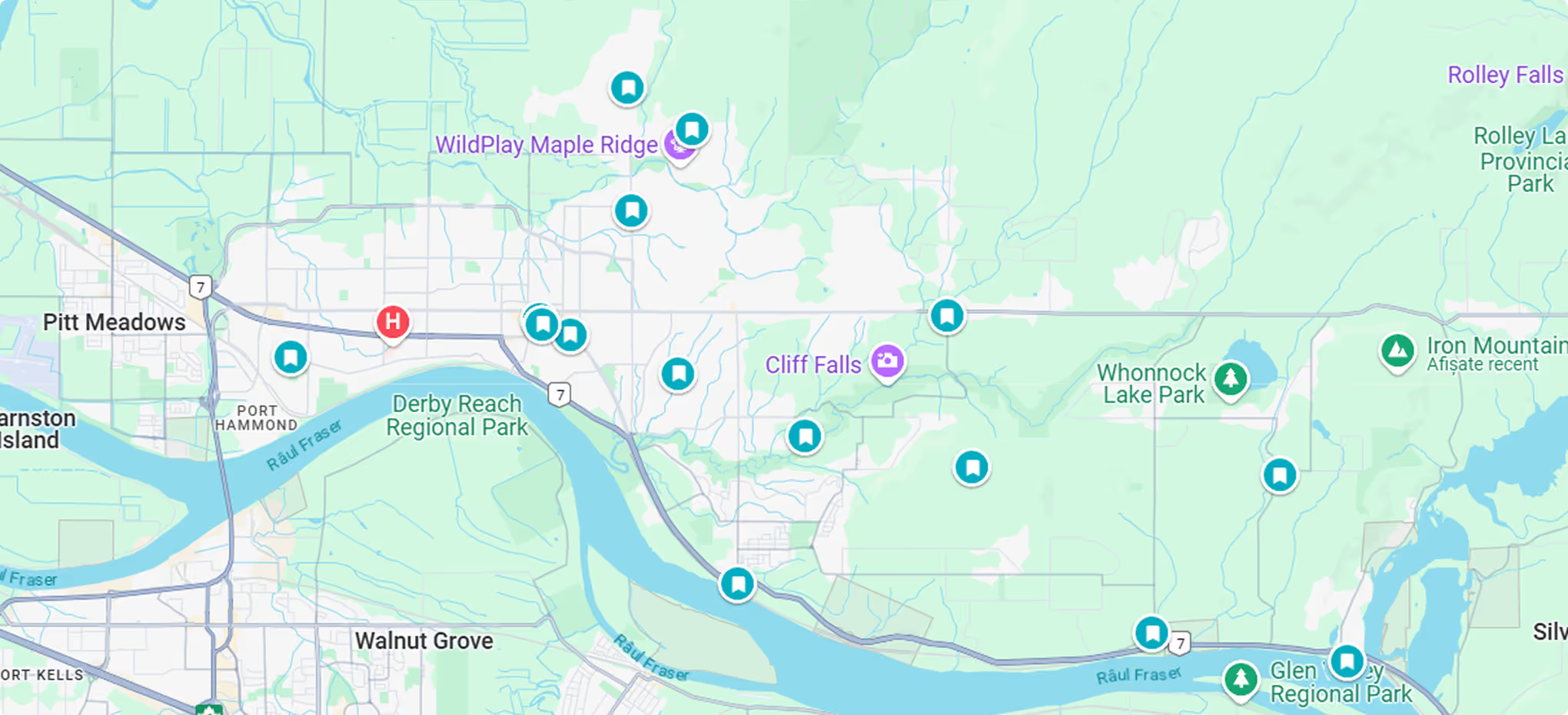
Neighbourhoods in the Fraser Valley