Indoor Air Quality in Whatcom, BC
Is Your Home Environment Making You Sick?
Concerned about how indoor toxins, allergens, and lingering humidity are affecting your family's health? You are not alone in seeking a breath of fresh air in Whatcom, BC, where sealed homes often trap pollutants inside. Contact us today to schedule your comprehensive air quality assessment.
- Identify airborne hazards in your home — from molds and mildew to volatile chemicals.
- Receive personalized improvements with immediate health benefits for respiratory systems.
- Ensure clean air with our certified purification and ventilation systems.
All services are environmentally compliant and come with a satisfaction guarantee to put your mind at ease.

Comprehensive Air Quality Solutions for a Healthier Home
Most homeowners assume that their standard heating and cooling system filters are sufficient for maintaining clean air. In reality, standard 1-inch filters are designed primarily to protect the HVAC equipment from large debris, not to protect human lungs from microscopic particulates. When you partner with Rep-Air Heating and Cooling, we tailor the solution to the specific biological and chemical makeup of your home's air.
True indoor air quality (IAQ) management involves a multi-layered approach. It is not about a single product but a system of defenses working in tandem to eliminate contaminants. We provide a full suite of IAQ technologies designed to tackle the three main categories of indoor pollutants: particulates (dust, dander, pollen), biologicals (mold, bacteria, viruses), and volatile organic compounds (gases, odors, chemical vapors).
Whole-Home Filtration Systems
Portable air purifiers often fail to clean the air in more than one room. Whole-home media air cleaners integrate directly into your existing ductwork. These high-efficiency units trap contaminants as air cycles through your central system. Unlike standard hardware store filters, media filters have a massive surface area, allowing them to capture smaller particles without restricting airflow to your furnace or air conditioner. This ensures that every time your system runs, it is actively scrubbing the air in every room of the house.
UV Light Purification
Filtration captures solids, but it does not always kill living organisms. Ultraviolet (UV) light systems are installed within the ductwork, usually near the evaporator coil. This technology mimics the antimicrobial power of sunlight. As air passes through the UV field, the DNA of mold spores, bacteria, and viruses is scrambled, rendering them unable to reproduce. This is particularly effective in preventing mold growth on damp AC coils, a common source of musty odors and spore circulation.
Humidity Control Systems
Air quality is inextricably linked to moisture levels. In the Pacific Northwest, controlling humidity is as important as temperature control.
- Dehumidifiers: Essential for basements and crawl spaces, or for the whole home during the shoulder seasons. Excess moisture breeds dust mites and mold. A dedicated dehumidifier removes water vapor efficiently, lightening the load on your air conditioner.
- Humidifiers: During the heating season, furnace heat dries out the air, leading to cracked skin, irritated sinuses, and increased susceptibility to colds. Whole-home humidifiers inject precise amounts of steam or moisture into the supply air to maintain optimal health levels.
Ventilation Systems (HRVs and ERVs)
Modern construction codes emphasize airtight seals to conserve energy. While good for utility bills, this results in "stale air" syndrome where pollutants accumulate. Heat Recovery Ventilators (HRV) and Energy Recovery Ventilators (ERV) mechanically exchange stale indoor air for fresh outdoor air without losing the heat energy you have already paid for. These systems transfer thermal energy from the outgoing stream to the incoming stream, ensuring your home breathes without creating cold drafts.
The Process of Restoring Clean Air to Your Living Space
Improving the air you breathe requires a systematic approach rather than guesswork. Our technicians follow a rigorous protocol to ensure that the equipment installed addresses the specific issues found in your living space. We do not believe in one-size-fits-all packages; every home has a unique footprint regarding airflow, occupancy, and pollutant sources.
- Initial Consultation and Assessment: The process begins with a discussion about the symptoms you are experiencing. This includes questions about allergies, sleep quality, condensation on windows, or lingering odors. We inspect the current HVAC system, ductwork condition, and potential moisture intrusion points.
- Diagnostic Testing: We utilize advanced diagnostic tools to measure particulate levels, humidity, and airflow patterns. This data highlights exactly what contaminants are present and in what concentrations.
- Custom Solution Design: Based on the data, we design a system that integrates with your current heating and cooling infrastructure. This may involve a combination of better filtration, UV sanitization, and mechanical ventilation.
- Professional Installation: Our certified installers mount the equipment according to manufacturer specifications and local safety codes. This includes cutting into ductwork for UV lights, plumbing drain lines for humidifiers, and wiring controls for seamless operation.
- System Calibration: Once installed, the equipment is not just turned on; it is calibrated. We adjust fan speeds, set humidity targets, and verify that pressure drops across filters are within acceptable ranges to prevent strain on your blower motor.
- Final Walkthrough: We demonstrate how to operate the new systems, how to change media or lamps, and what maintenance schedules are required to keep the warranty valid.
Determining When to Upgrade Your Ventilation and Filtration Systems
Deciding between maintaining your current setup and investing in a dedicated IAQ system is often a matter of evaluating health impacts and home comfort. Simple repairs or filter upgrades are sometimes insufficient when the fundamental issue involves the building envelope or the volume of contaminants.
You should consider a full IAQ upgrade if:
- Persistent Allergies: Members of the household suffer from year-round allergies or respiratory issues that subside when they leave the house.
- Visible Mold Growth: You see mold returning in bathrooms, basements, or around window frames despite cleaning. This indicates a humidity control failure that a simple exhaust fan cannot fix.
- Condensation Issues: Windows are constantly weeping on the inside during the winter, indicating that the home is too tight and moisture is trapped.
- Odors: Cooking smells, pet odors, or musty scents linger for days. This suggests a lack of air exchange.
- Dust Accumulation: You find yourself needing to dust surfaces daily. This is a sign that your current filtration is bypassing or is too porous to capture dust.
- Recent Renovations: If you have recently installed new flooring, carpet, or cabinetry, these materials off-gas VOCs (formaldehyde and other chemicals) for months or years. Standard ventilation is often inadequate to flush these toxins out.
- Stale Air: The air feels heavy or stuffy, causing headaches or fatigue. This is often a sign of high carbon dioxide levels due to poor ventilation.
In these scenarios, repairing an old fan or buying a higher MERV rating filter for an existing furnace is a stop-gap measure. Installing dedicated purification and exchange hardware is the only way to fundamentally change the composition of the air.
Managing Indoor Air Challenges Specific to the Pacific Northwest
The climate in this region presents unique challenges for indoor air quality. Our temperate maritime climate involves mild, moist winters and cool, dry summers. The proximity to the ocean and substantial rainfall, particularly from late fall through early spring, creates a persistent battle against moisture.
High Humidity and Mold Risk
The most significant local factor is the "wet season." High outdoor relative humidity means that anytime you open a window, you are inviting moisture in. Without mechanical dehumidification or proper ventilation strategies, this moisture settles into carpets, drywall, and furniture. This environment is ideal for biological growth. Mold spores are naturally present in the outside air here, but when they find a damp indoor surface, they colonize rapidly.
The "Tight House" Effect
Local building codes and energy efficiency programs, such as those promoted by entities like EnergySmart Washington or Natural Resources Canada, encourage tightly sealed homes to retain heat. While this reduces the load on Puget Sound Energy grids, it traps pollutants. In older, drafty homes, air leaked in and out naturally. In modern or retrofitted homes in Whatcom, that natural exchange is gone. Mechanical ventilation (HRVs) becomes a necessity, not a luxury, to meet both health requirements and energy efficiency goals.
Seasonal Pollen and Wildfire Smoke
Spring and summer bring their own challenges. Pollen counts can skyrocket, affecting those with seasonal sensitivities. Furthermore, recent years have seen an increase in wildfire smoke affecting the region in late summer. During these smoke events, opening windows is impossible. Homes must rely on internal filtration systems capable of scrubbing fine particulate matter (PM2.5) from the indoor air to maintain a safe breathing environment.
Why Professional Air Quality Management Matters
Improving indoor air quality is a technical discipline that requires understanding thermodynamics, microbiology, and airflow dynamics. It is not something that can be solved with off-the-shelf air sprays or generic standalone units found at big-box stores. Those solutions often mask odors rather than removing the source, or they lack the power to treat the total volume of air in a residence.
Professional intervention ensures that the solutions provided are scientifically valid and properly sized. An oversized humidifier can cause condensation and rot inside walls; an undersized air purifier will run constantly with little effect. Professional installation also ensures that your HVAC system’s static pressure remains balanced. Adding high-restriction filters to a system not designed for them can burn out blower motors and freeze up air conditioner coils.
We adhere to the highest industry standards for installation and safety. Our team navigates the complexities of integrating new technology with legacy heating systems, ensuring seamless operation. We stay updated on the latest health guidelines and building codes to provide recommendations that protect both your property value and your family's well-being.
Take Control of Your Indoor Environment
Your home should be a sanctuary, not a source of respiratory stress. The air you breathe for hours every night while sleeping has a profound impact on your long-term health and daily energy levels. By addressing humidity, filtration, and ventilation, you transform your living space into a cleaner, safer environment.
Don't wait for symptoms to worsen. Rep-Air Heating and Cooling is ready to help you analyze your needs and implement a robust solution for lasting air purity.
hear what our satisfied clients have to say
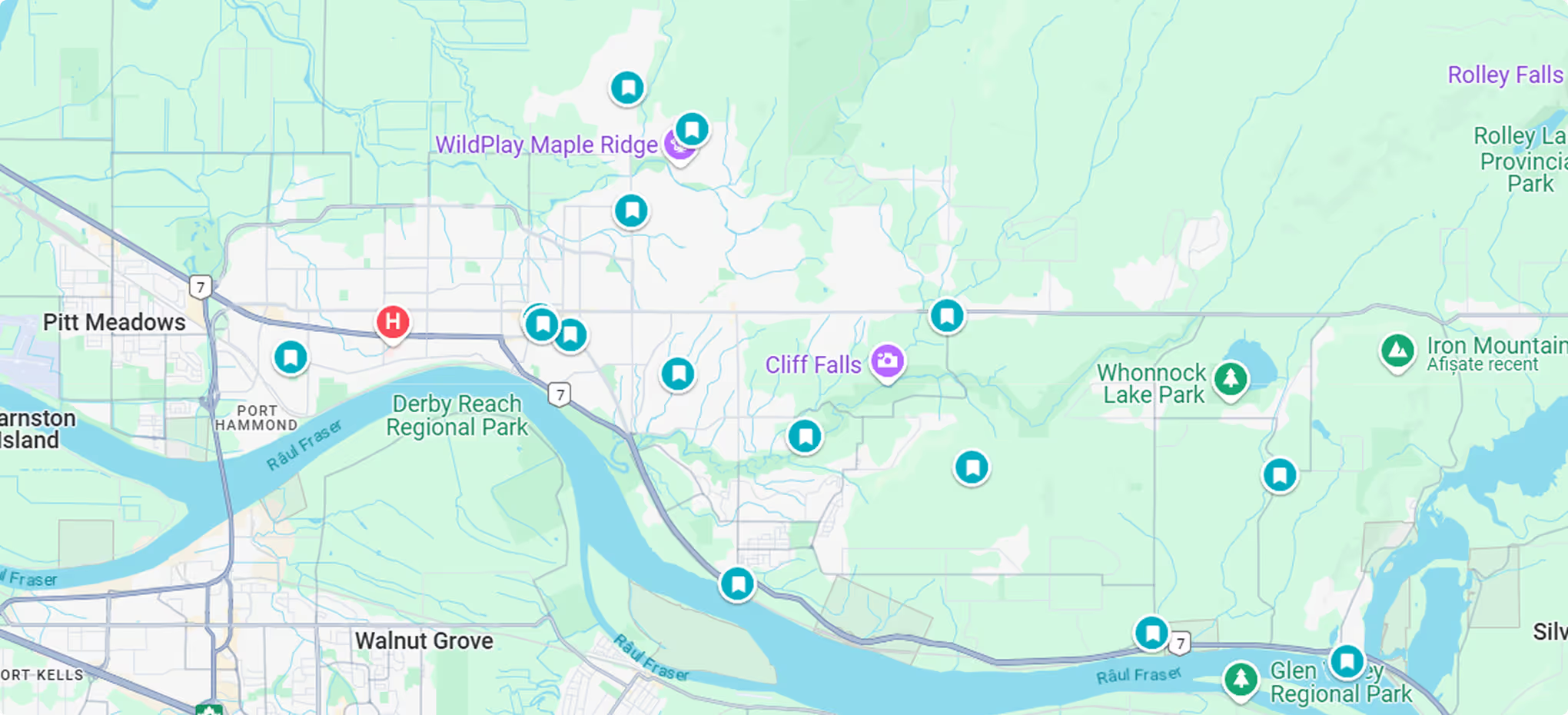
Neighbourhoods in the Fraser Valley