UV lights Installations in South Poplar, BC
When indoor air quality declines due to mold, allergens, or aging ventilation systems, Rep-Air Heating and Cooling offers expert UV light installations in South Poplar, BC designed to disinfect air and HVAC components effectively. Professional installation ensures safe placement, proper electrical setup, and maximum germicidal efficiency to protect your home or business. Our licensed technicians bring proven expertise in HVAC optimization and UV-C technology, guaranteeing accurate installation and lasting results the first time. Schedule your UV light assessment with us and experience cleaner, healthier air.

UV lights Installations in South Poplar, BC
UV lights installations in South Poplar, BC provide targeted indoor air and surface disinfection that reduces airborne pathogens, limits microbial growth on HVAC components, and helps maintain healthier indoor environments in homes, offices, and health facilities. For South Poplar residents and building managers dealing with damp winters, seasonal wildfire smoke, and aging heating and ventilation systems, properly specified and installed UV systems are an effective part of a layered infection control and indoor air quality strategy.
Why UV disinfection matters in South Poplar, BC
- South Poplar’s cool, humid climate encourages mold and bacterial growth on air handler coils and in ducts; in-duct UV reduces coil biofouling and improves heat-exchange efficiency.
- Wildfire smoke in summer months raises concern about particulate-associated microbes and odors; UV does not remove smoke particles but can limit microbial growth on surfaces and in HVAC systems after smoke events.
- Older homes and mixed-use buildings with limited ventilation benefit from upper-room UV and surface systems to reduce transmission risk in shared spaces.
Types of UV systems and common applications
- In-duct UV-C
- Mounted inside HVAC ducts near the coil or in the return to disinfect air and prevent coil contamination.
- Best for whole-building treatment tied to the mechanical system.
- Typical applications: single-family homes with forced air, multi-unit buildings, commercial HVAC.
- Upper-room UV
- Ceiling-mounted fixtures that create a disinfection zone above occupants; safe when properly designed to avoid direct exposure.
- Ideal for classrooms, waiting rooms, clinics, and assembly areas.
- Surface-mounted and portable UV
- Units designed for room surface disinfection during unoccupied periods or for targeted spot treatment.
- Useful in healthcare settings, janitorial cycles, and targeted cleaning of high-touch areas.
Consultation and site assessment
A professional assessment in South Poplar includes:
- Mapping HVAC layout, duct access, and coil locations.
- Measuring airflow rates, duct velocities, and static pressure to determine in-duct lamp placement and count.
- Recording room volumes, ceiling heights, and occupancy patterns for upper-room sizing.
- Identifying shadowing, fixtures, and materials that affect UV exposure for surface systems.
- Reviewing electrical capacity, panel access, and local code requirements.
This site-specific information drives accurate system selection and prevents under- or over-sizing.
System selection and sizing - what matters
- Required UV dose: Selection is based on the level of microbial reduction desired; professionals estimate dose by combining irradiance and air exposure time.
- Duct velocity and exposure time: Faster air means shorter exposure; more lamps or optimized placement may be necessary.
- Ceiling height and mixing: Upper-room systems require sufficient ceiling height and good air mixing to transport microbes into the irradiated zone.
- Integration with existing HVAC: In-duct units should avoid creating obstructions, and placements near coils maximize coil cleaning benefits.
Professional installation procedures
- Installers follow a pre-approved layout based on the assessment and manufacturer instructions.
- Electrical work conforms to local electrical code and uses rated ballasts and wiring.
- In-duct systems are sealed and mounted to minimize airflow disruption; access panels are provided for service.
- Upper-room fixtures are positioned and shielded to prevent direct occupant exposure; surface units are located to avoid shadowed zones.
- Commissioning includes lamp orientation, ballast checks, and initial irradiance verification.
Safety protocols and regulatory compliance
- UV-C can damage skin and eyes with direct exposure; installations are designed to eliminate or limit occupant exposure through shielding, mounting height, interlocks, and occupancy sensors where needed.
- Systems comply with Health Canada recommendations and applicable Canadian electrical and building codes; installers should reference CSA standards and local authorities for permitting requirements.
- Warning signage, service-mode locks, and documented safety procedures are part of every installation to protect occupants and maintenance staff.
Maintenance, lamp replacement, and service schedules
- Lamps lose germicidal output gradually; typical replacement intervals are every 9 to 12 months for mercury low-pressure UV-C lamps to maintain rated output.
- Quarterly cleaning of lamp sleeves and fixtures is recommended in dusty or humid environments common in South Poplar.
- Ballast and control checks are advised annually; replace ballasts per manufacturer guidance (commonly every 3 to 5 years).
- Establish a service agreement for scheduled maintenance, lamp replacement, and safety inspections to ensure ongoing performance.
Performance testing and verification
- Post-installation testing should verify UV irradiance at critical points using a calibrated UV meter.
- Airflow and pressure tests confirm the system did not negatively impact HVAC performance.
- Periodic microbiological surface or air sampling can demonstrate efficacy when required by building managers or healthcare guidelines.
- Documentation of test results and a maintenance log provide traceability for operations and compliance.
Warranty and service options
- Manufacturer warranties typically cover lamp and ballast defects for a specified period; installation warranties address workmanship.
- Consider service options that include regular lamp replacement, annual inspections, and performance verification to ensure continuous protection.
- Extended service agreements can help building managers budget for ongoing upkeep and ensure timely component replacement.
Common issues and troubleshooting
- Reduced performance due to dirty sleeves or fouled lamps; regular cleaning resolves the majority of these cases.
- Under-sizing relative to duct velocity or room occupancy; a follow-up assessment can justify adding lamps or adjusting placement.
- Electrical faults or ballast failure; routine testing catches these before effectiveness is lost.
- Improper mounting leading to occupant exposure; safety audits verify shielding and compliance.
Expected benefits and recommended maintenance approach
- Benefits include reduced microbial load on coils and surfaces, extended HVAC efficiency, potential reduction in odors and mold staining, and an added layer of disinfection in occupied spaces.
- For South Poplar buildings, pair UV installations with routine HVAC filtration, ventilation checks, and humidity control for a comprehensive indoor air quality program.
- Recommended maintenance: clean quarterly, replace lamps annually, perform annual irradiance verification, and keep a documented service log.
Properly designed and professionally installed UV lights in South Poplar, BC address local environmental challenges and building characteristics while delivering measurable improvements in indoor hygiene and HVAC performance. Regular maintenance, safety protocols, and performance verification keep systems working safely and effectively over their service life.
hear what our satisfied clients have to say
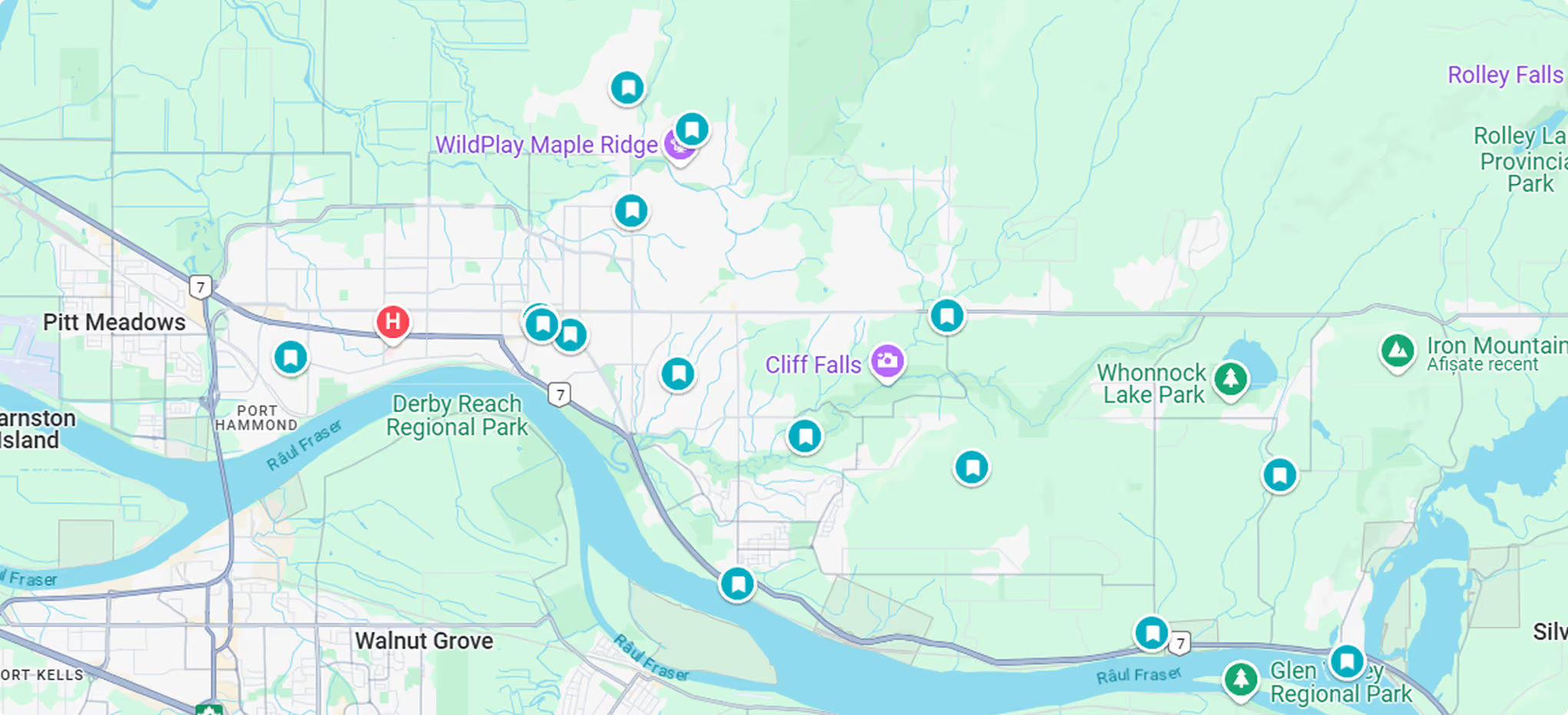
Neighbourhoods in the Fraser Valley