Air Conditioning in Cottonwood, BC
Is Your Air Conditioner Failing During a Heatwave?
When your air conditioner quits during a BC heatwave, every minute without repair feels unbearable, especially when indoor temperatures begin to match the scorching conditions outside. Residents in Cottonwood know that reliable cooling is essential when summer temperatures spike, and a malfunctioning system requires immediate professional attention to restore safety and comfort. Contact our team at [Phone Number] for dispatch or apply for financing to secure your system replacement immediately.
- Same-day service for urgent AC repairs to restore a safe indoor environment.
- Licensed professionals ensuring safety, efficiency, and adherence to local codes.
- Comprehensive cost assessments to help with budget-preparedness and decision-making.
Experience peace of mind with fully insured services and flexible financing options designed to get your system running without financial strain.

Immediate Help for Faulty Air Conditioning
A broken air conditioning system is more than an inconvenience; in the height of summer, it becomes a safety concern for homes with elderly family members, young children, or pets. When a system fails, the internal temperature of a home can rise rapidly, creating a stifling environment that makes sleep and daily activities impossible. The urgency to repair these systems is driven by the need to protect the home’s occupants and the property itself from humidity damage.
Rep-Air Heating and Cooling prioritizes urgent service calls to address these failures before they escalate. Modern air conditioning units are complex machines that rely on the precise coordination of electrical signals, refrigerant pressure, and airflow. When one component fails—be it a capacitor, a compressor, or a blower motor—the entire system can seize. Homeowners often notice warning signs before a total collapse, such as weak airflow, warm air coming from vents, or loud grinding noises. Addressing these signs immediately can often save the compressor, which is the heart of the system and the most expensive component to replace.
Today’s AC Repair Solutions: What to Expect
When a technician arrives at your property to address a cooling issue, the objective is to perform a comprehensive diagnostic that isolates the root cause of the failure. This process goes beyond simply swapping out parts; it involves a systematic analysis of the cooling cycle to ensure that the repair provides a long-term solution rather than a temporary patch.
- Detailed System Diagnostics: The service begins with checking thermostat communication, ensuring the interface is correctly signaling the unit to cool. Technicians then move to the outdoor condenser unit to inspect electrical connections, measure voltage and amperage, and test the capacitor’s ability to store and release energy.
- Refrigerant Leak Detection: Low refrigerant levels are a common cause of frozen evaporator coils and lack of cooling. A simple recharge is rarely the solution; the leak must be located and sealed. Technicians use electronic sniffers or UV dye to pinpoint the exact location of the leak within the copper line set.
- Airflow Analysis: Proper static pressure is critical for efficiency. The technician checks the filter, the blower motor, and the ductwork to ensure that air is moving freely over the evaporator coil. Restricted airflow is a leading cause of compressor burnout.
- Component Testing: Safety switches, contactors, and relays are tested for continuity and wear. Pitted contactors can cause voltage irregularities that damage the compressor, so these small parts are inspected rigorously.
- Condensate Drain Cleaning: A clogged drain line can trigger a safety float switch that shuts down the entire system to prevent water damage. Clearing these lines is a standard part of restoring functionality.
Understanding Our AC Repair Process
The repair process is designed to be transparent and efficient, minimizing disruption to your day while ensuring you are fully informed about the condition of your equipment. From the moment the service vehicle arrives, the focus is on technical precision and clear communication.
- Arrival and Site Protection: The technician arrives equipped with the necessary tools and common replacement parts. Shoe covers and drop cloths are used to protect flooring and maintain the cleanliness of the workspace.
- Initial Assessment and troubleshooting: The technician listens to the system and the homeowner’s description of the problem. Using specialized gauges and multimeters, they gather data on system pressures and electrical consumption.
- Presentation of Findings: Once the issue is identified, the technician explains the failure in plain language. You are presented with a clear explanation of what broke, why it broke, and if any underlying issues contributed to the failure.
- Upfront Quoting: Before any repair work begins, you receive a flat-rate quote. This eliminates surprise billing and allows you to approve the specific scope of work.
- Execution of Repairs: Upon approval, the technician performs the repair. This may involve brazing copper lines, replacing electrical components, or adjusting refrigerant charges to manufacturer specifications.
- System Validation and Testing: After the repair, the system is run through a full cycle. The technician measures the temperature split—the difference in temperature between the supply and return air—to verify that the unit is cooling effectively.
- Final Walkthrough: The technician reviews the work performed with you, offers maintenance tips to prevent future issues, and ensures the thermostat is set to your preferred schedule.
Deciding Between AC Repair and Replacement
One of the most difficult decisions homeowners face is whether to repair an aging unit or invest in a modern replacement. While repairs are often the quicker solution, they are not always the most improved financial decision in the long run. There are objective criteria used to determine when a system has reached the end of its viable service life.
- The 50% Rule: A general industry standard suggests that if the cost of the repair approaches 50% of the value of the system, replacement is the wiser choice. This is particularly true for major failures like a blown compressor or a leaking evaporator coil out of warranty.
- System Age: Most air conditioners have a lifespan of 10 to 15 years. If a unit in the Cottonwood area is over 12 years old and requires a significant repair, the likelihood of another component failing soon is high. Investing in a new unit resets the warranty clock.
- Refrigerant Type: Older systems utilize R-22 (Freon), a refrigerant that has been phased out due to environmental regulations. R-22 is becoming prohibitively expensive and difficult to source. If an R-22 system develops a leak, replacement is almost always the only viable option. Modern systems use R-410A or newer, eco-friendly alternatives.
- Energy Efficiency and SEER Ratings: Older units often have a Seasonal Energy Efficiency Ratio (SEER) of 10 or less. Modern units start at 13 or 14 SEER and can go much higher. Replacing a 10 SEER unit with a 16 SEER unit can result in significant energy savings, effectively subsidizing the cost of the new system over time through lower utility bills.
- Frequency of Breakdowns: If a system has required multiple service calls in the past two years, it is signaling that it is nearing the end of its life. Continuing to pour money into a "lemon" is rarely cost-effective.
Navigating Local Regulations and Seasonal Advice in BC
Operating air conditioning equipment in British Columbia requires an understanding of local climate patterns and regulations. The region’s specific environmental factors influence how systems should be sized, installed, and maintained.
- Permitting and Code Compliance: In many municipalities, major HVAC installations and modifications require electrical and mechanical permits. This ensures that the installation meets the BC Safety Standards Act. Licensed contractors handle the acquisition of these permits and schedule the necessary municipal inspections to close them out.
- Heat Pump Rebates and Incentives: BC is aggressive in promoting energy efficiency. Homeowners looking to replace traditional AC units should investigate provincial rebate programs, such as CleanBC, which often incentivize switching to high-efficiency heat pumps that provide both heating and cooling. These rebates can significantly offset the initial capital investment.
- Sizing for Heat Domes: The phenomenon of "heat domes" has changed how cooling loads are calculated. Systems must be sized not just for the average summer day, but for the peak heat events that are becoming more frequent. An undersized unit will run continuously without reaching the set point, leading to high bills and premature failure.
- Noise Bylaws: Municipalities often have noise control bylaws that dictate the maximum decibel level an outdoor unit can generate at the property line. Selecting a unit with a low decibel rating and positioning it correctly is crucial to avoid bylaw infractions and disputes with neighbors.
- Electrical Infrastructure: Many older homes in the region may require an electrical panel upgrade to handle the load of a modern central air conditioner. A load calculation helps determine if the existing 100-amp or 200-amp service is sufficient.
Why Technical Expertise Matters for Long-Term Comfort
The longevity and efficiency of an air conditioning system are almost entirely dependent on the quality of the installation and the precision of the maintenance it receives. While the brand of the equipment matters, the skill of the technician is the variable that determines performance. Rep-Air Heating and Cooling technicians undergo rigorous training to stay current with the evolving HVAC landscape.
- Correct Sizing and Load Calculation: Rules of thumb based solely on square footage are inaccurate. Professional service involves performing Manual J load calculations that account for insulation levels, window orientation, ceiling height, and local climate data. This ensures the unit is neither too large (causing short cycling and humidity issues) nor too small (inability to cool).
- Ductwork Integrity: Even the most efficient AC unit will underperform if connected to leaky or undersized ductwork. Professionals assess the air distribution system to identify leaks, kinks, or disconnects that could compromise system performance.
- Proper Refrigerant Charging: An incorrect refrigerant charge can reduce efficiency by up to 20% and damage the compressor. Technicians use subcooling and superheat methods to charge systems to the exact manufacturer specifications, ensuring optimal heat transfer.
- Electrical Safety: AC units draw significant power. Loose connections or undersized wiring can create fire hazards. Certified technicians ensure all electrical work meets the Canadian Electrical Code, using torque screwdrivers to secure connections and verifying proper grounding.
- Manufacturer Warranty Protection: Manufacturers often require proof of professional installation and annual maintenance to honor warranty claims. Using unlicensed labor can void these warranties, leaving the homeowner liable for the full cost of future parts replacements.
Secure Your Comfort and System Efficiency
Ignoring the signs of a struggling air conditioner can lead to total system failure during the hottest days of the year. Whether you require an emergency repair to salvage a failing compressor or a consultation to replace an outdated, inefficient unit, taking decisive action is the only way to guarantee indoor comfort. Professional intervention ensures that your cooling system operates safely, efficiently, and reliably, protecting your home investment and your family’s well-being.
Don't wait for the next heatwave to test the limits of your equipment. Schedule your comprehensive AC diagnostic or replacement consultation today to ensure your home remains cool and compliant with all local energy standards.
hear what our satisfied clients have to say
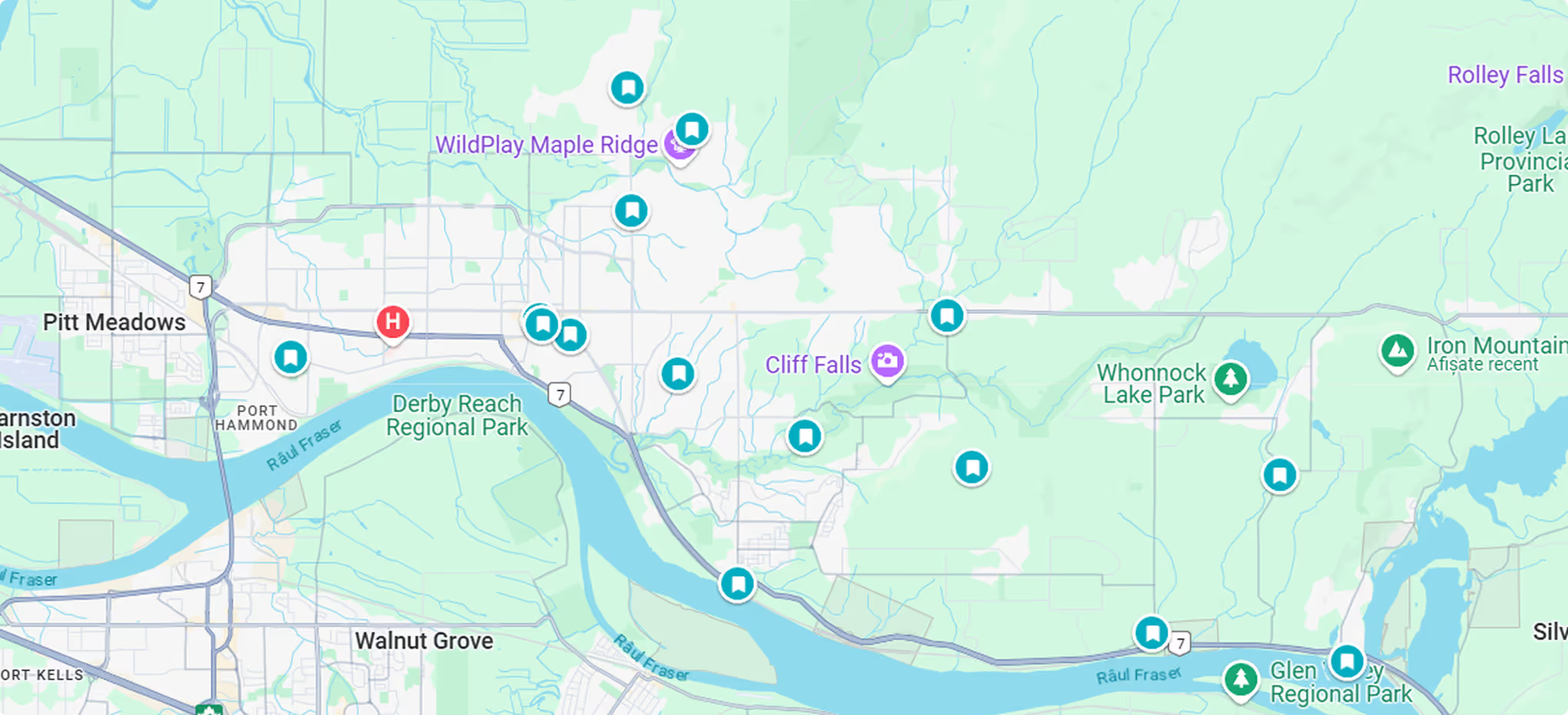
Neighbourhoods in the Fraser Valley