Air Conditioning in Sumas Prairie, BC
When your AC quits on you, either in the clammy chill of winter or the soaring summer heat, immediate relief is paramount. You need fast, reliable repairs without the wait in Sumas Prairie and the surrounding region. Contact us immediately to schedule your diagnostic visit or inquire about financing options.
- Reach out now—technicians available within the hour.
- Ensure your comfort with 24/7 emergency repair services.
- Enjoy peace of mind with a 1-year guarantee on all repair work.
Licensed and fully insured—covering all local permit requirements at no extra cost to you.
Immediate Air Conditioning Repair for Urgent Cooling and Heating Needs
When an air conditioning system fails in the distinct climate of British Columbia, it rarely happens at a convenient time. Homeowners often face a decision window that is incredibly short due to rapidly rising internal temperatures or the sudden onset of damp cold. The focus is on rapid diagnostics and immediate resolution. You do not need a sales pitch; you need a technician who understands the intricacies of thermodynamics and electrical systems to restore functionality immediately.
Our approach centers on identifying the root cause of the breakdown rather than just treating the symptom. A system that is blowing warm air might be suffering from a refrigerant leak, a frozen evaporator coil, or a failed compressor. Each of these requires a drastically different repair protocol. For instance, simply adding refrigerant to a leaking system is a temporary patch that violates environmental regulations and fails to solve the long-term efficiency problem. We locate the leak, repair the braze or connection, test the pressure, and then recharge the system to manufacturer specifications.
Residents in Sumas Prairie often encounter issues related to electrical components due to the fluctuation between wet, humid winters and dry, hot summers. This environmental stress can lead to corroded contacts, failed capacitors, or tripped breakers. If your system is making strange noises—such as grinding, squealing, or banging—it indicates a mechanical failure that requires immediate professional intervention to prevent permanent damage to the motor or fan blades. Delaying these repairs often converts a minor component replacement into a full system failure.
What to Expect: Today's AC Repair Process and Timing
You need clarity on what happens from the moment a service truck arrives at your property. The goal is to minimize downtime and ensure that your home returns to a comfortable temperature as quickly as possible. Most repairs fall into specific categories involving electrical failures, airflow restrictions, or refrigerant cycle issues. Because our vehicles are stocked with universal parts and common manufacturer-specific components, the majority of repairs are completed in a single visit.
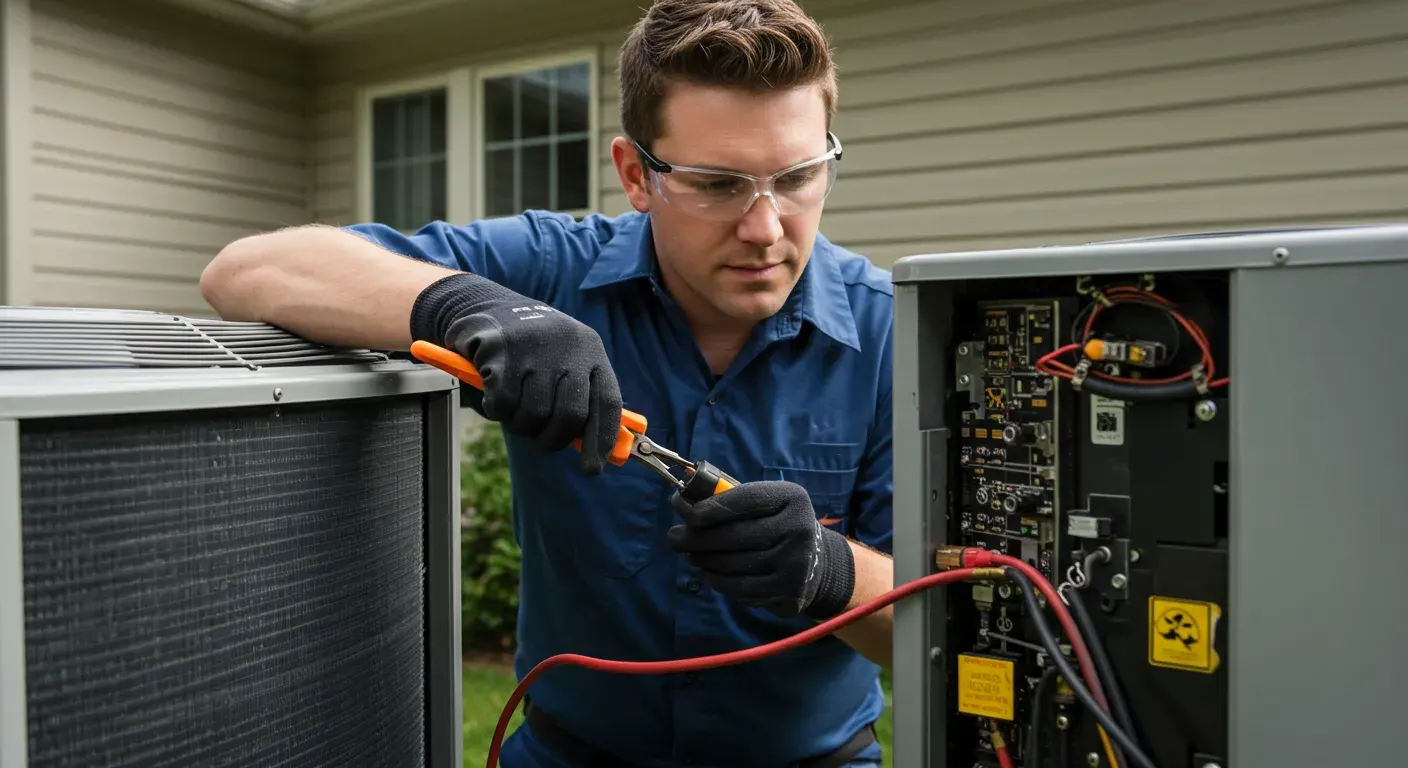
Upon arrival, the technician performs a systematic evaluation of the entire HVAC system. This is not a cursory glance; it is a multi-point inspection designed to isolate the failure.
- System Diagnostics: We utilize advanced metering tools to check voltage, amperage, and continuity across all electrical components. This ensures that the thermostat is communicating correctly with the control board and that the condenser unit is receiving the power it needs to start.
- Airflow Analysis: Technicians measure static pressure within the ductwork to ensure that the blower motor is moving the correct volume of air. Restricted airflow is a leading cause of frozen coils and compressor overheating.
- Refrigerant Assessment: Gauges are attached to the service ports to measure sub-cooling and superheat levels. These metrics tell us exactly how the refrigerant is changing state within the system, revealing issues with charge levels or metering devices.
Once the issue is identified, you receive a clear explanation of the failure and a direct quote for the repair. Work begins only upon your approval. The technician will then proceed with the necessary part replacements or adjustments. After the repair is complete, the system is not just turned on; it is stress-tested. We run the unit through a full cycle to ensure that the temperature drop across the coil is within range and that no secondary issues are present.
Understanding Your AC Repair: Steps to Cooling Comfort
The path to restoring your indoor climate involves a structured technical process. Understanding these steps helps you gauge the progress of the repair and ensures transparency regarding the work being performed on your property. We adhere to industry best practices to ensure safety and system longevity.
- First, Safety and Site Preparation: The technician isolates the electrical power to the unit at the disconnect box to ensure safe working conditions. The area around the outdoor condenser and indoor air handler is cleared to allow for unobstructed access to service panels.
- Next, Component Isolation: If a specific part, such as a dual-run capacitor or a contactor, is identified as faulty, it is carefully discharged and removed. For refrigerant-related repairs, we may need to pump down the system or recover the refrigerant into a sterile tank to protect the environment and prepare the lines for brazing.
- Then, Installation and Calibration: The new component is installed using OEM-grade parts. Wiring connections are tightened and inspected for signs of heat stress. If the repair involves the refrigerant circuit, a vacuum pump is used to evacuate moisture and non-condensables from the lines before recharging.
- Finally, Performance Verification: Power is restored, and the system is engaged. We monitor the startup amperage of the compressor and the fan motor. The technician checks the temperature differential between the return air and supply air to verify that the cooling capacity has been restored to factory standards.
This methodical process ensures that when the technician leaves, your system is reliable. Rep-Air Heating and Cooling prioritizes this level of technical detail because it directly correlates to the lifespan of your equipment and the efficiency of your energy usage.
Repair or Replace? A Quick Guide to Making Cost-Effective Decisions
One of the most critical decisions a homeowner faces is determining when a unit has reached the end of its viable service life. Pouring money into an aging system is often less economical than investing in modern, high-efficiency equipment — view current promotions. However, not every breakdown warrants a replacement. You need data to make this financial decision.
We utilize the "50% Rule" and age-based metrics to guide this conversation. If the cost of the repair approaches or exceeds 50% of the value of a new system, replacement is generally the wiser financial move. Additionally, if your equipment utilizes outdated R-22 refrigerant, which is phased out and incredibly expensive to source, major repairs involving the refrigerant circuit usually tip the scale toward replacement.
Consider the following factors when evaluating your current system:
- Age of the Unit: Air conditioners typically last between 10 and 15 years. If your unit is over 12 years old and requires a major component replacement (like a compressor or motor), the efficiency gains of a new unit will likely offset the cost over time.
- Frequency of Breakdowns: If you have required repairs more than twice in the last two years, the system is likely becoming unreliable. Cumulative repair costs quickly eclipse the price of a new installation.
- Energy Efficiency (SEER Ratings): Older units often operate at 10 SEER or lower. Modern units starts at 13-14 SEER and go much higher. Upgrading can result in significant reductions in monthly utility bills, paying for the installation over the life of the system.
- Comfort Consistency: If some rooms remain hot while others are freezing, or if the unit runs constantly without satisfying the thermostat, the system may be undersized or suffering from irreversible wear.
We provide you with the raw data—repair costs versus replacement costs and projected energy savings—so you can make the decision that fits your budget and long-term plans.
Local Guidelines and Seasonal Tips for Optimal AC Performance
Operating an air conditioning system in the Sumas Prairie region requires attention to specific environmental factors. The climate here involves wet, temperate winters and summers that can see sharp spikes in temperature. This oscillation creates specific challenges for HVAC hardware, particularly regarding moisture control and debris management.
The proximity to the Cascade Mountain Range and the Pacific Ocean means that humidity levels can remain high even when temperatures drop. This moisture can lead to biological growth on evaporator coils if the system is not draining properly. Furthermore, during the off-season, outdoor units are subjected to heavy rainfall. It is vital to ensure that the area surrounding the condenser is free from debris, leaves, and overgrowth that can trap moisture against the metal cabinet, leading to premature rust and corrosion.
- Permit and Code Compliance: In British Columbia, HVAC work often requires adherence to specific electrical and gas safety codes. Any modification to the electrical disconnect or significant alteration to the system requires a qualified professional who understands local municipal requirements. We handle these logistical details to ensure your system is compliant and safe.
- Seasonal Switch-Over: Before the first heat wave hits, it is crucial to check the condensate drain line. Over the winter, algae and sediment can form a blockage. When the AC kicks on for the first time, this blockage can cause water to back up and damage your property.
- Filter Maintenance: In our region, pollen and agricultural dust can clog filters rapidly during the late spring and summer. A clogged filter increases static pressure, forcing the blower motor to work harder and overheating the heat exchanger or compressor — sign up for our maintenance plan.
Why Choose Us? Certified Excellence in HVAC Services
Selecting a service provider is about trust and technical competence. You need to know that the technician entering your home is vetted, trained, and accountable. We employ only certified technicians who undergo rigorous training on the latest HVAC technologies and safety protocols. This ensures that whether you have a standard split system, a ductless mini-split, or a complex heat pump, the individual working on it has the specific knowledge required to fix it correctly.
We stand behind our workmanship with clear warranties. If a repair fails within the guaranteed period, we return to fix it at no cost to you. Our pricing structure is upfront and transparent; you will never face hidden fees or surprise charges after the work is completed. From the moment you call Rep-Air Heating and Cooling to the final system test, our focus is on professional, efficient service that respects your time and your property.
Don't let a broken AC disrupt your comfort any longer. Contact us today to schedule your repair or maintenance service.
Restore Comfort Fast with Rep-Air Heating and Cooling in Sumas Prairie
When your AC stops working—whether during the damp winter chill or a scorching summer afternoon—you need fast, professional help that restores comfort without delay. At Rep-Air Heating and Cooling, we deliver rapid-response service, precise diagnostics, and long-lasting repairs tailored to the unique climate demands of Sumas Prairie. From emergency cooling failures to sudden electrical breakdowns, our certified technicians arrive prepared, equipped, and ready to fix the issue on the first visit whenever possible. Don’t let a malfunctioning air conditioner disrupt your comfort or your routine—contact us today to schedule your diagnostic appointment, request a repair, or explore flexible financing options with Rep-Air Heating and Cooling. Your comfort is our priority, and we’re here to restore it quickly and reliably.
hear what our satisfied clients have to say
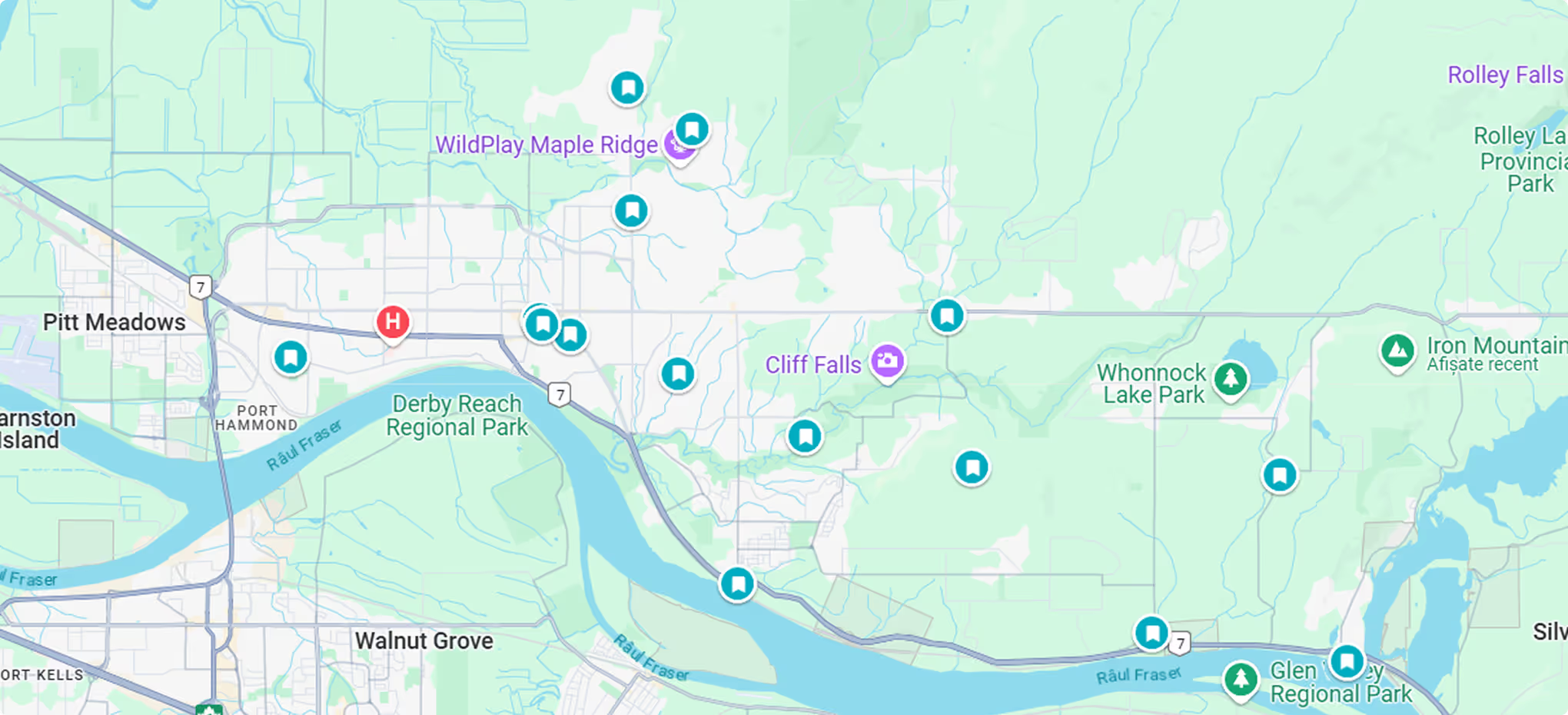
Neighbourhoods in the Fraser Valley