Why Your Breaker Keeps Tripping in Mission, BC: Unmasking the Culprit & Finding Solutions
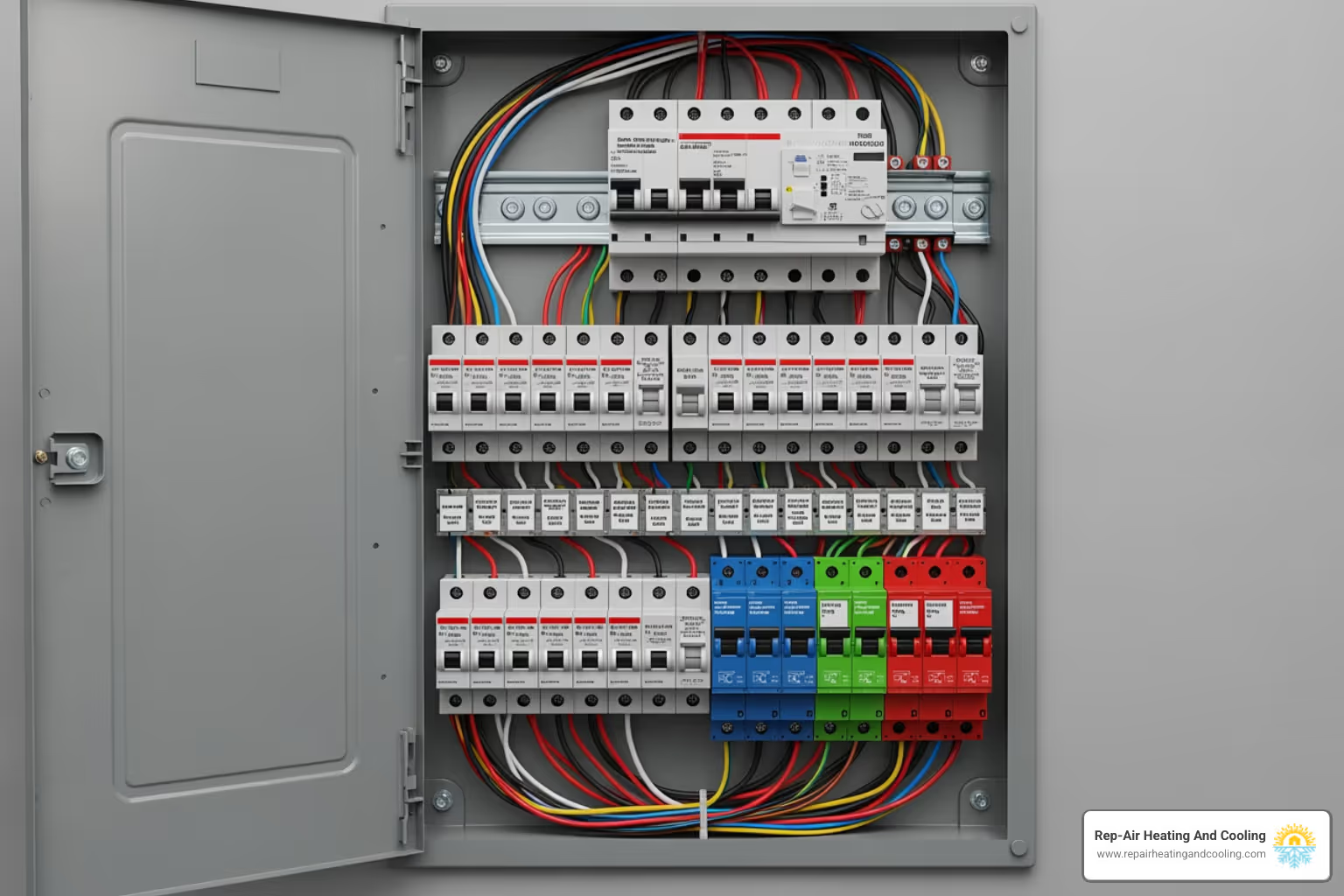
Why Your Breaker Keeps Tripping: A Mission, BC Homeowner's Safety Concern
A breaker that keeps tripping in Mission, BC is more than an inconvenience; it's a critical warning from your home's electrical system. A repeatedly tripping breaker signals a safety issue that needs attention. Circuit breakers are designed to protect your home from electrical fires and shocks by cutting power when a fault is detected. Understanding the cause is key to protecting your family and property.
Quick Answer: The three main reasons your breaker keeps tripping are:
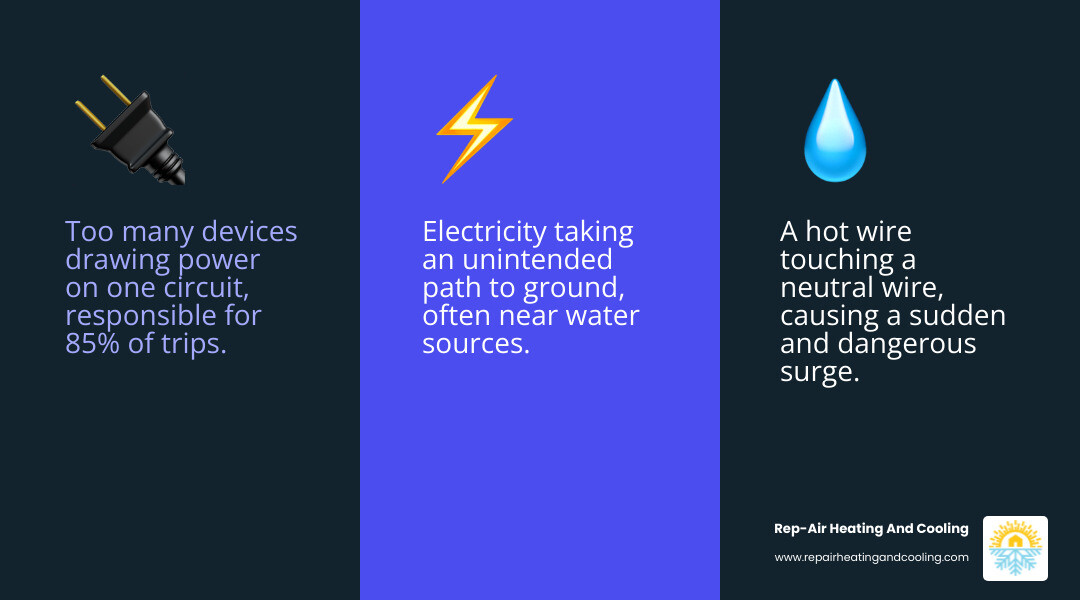
1. Circuit Overload - Too many devices drawing power on one circuit (responsible for 85% of trips)
2. Short Circuit - A hot wire touching a neutral wire, causing a sudden surge
3. Ground Fault - Electricity taking an unintended path to ground, often near water sources
Need help diagnosing electrical issues in your home? Learn more about common electrical problems and solutions or contact our certified electricians for a professional assessment.
This guide covers each cause, how to safely reset your breaker, how to spot serious warning signs, and when to call a professional. Knowing the difference between a simple fix and a dangerous fault is crucial for your safety.
The "Big Three": Uncovering Why Your Breaker Trips
Your circuit breaker is an essential safety device, always on duty to protect your home. That click you hear in the dark is your home's safety system doing its job.
Circuit breakers monitor the flow of electrical current through your wiring. They are sensitive gatekeepers that know the exact safe limit for each circuit. The moment they detect an abnormality—too much power, a dangerous surge, or electricity going where it shouldn't—they trip to cut the power.
This circuit protection is vital for preventing electrical fires, stopping wires from overheating within your walls, and protecting your family from electrical hazards. When your breaker keeps tripping, Mission, BC residents should view it as a clear warning sign.
Fortunately, nearly every tripped breaker can be traced to one of three issues. Understanding these "Big Three"—circuit overloads, short circuits, and ground faults—will help you determine if you have a simple fix or a problem that requires a professional electrician.
1. Circuit Overload: The Most Common Culprit
A circuit overload occurs when too many devices draw power from a single circuit, demanding more current than the wiring can safely handle. This causes the wires to heat up, creating a fire risk. Your circuit breaker trips to cut the power before this happens.
In fact, circuit overload accounts for about 85% of all tripped breakers. If your breaker keeps tripping in Mission, BC, there's a high probability that one circuit is simply being asked to do too much.
Signs of an overload include:
• Flickering or dimming lights when a large appliance turns on.
• Warm outlets or switch plates.
• A faint buzzing sound from outlets or your electrical panel.
High-draw appliances are the usual suspects. Space heaters are a primary offender, often using most of a standard circuit's capacity on their own. In the kitchen, microwaves, toasters, and coffee makers are all power-hungry. Other common culprits include hair dryers, vacuum cleaners, and window air conditioners.
If your breaker trips when you use certain appliances together, you've likely found an overload. The solution is to spread out their use or plug them into outlets on different circuits.
2. Short Circuits: A Sudden and Dangerous Fault
A short circuit is a dangerous electrical fault where a hot wire carrying current directly touches a neutral wire. This creates a path with almost no resistance, causing a massive, instantaneous surge of electricity that your wiring cannot handle.
Your circuit breaker is designed to detect this sudden spike and trip immediately, preventing the wires from overheating and causing a fire.
What causes short circuits in Mission, BC homes? The most common causes are:
• Damaged wiring: Insulation can crack, fray, or be damaged by pests over time, exposing the wires.
• Faulty appliances: Internal wiring problems within an appliance can cause a short.
• Loose connections: Wires in outlets, switches, or the panel can become loose and make contact.
Warning signs of a short circuit are typically more dramatic than an overload. If your breaker keeps tripping in Mission, BC the instant you plug something in or flip a switch, a short is likely. Other signs include a burning smell from an outlet or appliance, or a popping sound and a brief flash of light.
If you suspect a short circuit, do not reset the breaker. It's an electrical emergency that requires immediate attention from a professional electrician.
3. Ground Faults: A Shocking Hazard
A ground fault occurs when a "hot" wire contacts a grounded object, like a metal electrical box, a ground wire, or a water pipe. This creates an unintended and dangerous path for electricity, posing a serious risk of electrical shock, especially if a person becomes part of that path.
How does a ground fault affect circuit breakers in Mission, BC?
The risk of a ground fault is highest in wet areas like bathrooms, kitchens, garages, and outdoor spaces, as water is an excellent conductor of electricity. When an appliance or wiring comes into contact with water, it can create a path for electricity to flow to the ground.
Your circuit breaker will trip to cut power when it detects this current imbalance. For added protection, modern building codes require GFCI outlets (Ground Fault Circuit Interrupters) in these wet locations.
GFCI outlets are incredibly sensitive devices that monitor for tiny differences in current. If they detect a leak to the ground—as small as 4-6 milliamperes—they trip in less than a tenth of a second. This rapid response can be the difference between a minor jolt and a fatal shock. You can identify these outlets by the "Test" and "Reset" buttons located on their face.
If your breaker keeps tripping in Mission, BC, especially near a water source, treat it as a serious safety concern. Do not use the affected outlet or appliance until a qualified electrician has inspected it.
A Homeowner's Guide to Safely Resetting and Troubleshooting
When a breaker trips, it's important to proceed with caution. The breaker tripped for a reason, and a quick safety check should always be your first step.
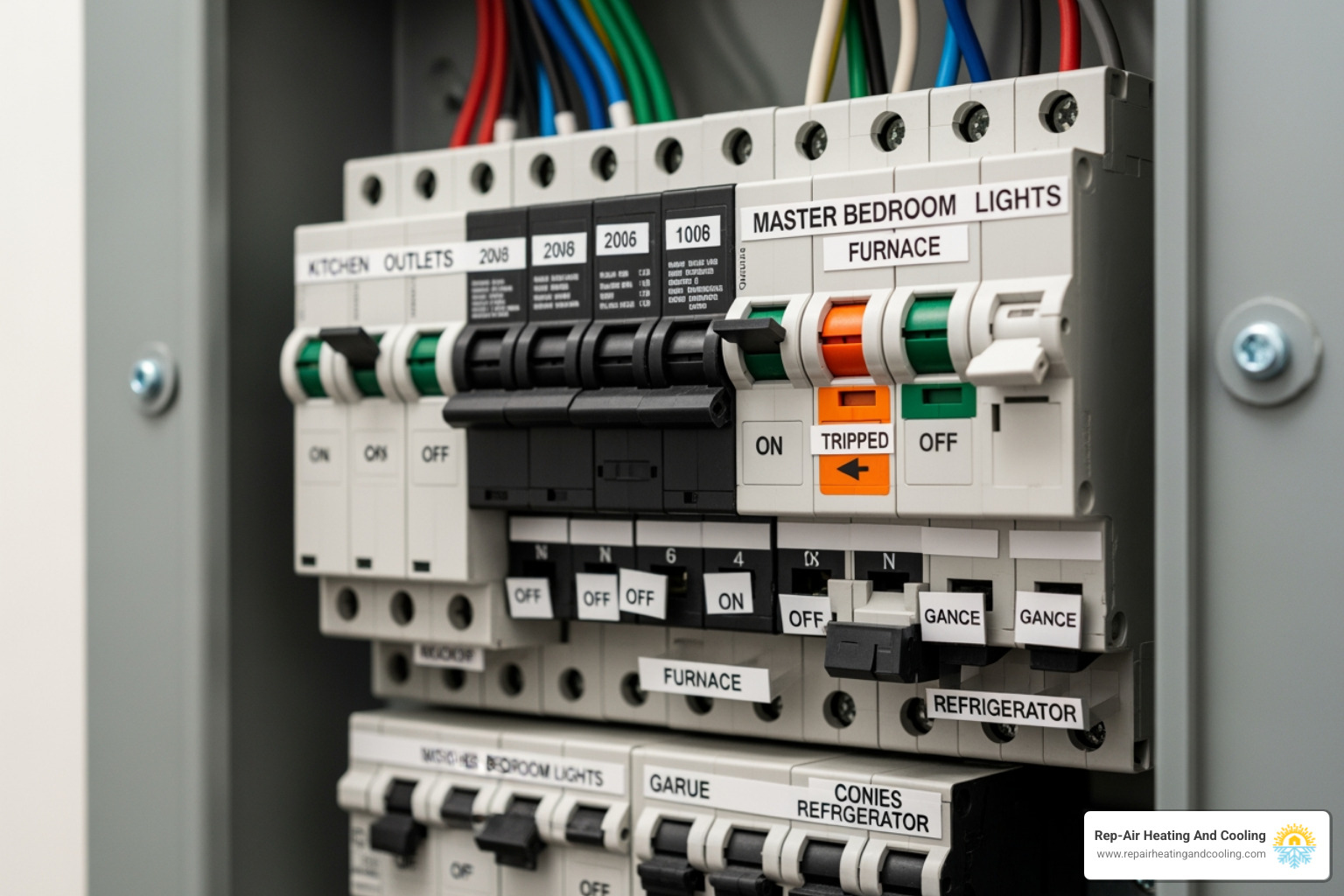
How to Safely Reset a Tripped Circuit Breaker
First, check for any warning signs like a burning smell, buzzing sounds, or scorch marks near the panel or outlets. If you notice any of these red flags, stop immediately and call an electrician.
If everything seems normal, follow these steps:
1. Turn Off and Unplug: Switch off or unplug all devices and appliances on the affected circuit.
2. Locate the Breaker: Open your electrical panel (usually in a basement, garage, or utility room) and find the breaker that is in the "OFF" position or halfway between "ON" and "OFF".
3. Reset the Breaker: To properly reset it, you must first push the breaker switch firmly all the way to the "OFF" position. You should feel a click.
4. Turn it On: Flip the switch back to the "ON" position. Power should be restored.
5. Test the Circuit: Go back and turn on your devices one at a time to see if a specific appliance is causing the trip.
What to do if your breaker keeps tripping in Mission, BC after a reset
If a breaker trips again immediately after you reset it—even with nothing plugged in—you likely have a serious issue like a short circuit or ground fault. Stop trying to reset it. Forcing it on repeatedly creates a fire hazard.
If the breaker stays on for a while but trips after you plug in a specific device, that appliance is likely faulty. If it trips when you use several items at once, you're dealing with an overload. You can try to isolate the problem by unplugging everything from the circuit, resetting the breaker, and then plugging items back in one by one until it trips again.
However, know when to stop. If a breaker trips repeatedly, it's dangerous to keep resetting it. Each time, you risk overheating wires and increasing your fire risk. This is the time to call our team at Rep-Air Heating And Cooling for a safe, professional diagnosis.
When Your Breaker Keeps Tripping in Mission, BC: Red Flags and Serious Issues
Ignoring a repeatedly tripping breaker is like ignoring your car's check engine light. The risks are serious and real. The biggest concern is electrical fires. According to the National Fire Protection Association, electrical failures are a leading cause of home fires. Other risks include dangerous electrical shocks and damage to expensive electronics. If a breaker trips weekly, daily, or immediately after a reset, it's time to call a professional.
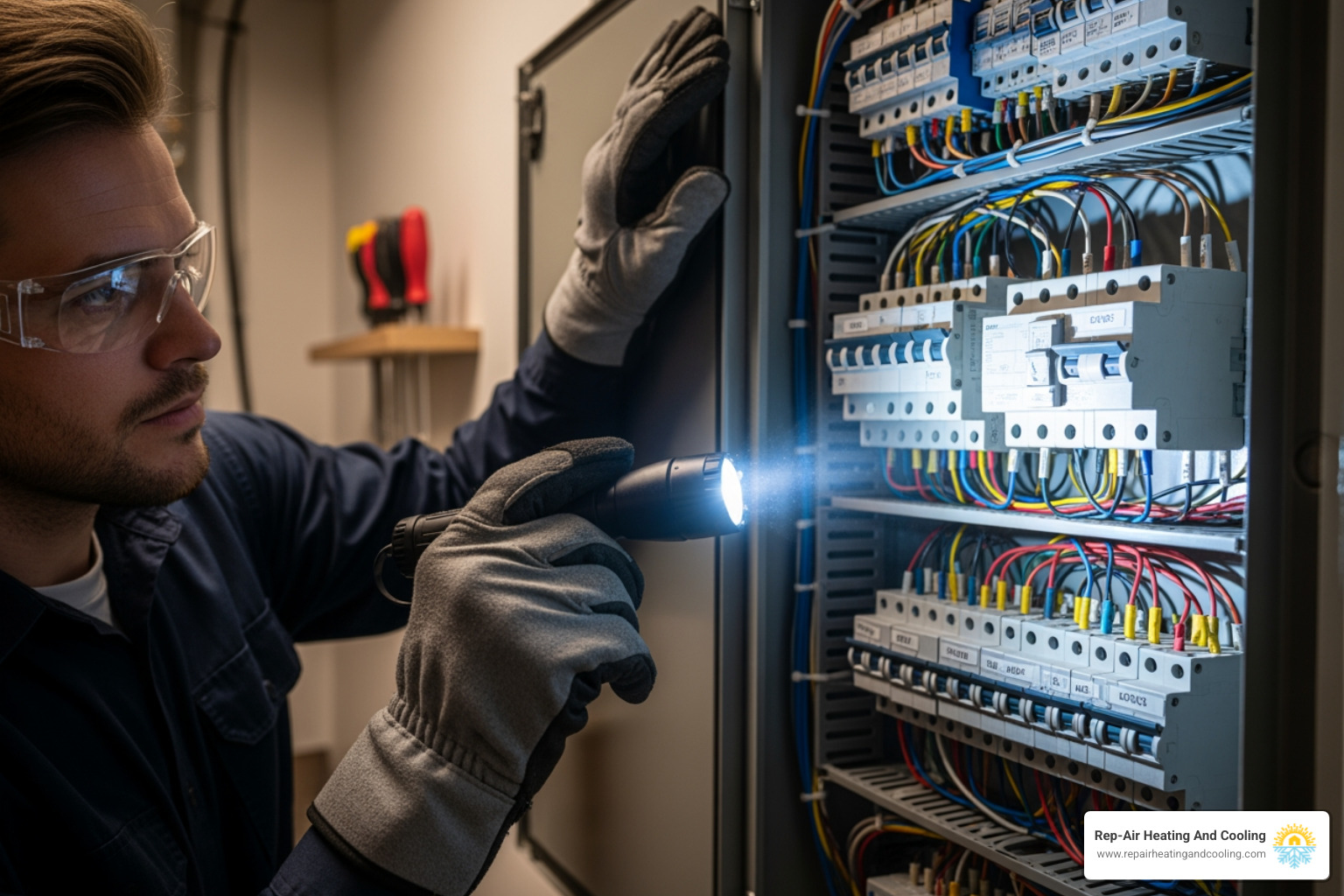
Serious warning signs beyond a simple breaker keeps tripping in Mission, BC
Some electrical problems are emergencies. If you notice any of the following, call an electrician right away:
• Burning Smell: A plastic or rubber burning odor from outlets or the panel indicates overheating wires.
• Strange Sounds: Loud buzzing, crackling, or sizzling from the panel or outlets suggests loose connections or dangerous arcing.
• Scorch Marks: Discoloration or charring around outlets or on the panel is evidence of a fire hazard.
• Hot Panel: If the panel or breakers are warm or hot to the touch, it signals a dangerous overload or failing component.
• Breaker Won't Reset: If a breaker trips instantly or won't lock in the "ON" position, there's a persistent fault.
• Mild Shocks: Any shock from an appliance or outlet indicates a dangerous wiring or ground fault issue.
Is Your Electrical Panel Outdated?
Many older homes in Mission, BC have electrical panels that can't handle modern demands. Signs your panel may be outdated include:
• Frequent breaker trips even without obvious overloads.
• Widespread flickering lights throughout the home.
• A lack of outlets, leading to overuse of power strips.
• The presence of an old fuse box instead of breakers.
• The panel is 25-40 years old, which is the typical lifespan of a circuit breaker.
An upgrade may be necessary if you're adding major appliances like a hot tub, central AC, or an EV charger. A panel upgrade is a crucial investment in your home's safety and functionality. For a professional assessment, explore our Electrical Services.
Proactive Solutions: Preventing Future Trips and Ensuring Safety
Dealing with a breaker that keeps tripping in your Mission, BC home is frustrating, but most issues can be prevented with a proactive approach to your home's electrical health. Just like a car, your electrical system needs regular maintenance to run smoothly and safely.
Here are some tips to prevent future trips:
• Manage Your Electrical Load: Avoid running multiple high-draw appliances (like a microwave and toaster) on the same circuit simultaneously.
• Unplug Devices: Many electronics draw "phantom" power even when off. Unplugging them can reduce the overall load on a circuit.
• Inspect Cords and Outlets: Regularly check for frayed cords, loose outlets, or signs of discoloration. Replace any damaged components promptly.
• Use Surge Protectors Wisely: These protect electronics from spikes but do not prevent circuit overloads. Plugging too many devices into one can make an overload more likely.
• Schedule Regular Maintenance: An annual inspection by a qualified electrician can identify potential problems before they become dangerous failures.
Common Appliance Culprits and Dedicated Circuits
Certain appliances are common culprits due to their high power needs. Air conditioners, furnaces (especially electric ones), microwaves, and hair dryers can easily overload a shared circuit. For troubleshooting specific AC issues, see our guides on AC Breaker Keeps Tripping and AC Circuit Breaker Issues.
The best solution for these major appliances is a dedicated circuit, which provides power to a single appliance from its own breaker. This prevents overloads, ensures the appliance gets stable power, and is often required by code for new installations like EV chargers or hot tubs.
The Value of a Professional Electrical Inspection
A professional electrical inspection is a health checkup for your home's electrical system. It improves safety by identifying hidden hazards like deteriorating wiring or loose connections, providing you with peace of mind. Early problem detection saves money by addressing issues before they escalate into emergencies. An electrician also ensures your system is up to current code compliance, which is crucial for safety. During an inspection, we test critical safety devices like GFCI and AFCI breakers, which protect against shock and fire but can fail over time. An inspection is a smart investment in your family's safety and your home's longevity. Learn more about our comprehensive Electrical Services.
Frequently Asked Questions about Tripping Breakers
We hear many of the same questions from Mission, BC homeowners about their tripping breakers. Here are answers to the most common ones.
Can I just install a bigger breaker to stop it from tripping?
Absolutely not. This is extremely dangerous. A circuit breaker is carefully sized to protect the wire inside your walls. Installing a larger breaker allows more current than the wire can safely handle, which can cause the wires to overheat and start a fire. The correct solution is to find and fix the underlying problem, not disable the safety device.
Why does my breaker trip when I'm not using much electricity?
This scenario often points to a more serious issue than a simple overload. If your breaker keeps tripping in Mission, BC with little to no load, it could be due to a hidden short circuit in the wiring, a ground fault where electricity is leaking, a faulty appliance with an internal short, or the breaker itself may be old and failing. These situations require professional diagnosis to ensure your home's safety.
How often is it "normal" for a circuit breaker to trip?
In a properly functioning electrical system, a breaker should almost never trip. A trip once or twice a year might be a fluke, but anything more frequent—such as monthly or weekly—is a clear sign of a problem that needs attention. Think of it as a warning light on your car's dashboard. If it keeps coming on, the underlying issue needs to be addressed by a professional to prevent a more serious failure.
Conclusion: Ensure Your Mission Home is Safe and Powered
When your breaker keeps tripping in Mission, BC, it's your home's safety system working exactly as designed. It's a warning about a potential overload, a dangerous short circuit, or a hazardous ground fault. You now know the signs to watch for, from flickering lights to more serious red flags like burning smells, and how to safely reset a breaker. Most importantly, you know that repeated trips are a problem to be addressed, not ignored.
Ignoring these warnings can lead to serious hazards. At Rep-Air Heating And Cooling, we know that electrical failures are a leading cause of home fires. Taking a proactive approach through regular inspections and addressing issues promptly is key to your family's safety. If you're experiencing persistent trips, see signs of an outdated panel, or feel uncertain about an electrical issue, it's time to call a professional.
Our certified electricians are ready to help. Contact us for expert electrical services in Mission, BC to ensure your home is safely powered and your family is protected. Don't wait for a small issue to become a major problem—reach out today.
hear what our satisfied clients have to say
Neighbourhoods in the Fraser Valley