Everything You Need to Know About Ductless vs Ducted AC
Your First Look at Ductless vs Ducted Options for First-Time AC Installation in the Lower Mainland
When weighing ductless vs ducted options for first time AC installation, the right choice depends on whether your home already has ductwork, how many rooms you need to cool, and your long-term comfort goals.
Quick comparison for first-time buyers:
• Existing ductwork needed? — Ductless Mini-Split: No — Ducted Central AC: Yes (or costly to add)
• Best for homes without ducts? — Ductless Mini-Split: Yes — Ducted Central AC: No
• Energy efficiency (SEER2) — Ductless Mini-Split: 18-42 — Ducted Central AC: 14-22
• Zoning capability — Ductless Mini-Split: Built-in, per room — Ducted Central AC: Requires add-ons
• Installation disruption — Ductless Mini-Split: Minimal — Ducted Central AC: Moderate to high
• Ideal home type — Ductless Mini-Split: Older homes, additions, multi-zone — Ducted Central AC: Homes with existing ducts
• Heats and cools? — Ductless Mini-Split: Yes (heat pump) — Ducted Central AC: Cooling only (typically)
For most Lower Mainland homeowners installing AC for the first time: especially in older homes without existing ductwork, a ductless mini-split system offers a faster, less invasive, and more energy-efficient path to home comfort. If your home already has well-maintained ductwork from a forced-air furnace, a ducted central AC system can be a straightforward and cost-effective fit.
Homes across Coquitlam, Maple Ridge, and throughout British Columbia vary widely in age, layout, and infrastructure. That means there's no single right answer, but understanding the key differences makes the decision much clearer.
This guide from Rep-Air Heating And Cooling breaks down everything you need to know, from efficiency ratings and installation requirements to noise levels and long-term maintenance, so you can make a confident, informed choice for your home.
Understanding the Core Differences for Your First-Time AC Installation
When you start looking into ductless vs ducted options for first time ac installation, it helps to think of them as two different ways to deliver "comfort juice" to your living space. Central air conditioning is the traditional heavyweight. It uses a large indoor air handler (usually tucked away in a closet or crawlspace) and a network of hidden ducts to push air through vents in every room. It relies on forced-air mechanics, meaning one powerful fan does all the heavy lifting for the entire house.
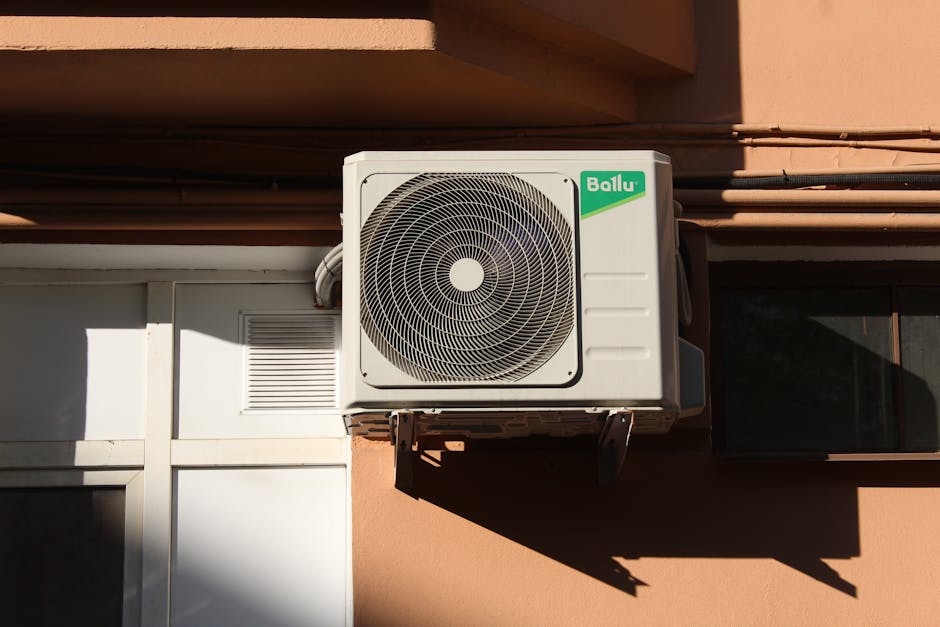
On the flip side, ductless mini-split technology is the "nimble" alternative. Instead of ducts, it uses small indoor air handlers mounted directly on your walls or recessed into the ceiling. These units are connected to an outdoor compressor by thin refrigerant lines and electrical wiring that only require a tiny three-inch hole in your exterior wall.
For many homeowners in areas like Babich, BC, the lack of invasive construction is a huge selling point. While a central system requires a thorough AC system check to ensure existing ducts aren't leaking, a ductless system bypasses that infrastructure entirely.
Comparing Energy Efficiency and Performance in British Columbia
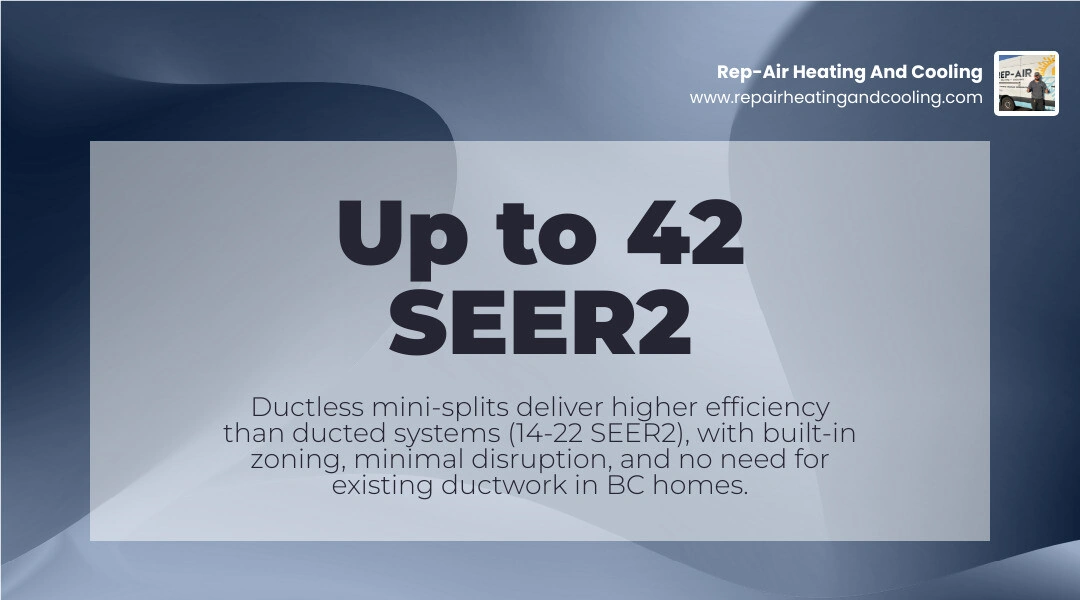
In May 2026, energy efficiency isn't just a buzzword; it's a standard we live by in British Columbia. When comparing these systems, we look closely at SEER2 (Seasonal Energy Efficiency Ratio) ratings. Ductless systems are the undisputed champions here, with ratings often reaching between 18 and 42. Traditional central AC typically ranges from 14 to 22.
Why the big gap? It mostly comes down to "duct loss." Research shows that ducted systems can lose 20% to 30% of their conditioned air through leaks, poor insulation, or radiation within the ductwork itself. Since ductless systems deliver air directly into the room, they avoid this waste entirely.
Furthermore, most modern ductless units utilize variable-speed inverter technology. Unlike older "all-or-nothing" systems that blast cold air and then shut off, an inverter compressor slows down or speeds up to maintain a steady temperature. This results in a high-quality AC service experience that uses up to 40% less energy than conventional systems. For a 2, 000-square-foot home, this efficiency can lead to significant annual savings on utility bills.
Ductless vs Ducted Options for First Time AC Installation: Which Fits Your Layout?
Your home's "bones" often dictate the best choice. Here is how we typically break it down for different layouts in the Lower Mainland:
• Heritage and Older Homes: If you live in a beautiful historic home in Langley or Mission that uses radiators or baseboard heat, you likely don't have ducts. Installing them would mean cutting into lath-and-plaster walls and losing closet space. Ductless is almost always the winner here.
• Open-Concept Homes: If your main floor is one giant room, a single high-capacity ductless head or a central system can work equally well.
• Multi-Story Layouts: We often see "hot upstairs syndrome" in central AC homes. A ductless multi-split allows you to place units in upstairs bedrooms to ensure they stay cool without freezing out the basement.
• Home Additions and Finished Basements: If you've added a sunroom or finished a basement, extending existing ductwork can be a nightmare. A standalone ductless unit provides a space-saving design that integrates aesthetically without overloading your main furnace.
Whether you are looking for an AC installation in Babich, BC or a retrofit in a heritage house, the layout is the primary "veto" factor in your decision.
Operational Benefits: Zoning, Noise Levels, and Maintenance
One of the most loved features of ductless systems is individual room control, also known as "zoning." If you like your bedroom at 18°C but want the living room at 22°C, ductless makes that easy. Each indoor head has its own thermostat. Central AC usually cools the whole house to one temperature, though some high-end systems can be zoned with expensive motorized dampers.
Noise is another major factor. Ductless indoor units are famous for their whisper-quiet operation, often running at decibel levels between 19 and 26 dB; that's quieter than a library! Central AC involves the sound of rushing air through vents and the mechanical "clunk" of the large air handler starting up.
Maintenance is a bit of a trade-off. For central systems, you'll need to change a single large filter every few months and schedule regular AC maintenance in Abbotsford. Ductless units require you to pop open the front panel and wash the small plastic filters every few weeks, but it's a simple DIY task. Long-term reliability is high for both, but ductless systems often last 15 to 20 years, potentially outliving central units by several years due to the reduced stress of inverter technology.
Frequently Asked Questions about Ductless vs Ducted Options for First Time AC Installation
How do ductless vs ducted options for first time ac installation impact indoor air quality?
Central AC systems generally offer more robust filtration because their powerful blowers can handle thick, high-MERV filters that trap tiny allergens and smoke particles. However, because they use ducts, they can also circulate dust and pet dander if the vents aren't cleaned every few years. Ductless systems provide "point-of-use" filtration. While the filters are smaller, they don't have dusty ducts to worry about. If you experience issues like an AC not blowing cold air, it's often a sign that filters are clogged, which directly impacts your air quality.
Which ductless vs ducted options for first time ac installation are best for BC climates?
In the Lower Mainland, we have relatively mild winters but increasingly hot summers. Most ductless systems are actually "heat pumps, " meaning they can provide highly efficient heating in the winter. For homes in Aberdeen, BC, a cold-climate heat pump can handle temperatures well below freezing, making it a year-round comfort solution. Central AC is typically a cooling-only add-on to a gas furnace.
Which system is quieter for a home office in Coquitlam, BC?
If you spend your day on Zoom calls, ductless is the way to go. The indoor units are specifically designed for low-decibel performance. Central AC registers can sometimes whistle or rattle, which is distracting during a quiet workday. For those in Hope, BC, choosing a system with sound-dampening technology ensures your home remains a peaceful sanctuary.
Conclusion
Choosing between ductless vs ducted options for first time ac installation doesn't have to be overwhelming. If your home has existing, healthy ductwork, a central AC system is a classic choice that offers "invisible" comfort. But if you're looking for maximum efficiency, room-by-room control, and a system that can both heat and cool without the need for major renovations, ductless technology is often the superior choice for the modern British Columbia home.
At Rep-Air Heating And Cooling, we treat our customers like family. Whether you need an AC repair in Mission or a brand-new installation in Maple Ridge, our team of experts is here to ensure you stay cool all summer long. We pride ourselves on customer service and helping you find the eco-friendly solution that fits your budget and your lifestyle.
Ready to upgrade your comfort? Request professional air conditioning services in British Columbia today and let us help you find the perfect fit for your home!
hear what our satisfied clients have to say
Neighbourhoods in the Fraser Valley