The Ultimate Guide to Hot Water Recirculating Pumps

Stop Waiting for Hot Water: What Every Lower Mainland Homeowner Should Know
A hot water recirculating pump is a device installed in your home's plumbing system that keeps hot water moving through your pipes so it arrives at your tap almost instantly — no more running the faucet and waiting.
Here's what you need to know at a glance:
• What it does: Circulates hot water through your pipes continuously or on demand, so hot water is ready when you turn on the tap
• How it helps: Eliminates the wait for hot water, reduces water waste, and can save up to 12,000–15,000 gallons of water per year
• Types available: Dedicated return line systems, under-sink crossover systems, on-demand, timer-based, or sensor-activated
• Who it's for: Homeowners with long wait times for hot water, especially in larger homes or homes with distant fixtures
• DIY or professional?: Some systems are DIY-friendly, but professional installation ensures proper sizing, safe setup, and code compliance
• Compatibility: Most systems work with traditional tank water heaters; tankless heater compatibility varies by model
If you live in the Lower Mainland — whether in Surrey, Burnaby, Coquitlam, or anywhere in between — you've likely experienced the frustration of standing at the sink waiting for the water to warm up. In larger homes with longer pipe runs, that wait can stretch to a minute or more. All that cold water running down the drain isn't just annoying — it's wasteful. With growing awareness around water conservation in British Columbia, more homeowners are looking for smarter solutions. A hot water recirculating pump addresses exactly this problem, delivering comfort and efficiency at the same time.
At Rep-Air Heating And Cooling, we help Lower Mainland homeowners make confident decisions about their home comfort systems — and understanding how recirculating pumps work is a great place to start.
Understanding the Technology: How Recirculation Works
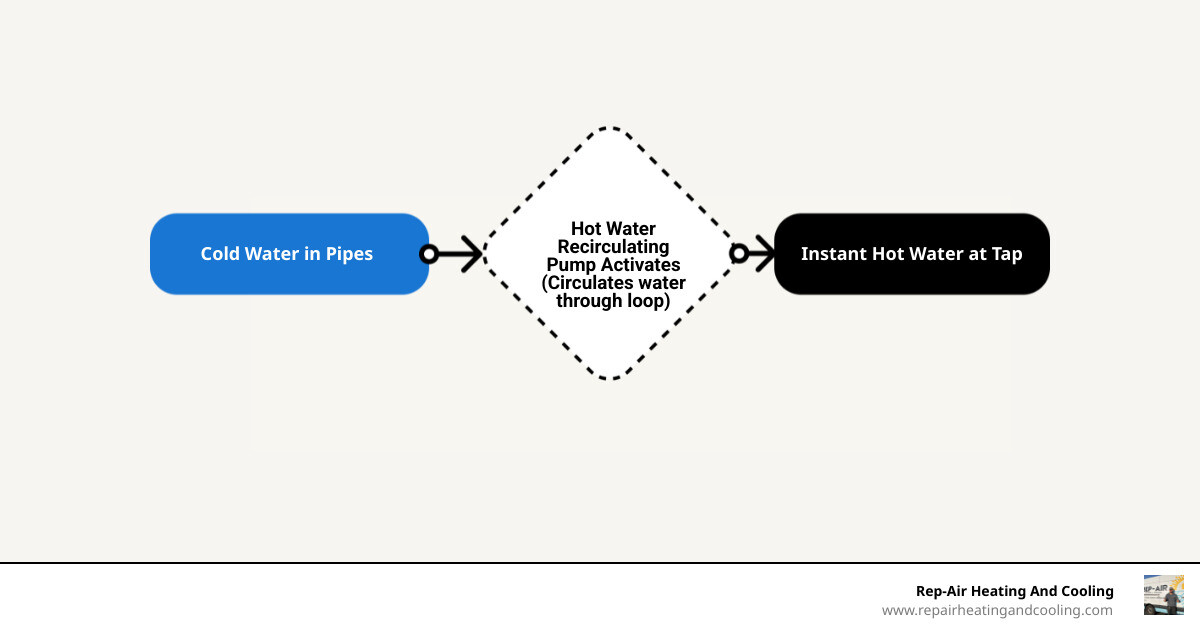
To understand why a hot water recirculating pump is such a game-changer for homes in places like Langley or Abbotsford, you first have to look at the "dead-leg" problem. In a standard plumbing setup, when you turn off the hot water tap, the water remaining in the pipes sits there and cools down. The next time you want a hot shower, you have to flush all that lukewarm or cold water out of the pipes before the fresh hot water from the tank can reach you.
A recirculation system fixes this by creating a loop. Instead of the water sitting still, the pump keeps it moving.
The Thermal Bypass and Sensor Valves
In many modern retrofit systems, we use something called thermal bypass technology. This involves a sensor valve installed under the sink farthest from your water heater. This valve acts like a traffic controller. When it detects that the water in the hot line has cooled down below a certain point (usually around 98°F), it opens up.
Using a pressure differential, the pump pushes that cool water back to the water heater through the cold water line. Once the sensor valve detects that hot water has arrived at the faucet, it shuts off, preventing hot water from entering your cold water pipes. It's a brilliant way to get instant delivery without needing a whole new set of pipes.
Loop Systems and Standby Heat Loss
In a "dedicated return line" system, there is a literal third pipe that carries water back to the heater. This is the most efficient way to move water, but it's usually only found in newer construction or major renovations.
One thing we always discuss with our customers in the Lower Mainland is standby heat loss. If a pump runs 24/7, the water in your pipes is always hot, which means your pipes are constantly losing heat to the surrounding air. This is why modern pumps often include timers or on-demand sensors—to make sure you aren't paying to heat water when everyone is asleep.
Comparing Different Systems for Your Home
Choosing the right system depends heavily on whether your home was built last year in Willoughby or fifty years ago in South Clearbrook. Not all pumps are created equal, and the installation requirements vary significantly.
Dedicated Return Line vs. Under-Sink Crossover
If your home has a dedicated return line, the pump is usually installed right at the water heater. It's a "plug-and-pump" solution that is very reliable. For the majority of older homes in British Columbia, an under-sink crossover system is the go-to choice. These systems don't require you to tear open your walls to run new pipes; they simply use your existing cold water line to return the water to the heater.
On-Demand and Smart Activation
The latest trend in April 2026 is on-demand activation. Instead of the pump running on a timer, you activate it via a wireless sensor, a motion detector in the bathroom, or even a button under the counter. This is the ultimate "green" choice because the pump only runs for the minute or two it takes to get the water hot, then shuts off immediately.
• Dedicated Return Line — Installation Difficulty: High (if retrofitting) — Energy Efficiency: High — Best Use Case: New construction or major remodels
• Under-Sink Crossover — Installation Difficulty: Low to Moderate — Energy Efficiency: Moderate — Best Use Case: Existing homes without return lines
• On-Demand System — Installation Difficulty: Moderate — Energy Efficiency: Very High — Best Use Case: Eco-conscious homes; any plumbing
• Timer-Based Pump — Installation Difficulty: Low — Energy Efficiency: Moderate — Best Use Case: Households with very predictable schedules
If you're curious about how these integrate with your existing setup, you can find more info about plumbing services on our dedicated service page.
Key Benefits of Instant Hot Water Technology
Why are so many families in Mission and Pitt Meadows making the switch? It isn't just about the luxury of a hot shower; there are practical, financial, and environmental reasons to consider.
1. Massive Water Conservation
The average household can waste between 12,000 and 15,000 gallons of water every year just waiting for it to get hot. In the Lower Mainland, where we are increasingly mindful of our reservoir levels during the summer months, this is a significant way to reduce your environmental footprint.
2. Reduced Sewage Load
Every drop of water that goes down the drain while you wait for it to warm up has to be treated at a municipal sewage plant. By using a hot water recirculating pump, you are reducing the volume of "clear water" entering the sewer system, which is better for our local infrastructure in cities like Delta and Surrey.
3. Convenience and Time Savings
Let's be honest: nobody likes standing in a cold bathroom at 6:00 AM waiting for the shower to warm up. Instant hot water adds a level of luxury and convenience to your daily routine that is hard to give up once you've experienced it.
4. Protecting Your Appliances
Some high-efficiency dishwashers and washing machines perform better when they have immediate access to hot water. A recirculating system ensures that the very first cycle of your dishwasher is actually washing with the temperature it needs to sanitize your plates.
Choosing the Right hot water recirculating pump for Your Setup
Not every pump fits every home. When we visit a client in Maple Ridge or White Rock, we look at several factors to determine the best model.
Home Square Footage and Pipe Diameter
The size of your home determines the "head" or the power the pump needs.
• For homes up to 2,500 square feet (or 100 feet of pipe run), a standard 55-series pump is usually sufficient.
• For larger estates in Campbell Valley or Salmon River Uplands that may reach 5,000 square feet, you'll need a more powerful 150-series pump to ensure the water makes it all the way to the farthest wing of the house.
Flow Rate (GPM)
Flow rate, measured in Gallons Per Minute (GPM), is crucial. If the flow rate is too low, the water won't stay hot. If it's too high, you might experience "pinhole leaks" over time due to erosion in your copper pipes. Most residential systems operate between 0 and 4 GPM.
Brand Performance and Ratings
Based on current market data, several brands have stood out for their reliability:
• Watts: Their Hot Water Recirculation System is a favorite for retrofits, boasting over 5,400 reviews with a 4.5-star average. It's known for being DIY-friendly and includes a built-in timer.
• Grundfos: Often considered the industry standard for durability, their Comfort Series has a 4.6-star rating and uses highly efficient permanent magnet motors.
• APCOM: Their UT1 model is specifically designed for under-sink installation and is a solid choice for tank-type water heaters.
Tank vs. Tankless Compatibility
This is where things get tricky. Many standard pumps are designed for traditional tank heaters. If you have a tankless water heater, you need a pump that can provide enough flow to trigger the heater's "firing" mechanism. Brands like Noritz offer integrated pumps specifically designed for this, while others require a specific crossover kit.
Maintenance and Troubleshooting for Long-Term Reliability
Like any mechanical device with a motor, a hot water recirculating pump requires a little bit of love to keep running quietly and efficiently for years.
Dealing with Air Locks
If you hear a humming sound but the water isn't getting hot, or if the pump sounds like it's "grinding gravel," you likely have an air lock. This happens when air bubbles get trapped in the pump housing. Most modern pumps have a bleed screw that allows you to release this air.
Mineral Buildup and Scaling
In some areas of the Lower Mainland, particularly those that might rely on well water or have slightly harder water, mineral buildup can be an issue. Calcium and magnesium can coat the internal components of the pump and the sensor valve. We recommend a routine inspection every year to ensure everything is clear and the check valves are seated properly.
Timer Calibration and Pump Runtime
If your pump has a digital timer, check it after a power outage! There's nothing more annoying than a pump that runs all night but is off during your morning shower. Some high-end Grundfos models actually have an "auto-learning" mode that tracks your usage patterns for a week and then creates its own schedule. It's like having a smart assistant for your plumbing.
Quiet Operation
A well-installed pump should be almost silent. If it starts getting loud, it could be a sign of a failing bearing or a loose connection. Checking the mounting brackets and ensuring the pump is isolated from the wall can prevent vibrations from echoing through your home.
Frequently Asked Questions
Are hot water recirculating pumps compatible with tankless heaters?
Yes, but you have to be careful. Tankless heaters require a minimum flow rate to activate the burners. If the recirculating pump's flow is too low, the heater won't turn on, and you'll just be circulating cold water! High-efficiency units often require specific crossover kits or integrated pumps with Bluetooth scheduling to ensure they work in harmony.
How much water can a hot water recirculating pump save annually?
The statistics are impressive. A typical household can save between 12,000 and 15,000 gallons of water per year. For a family in Burnaby or Coquitlam, that's a massive reduction in water waste. Beyond the environmental impact, this also means your water heater doesn't have to work as hard to heat up "new" cold water, which can lead to lower utility bills over time.
Is a professional installation necessary for these systems?
While some kits are marketed as DIY-friendly, we strongly recommend professional installation for a few reasons. First, building codes in British Columbia can be specific about how these are wired and plumbed. Second, ensuring the system is sized correctly for your specific pipe diameter and home layout prevents issues like pipe erosion or pump burnout. Finally, dealing with electrical safety near water lines is always best left to the experts.
Conclusion
A hot water recirculating pump is one of those home upgrades that you'll wonder how you ever lived without. From the instant comfort of a warm morning shower to the satisfaction of knowing you're saving thousands of gallons of water, the benefits are clear. Whether you're in a cozy townhouse in Pitt Meadows or a sprawling family home in Abbotsford, there is a recirculation solution that fits your needs.
At Rep-Air Heating And Cooling, we pride ourselves on treating our customers like family. We've been serving the Lower Mainland for years, providing comprehensive maintenance and expert installations that keep your home running smoothly. If you're tired of the wait and ready to upgrade your home's efficiency, we're here to help.
Ready to stop wasting water and start enjoying instant comfort? Explore our plumbing services or give us a call today to see how we can help you find the perfect system for your home.
hear what our satisfied clients have to say
Neighbourhoods in the Fraser Valley