The R22 Phase Out and Why It Forces an AC Replacement
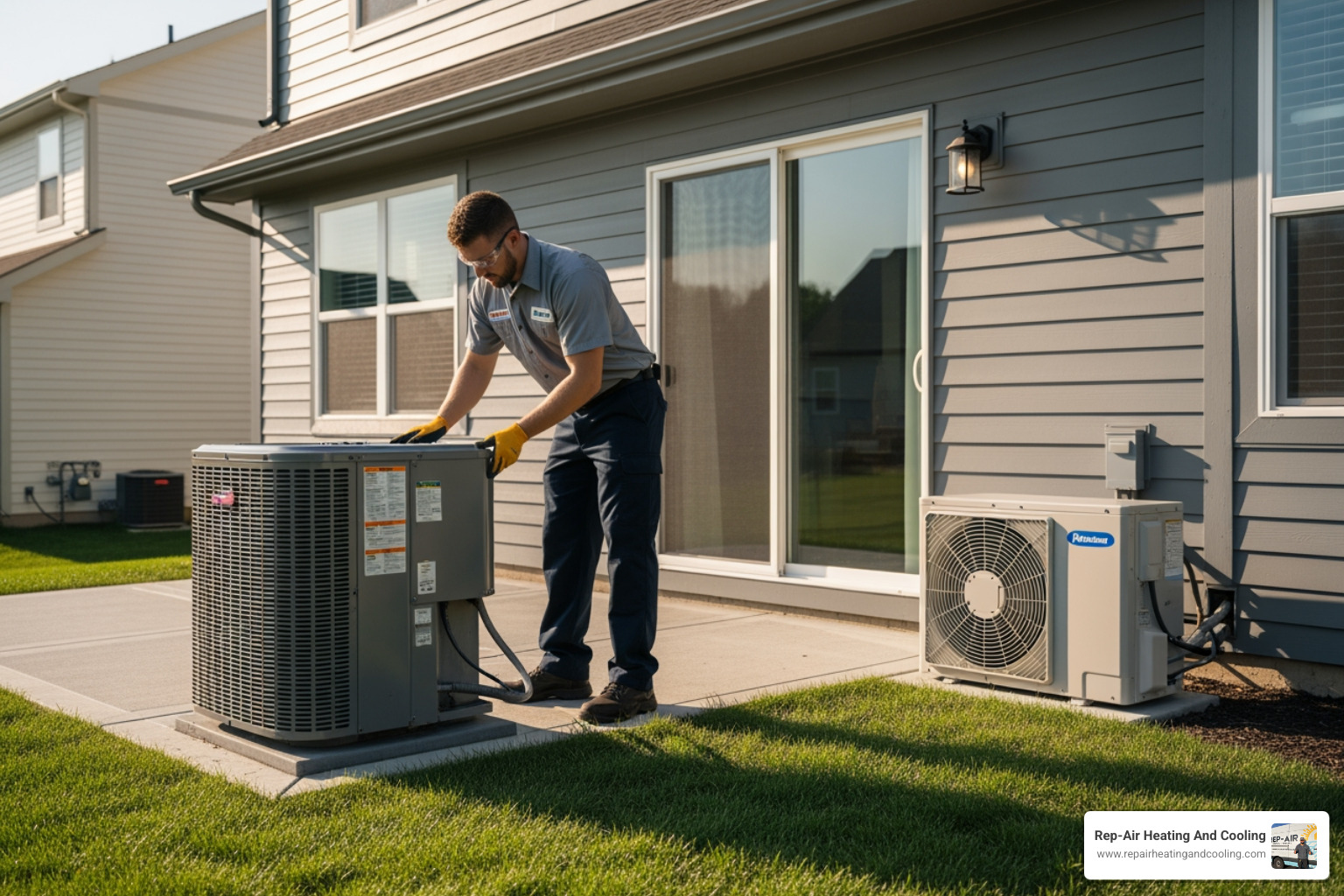
My older AC uses R-22 in Maple Ridge, BC. Do I need to replace it?
Understanding how r22 refrigerant phase out forces ac replacement decisions comes down to one simple fact: the refrigerant that kept millions of older AC systems running is no longer being made, and what little remains is becoming harder to access every year.
Here's the short answer:
• R-22 (also called Freon or HCFC-22) was banned from production and import in Canada and the U.S. as of January 1, 2020
• Only recycled or reclaimed R-22 is now available to service existing systems
• As supply shrinks, servicing an R-22 system becomes more difficult over time
• When repairs become more involved especially after multiple service calls replacement often becomes the more practical choice
• You are not legally required to replace a working R-22 system, but major failures often make replacement the most sensible option
If your home in Maple Ridge, BC has an air conditioner installed before 2010, there is a strong chance it still runs on R-22. That means every repair, recharge, or service call now depends on a dwindling supply of reclaimed refrigerant and that supply will not last forever.
This guide walks you through exactly what the R-22 phase-out means for your system, when repairs still make sense, and when it is time to plan for a replacement.

Must-know how r22 refrigerant phase out forces ac replacement terms:
• How your AC replacement timeline depends on maintenance history
• Questions to ask before committing to AC replacement
What R-22 Refrigerant Is and Why It Was Used for So Long
R-22, also called HCFC-22 and often casually called Freon, was the standard refrigerant in residential air conditioners and heat pumps for decades. It became common in home cooling starting in the 1950s and stayed dominant for a very long time.
Why? Because it worked well, manufacturers built systems around it, and technicians were deeply familiar with it. Once an industry standard gets that established, it tends to stick around like that one extension cord nobody throws away.
Why R-22 became the default in home cooling
R-22 lasted so long because it checked the boxes that mattered at the time:
• It was dependable in residential cooling systems
• Equipment was widely designed around it
• Parts, tools, and service practices were built for it
• AC systems often lasted many years, so older R-22 units stayed in homes long after newer standards began
That long equipment life is a big reason many Maple Ridge, BC homeowners are still dealing with R-22 in 2026. Even though new systems moved away from it years ago, older units can keep running well past the point where their refrigerant becomes outdated.
Why R-22 was phased out in the first place
R-22 was phased out because it damages the ozone layer. It is an HCFC, or hydrochlorofluorocarbon, and those chemicals were targeted under the Montreal Protocol, the international agreement that pushed countries to phase out ozone-depleting substances.
The environmental stakes were not small. Research tied the phase-out of ozone-depleting substances to major long-term public health benefits, including avoiding hundreds of millions of skin cancer cases and tens of millions of cataract cases in the U.S. alone across future generations.
In simple terms:
• R-22 helped cool homes
• R-22 also harmed the atmosphere when released
• Governments phased it out to protect the ozone layer and reduce environmental damage
That is why the refrigerant itself became the problem, even if the AC system still mechanically worked.
The 2026 Reality of the Phase-Out: how r22 refrigerant phase out forces ac replacement
In 2026, the big reality is this: no new R-22 is being produced or imported for regular servicing. Existing systems can still be serviced, but only with recycled, recovered, or reclaimed supply.
That changes everything for homeowners with older air conditioners in Maple Ridge, BC.
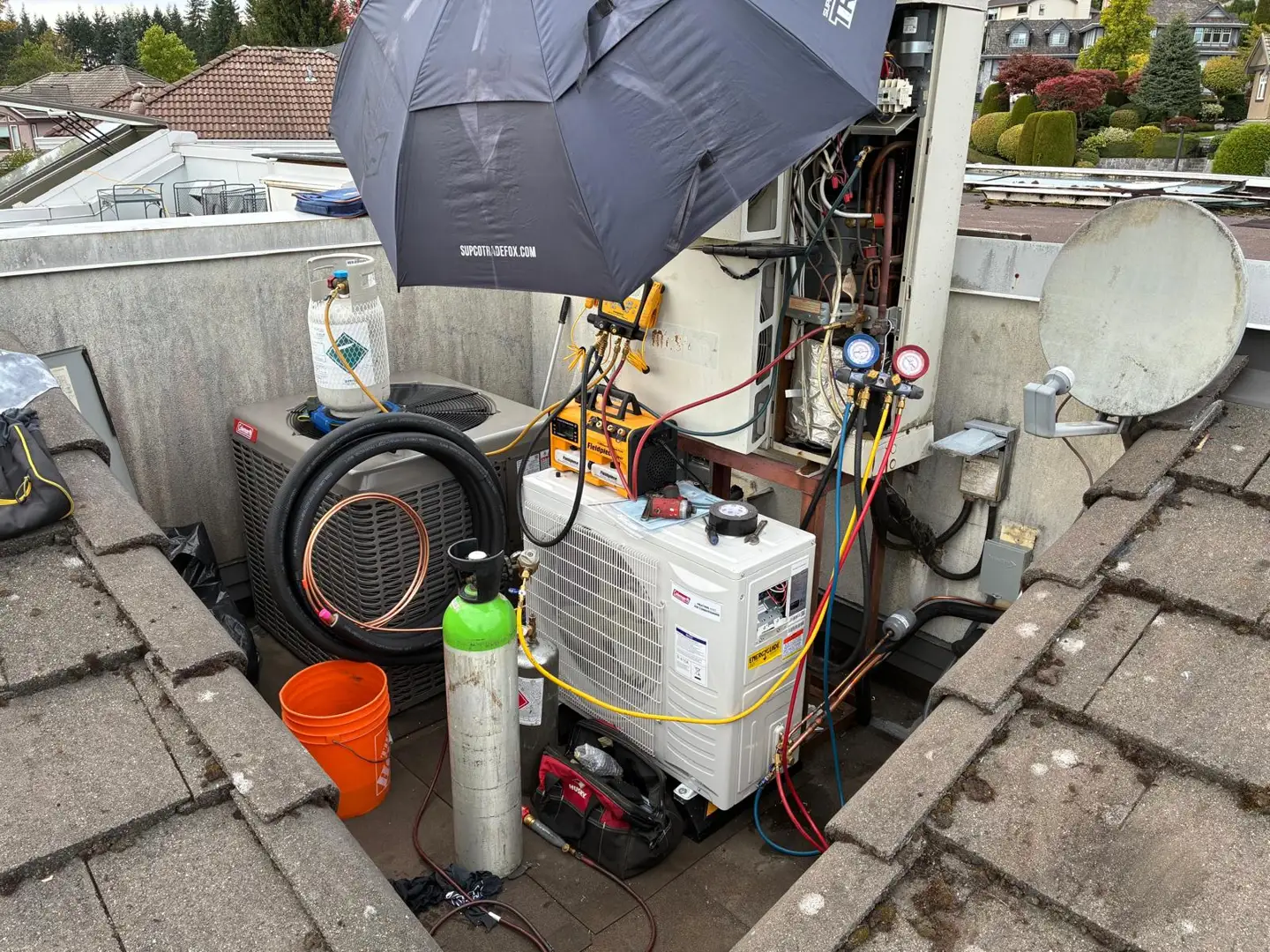
The R-22 timeline homeowners in Maple Ridge, BC should know
Here is the practical timeline:
• 2010: New equipment using R-22 was largely phased out, and the shift to other refrigerants accelerated
• 2020: Production and import of R-22 ended in Canada and the U.S.
• 2026: Existing R-22 systems can still operate, but service depends on limited reclaimed supply
• 2030: The final stage of HCFC phase-out is expected to tighten the remaining path for any continued HCFC use even further
For homeowners, 2026 is not about panic. It is about planning. If your older AC is still running, you do not have to replace it today just because it uses R-22. But if it develops a leak, loses cooling, or suffers a major component failure, the phase-out becomes very real very quickly.
Is it still legal to use and service an R-22 air conditioner?
Yes. It is still legal to keep using an existing R-22 air conditioner if it works.
What is no longer allowed is new production or import of R-22. Service is generally limited to reclaimed or recycled refrigerant, and refrigerant cannot legally be vented into the atmosphere. If a system leaks, the proper fix is to find and repair the leak, not just keep topping it off forever.
The important homeowner takeaway is:
• You can legally keep your R-22 system
• You can still have it serviced
• Service options are more limited than they used to be
• The older the unit gets, the less practical ongoing repairs usually become
How to know if how r22 refrigerant phase out forces ac replacement applies to your system
The easiest ways to identify an R-22 system are:
• Check the outdoor condenser nameplate or data sticker
• Look for "R-22," "HCFC-22," or sometimes "Freon"
• Review the owner manual if you still have it
• Check the manufacture date; systems made before 2010 are much more likely to use R-22
If you are not sure what your system uses, it helps to have it inspected before you end up with a midsummer surprise. If your unit is older and already showing cooling issues, knowing what you are dealing with early can make repair or replacement decisions easier.
Why Repairs on R-22 Systems Push Homeowners Toward Replacement
The biggest reason how r22 refrigerant phase out forces ac replacement is such a common homeowner question is that repair decisions change once the refrigerant becomes obsolete.
With R-22 systems, the issue is rarely just one repair. It is often a chain reaction:
• Aging equipment
• Harder-to-source refrigerant
• Worn components
• Repeat service calls
• Declining reliability in peak summer heat
If you want a deeper look at how this snowballs, read How Refrigerant Leak Repairs Add Up Over Time and Common AC Repair Issues and Their Solutions.
Why even a small refrigerant problem becomes a bigger decision on an R-22 unit
Air conditioners are sealed systems. If refrigerant is low, that usually means there is a leak. On a modern system, that is already a service issue. On an R-22 system, it becomes a bigger strategic decision.
A minor leak can turn into:
• A leak search and repair
• Recharging with scarce reclaimed R-22
• A risk that another leak or weak component appears later
• A repeat visit next season if the system is already near the end of its life
That is why homeowners are often surprised that a "small refrigerant issue" is not really small. The refrigerant type changes the whole conversation.
Repair vs. replace scenarios for older R-22 air conditioners
There are still times when repair makes sense. There are also many times when replacement is the smarter long-term move.
• Small issue with no refrigerant loss — Repair may make sense: Yes — Replacement is usually better: Maybe later
• First repair on otherwise reliable unit — Repair may make sense: Sometimes — Replacement is usually better: Depends on age
• Minor electrical or control issue — Repair may make sense: Often — Replacement is usually better: If system is very old, consider both
• Refrigerant leak requiring recharge — Repair may make sense: Sometimes, if leak is minor and system is in strong shape — Replacement is usually better: Often, especially on older units
• Evaporator coil problem — Repair may make sense: Rarely on aging R-22 systems — Replacement is usually better: Usually
• Compressor failure — Repair may make sense: Usually no — Replacement is usually better: Yes
• Multiple repairs in recent seasons — Repair may make sense: Rarely — Replacement is usually better: Yes
• System is 10-15+ years old and struggling — Repair may make sense: Less likely — Replacement is usually better: Usually
In general, if the unit is older, leaking refrigerant, and already showing wear in other parts, replacement tends to win because it resets the whole system instead of patching one aging section at a time.
how r22 refrigerant phase out forces ac replacement after repeat service calls
Repeat service calls are where many homeowners hit their decision point.
If your AC is showing any of these signs, the phase-out may be pushing you toward replacement:
• Weak airflow or warm air from vents
• Short cycling
• Repeated refrigerant loss
• Cooling that fades during hotter weather
• More than one recent repair
• Trouble keeping the house comfortable
These warning signs often show up before total failure. It is better not to wait until the hottest week of summer to make a rushed decision. If your older unit is acting up, start planning now. You may also find our guide on Signs Your AC Needs Repair helpful.
When Retrofitting Makes Sense and When Full Replacement Is the Better Move
Some homeowners ask whether they can retrofit an R-22 system to use another refrigerant instead of replacing the whole AC. In some cases, yes. But that does not mean it is always the best option.
There is no true drop-in replacement for R-22 that magically turns an old system into a modern one. Retrofitting usually involves tradeoffs, compatibility checks, and performance compromises.
When a retrofit may be worth considering
A retrofit may be worth discussing if:
• The system is otherwise in unusually good condition
• The problem is limited and the rest of the equipment is sound
• You need a short-term bridge rather than a long-term solution
• You have lighter cooling demands and understand the tradeoffs
Some replacement refrigerants have been used to extend the life of older systems, but that does not mean results are identical to original R-22 performance. Efficiency, capacity, and reliability can shift.
Why full replacement is usually the long-term solution
For most homeowners in Maple Ridge, BC, full replacement is the cleaner long-term move because a new system gives you:
• Equipment designed for the refrigerant it uses
• Better parts availability
• Better energy performance
• Improved reliability
• Better humidity control and comfort
• Modern warranty protection
If you are looking into a new system, our AC Installation Abbotsford page explains what professional installation involves, and our Ductless AC Install Abbotsford page is useful if you are considering ductless options for targeted comfort.
Why you cannot simply put a newer refrigerant into an R-22 system
This is one of the biggest misconceptions.
You cannot just swap R-22 for R-410A, R-454B, or R-32 like changing the ink cartridge in a printer. These refrigerants operate differently and require systems designed for their pressures, oil compatibility, metering components, and safety requirements.
Here is the simple version:
• R-410A operates at much higher pressures than R-22
• R-454B and R-32 are used in newer system designs, not old R-22 equipment
• System components have to match the refrigerant
• Mixing refrigerants or using the wrong one can damage the equipment and create safety problems
So if someone is hoping for a quick refrigerant swap, unfortunately the answer is usually no.
What Homeowners Gain by Replacing an R-22 AC System
Replacing an R-22 system is not just about escaping an obsolete refrigerant. It is also about improving comfort, efficiency, and dependability.
The main advantages of modern refrigerants over R-22
Modern refrigerants such as R-410A, R-454B, and R-32 offer several advantages over R-22-era technology:
• They do not deplete the ozone layer
• They are supported by current equipment design
• They are part of newer, more efficient systems
• They align better with current environmental standards
R-410A became the main replacement for many years after R-22, and newer equipment is increasingly moving toward lower-impact options such as R-454B and R-32.
Comfort and reliability improvements beyond refrigerant alone
In many cases, the biggest benefits come from the system upgrade itself, not just the refrigerant label.
A newer AC can offer:
• More consistent temperatures
• Better dehumidification
• Quieter operation
• Improved airflow
• Compatibility with smart thermostats
• Fewer breakdowns tied to age and obsolete parts
That matters in Maple Ridge summers, especially during hotter stretches when older systems tend to struggle the most.
What to do today if your R-22 system needs service in Maple Ridge, BC
If your R-22 system needs attention today, here is the best next-step approach:
1. Confirm the refrigerant type on the data plate or have it professionally checked.
2. Find out whether the issue is a simple component problem or a refrigerant leak.
3. Avoid treating repeated refrigerant loss as a normal maintenance item.
4. Ask whether the repair would meaningfully extend the life of the system.
5. If the unit is older and has a major issue, start planning for replacement rather than repeated patchwork repairs.
If the issue involves indoor cooling components, our AC Indoor Unit Repair page may help. You can also read our local repair resources, including the AC Repair Aberdeen, BC Complete Guide and the Air Conditioner Repair Langley, BC Guide.
Frequently Asked Questions About R-22 AC Replacement
Can I keep using my R-22 air conditioner if it still works?
Yes. If it is operating properly, you can continue using it. The phase-out does not mean homeowners must replace a working system immediately.
What we recommend is planning ahead. If the unit is older, pre-2010, or already showing reliability issues, start preparing now so you are not forced into a rushed replacement later.
How do I confirm whether my air conditioner uses R-22?
The easiest places to check are:
• The outdoor condenser data sticker
• The owner manual
• The manufacturer information tag
Look for "R-22" or "HCFC-22." If the system was made in 2009 or earlier, there is a strong chance it uses R-22.
Should I repair my old AC one more time or replace it now?
That depends on three main things:
• Age of the system
• Type of repair needed
• Overall reliability history
A small non-refrigerant repair on an otherwise stable unit may still be reasonable. But if the system is older, leaking, using reclaimed R-22, or requiring repeated service, replacement is usually the stronger long-term decision.
Conclusion
For homeowners in Maple Ridge, BC, the R-22 phase-out is not just a technical rule buried in an environmental policy file somewhere. It directly affects whether an older AC is still practical to repair.
That is the heart of how r22 refrigerant phase out forces ac replacement: the system may still run, but once refrigerant loss, major component failure, or repeat breakdowns show up, the shrinking supply of R-22 turns basic repairs into much bigger decisions.
The good news is that you do not have to figure it out alone. We help homeowners think through repair versus replacement with long-term comfort in mind, not just the next hot weekend. And if you want to reduce surprise breakdowns while extending the life of your current equipment, our More info about maintenance plans page is a smart next stop.
hear what our satisfied clients have to say
Neighbourhoods in the Fraser Valley