Stop Pouring Money Into Endless Refrigerant Leaks

How Refrigerant Leak Repairs Add Up Over Time in Langley, BC
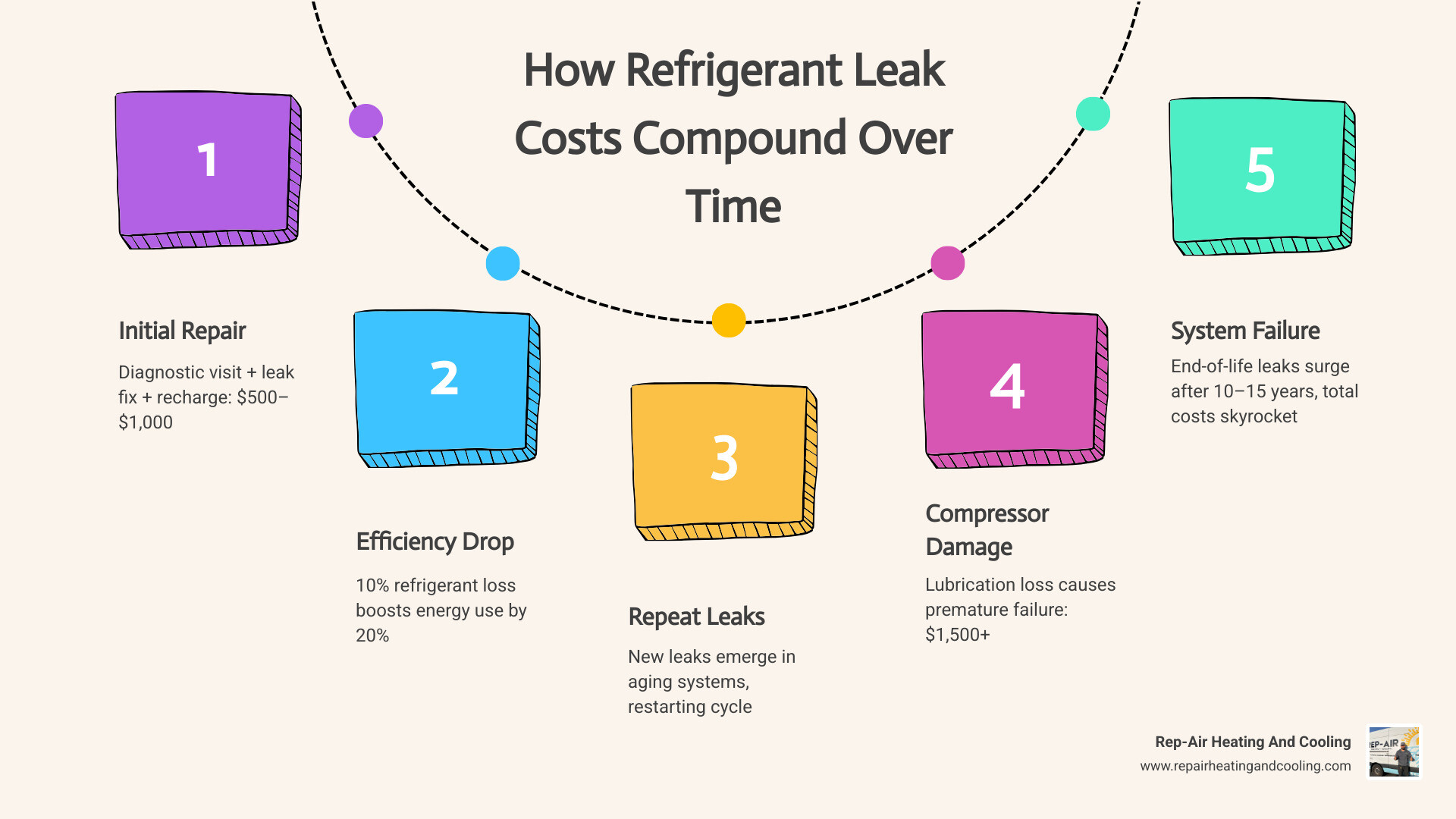
How refrigerant leak repairs add up over time is a question more Langley, BC homeowners are asking — and for good reason. What starts as a minor performance dip can quietly snowball into a serious financial drain. Here's a quick breakdown of how the costs compound:
• Single repair event: Diagnostic visit, leak detection, repair, and recharge
• Efficiency losses: A 10% drop in refrigerant can increase energy use by up to 20%
• Repeat leaks: Aging systems often develop new leaks after each repair, restarting the cost cycle
• Component damage: Low refrigerant starves the compressor of lubrication, leading to premature failure
• Regulatory costs: Systems with high annual leak rates may trigger mandatory inspection and documentation requirements under EPA Section 608
• End-of-life surge: Leaks become more frequent and severe as systems pass the 10-15 year mark, pushing cumulative costs even higher
The pattern is predictable: one repair turns into two, then three, each one pulling more money out of your pocket while your system delivers less comfort and higher energy bills. According to industry data, a 10% drop in refrigerant charge can cause energy consumption to climb by as much as 20% — meaning you're paying more to stay less comfortable.
For Langley homeowners dealing with warm BC summers and mild but real heating seasons, an underperforming AC isn't just inconvenient. It's expensive. And if that system is over a decade old, the risk of compounding leak-related costs rises sharply with every passing season.
Explore our complete AC maintenance and repair services or schedule your inspection today before a small leak turns into a costly breakdown.
Common Culprits Behind Refrigerant Loss in Langley Homes
Understanding how refrigerant leak repairs add up over time starts with knowing why they happen in the first place. In Langley, BC, our unique climate and environmental factors play a significant role in the degradation of HVAC components.
One of the most frequent causes we see is formicary corrosion. This occurs when copper tubing reacts with common household chemicals—like those found in cleaning supplies, paints, or even building materials. Over time, this reaction creates microscopic "pinhole" leaks in the evaporator coil. These leaks are notoriously difficult to find because they are so small, yet they allow refrigerant to bleed out slowly over months.
Another major factor is vibration damage. HVAC systems have many moving parts, and if components aren't properly secured, the constant vibration can cause copper lines to rub against each other or the metal casing. Eventually, this friction wears a hole through the line. This is why checking for AC Fan Motor Issues and Fixes for Abbotsford Homes is so important; an unbalanced fan can send vibrations throughout the entire system, accelerating wear.
We also see issues related to thermal expansion and contraction. As our BC weather shifts from cool mornings to warm afternoons, the metals in your AC unit expand and contract. This puts stress on the joints and flared connections. If the initial AC Condenser Unit Repair Ultimate 2025 Guide wasn't followed during installation, or if the brazing was poor, these joints are the first places to fail.
How refrigerant leak repairs add up over time through hidden efficiency losses
Most homeowners only think about the bill from the technician, but the "hidden" costs of a leak can be even more damaging to your household budget. When your refrigerant levels drop, your system loses its ability to transfer heat effectively.
The Efficiency Gap: Full Charge vs. Low Charge
• 100% Charge — Cooling Capacity: Optimal — Energy Consumption: 100% (Baseline) — Compressor Lifespan: Full Life Expectancy
• 90% Charge — Cooling Capacity: Reduced — Energy Consumption: 110% - 120% — Compressor Lifespan: Increased Wear
• 80% Charge — Cooling Capacity: Poor — Energy Consumption: 130% - 150% — Compressor Lifespan: High Risk of Failure
As the table shows, even a small 10% drop in refrigerant can cause a 20% spike in your power bill. This happens because the system has to run longer cycles to reach the temperature set on your thermostat. These extended run times lead to power surges and increased wear on the electrical components.
Furthermore, low refrigerant levels directly impact indoor humidity. An AC unit doesn't just cool the air; it removes moisture. When the charge is low, the evaporator coil doesn't get cold enough to properly condense water vapor, leaving your Langley home feeling "clammy" even if the air is somewhat cool. This leads many homeowners to turn the thermostat even lower, further compounding the energy waste. This is a primary reason why the Importance of Regular AC Maintenance for Mission Homeowners cannot be overstated—catching a small drop in pressure early saves hundreds in utility bills.
Why small leaks lead to how refrigerant leak repairs add up over time
Small leaks are deceptive. You might not notice a change in comfort for the first year, but beneath the surface, your system is suffering. Refrigerant doesn't just cool; it also carries the lubrication necessary for the compressor. When refrigerant leaks out, the oil often stays trapped in the lines or leaks out with the gas, leaving the compressor's moving parts to grind against each other.
This lack of lubrication causes internal friction, leading to overheating and eventually "compressor burnout," which is often the death knell for an AC unit. Additionally, low pressure can cause the evaporator coil to freeze. When the coil turns into a block of ice, it restricts airflow entirely, forcing the system to work even harder against a literal wall of ice. Proactive homeowners understand that Why Preventative AC Service is Essential for Comfort is the only way to interrupt this cycle of degradation.
Navigating EPA Compliance and Leak Rate Calculations
While residential systems are smaller than commercial ones, the environmental regulations surrounding refrigerants are strict. In April 2026, we are operating under rigorous EPA Section 608 standards. These regulations are designed to minimize the release of ozone-depleting substances and high-GWP (Global Warming Potential) greenhouse gases.

Technicians use two primary methods to track leaks:
1. The Annualizing Method: This looks at how much refrigerant was added and projects that loss over a full year.
2. The Rolling Average: This tracks the total amount of refrigerant added over the past 365 days.
For homeowners, these calculations matter because they help determine if a system is "chronically leaking." If a system requires frequent "top-offs," it is a sign of a major structural failure. Simply adding more gas without fixing the source is not only a waste of money—it's an environmental hazard. One pound of common HFC refrigerant can have the same climate impact as 4,000 pounds of CO2. We take our environmental responsibility seriously, ensuring every repair in Langley meets or exceeds regulatory documentation requirements.
Understanding how refrigerant leak repairs add up over time in aging systems
As an HVAC system crosses the 10-year threshold, the financial math of repairs changes significantly. Older units often use obsolete refrigerants like R-22, which have become incredibly expensive due to phase-outs. Even with newer R-410A systems, metal fatigue in the coils becomes a major issue after a decade of BC winters and summers.
At this stage, how refrigerant leak repairs add up over time often reaches a tipping point. You might pay for a leak repair on the condenser this year, only to have the evaporator coil develop a leak next year. This is the "end-of-life surge," where cumulative repair costs can quickly approach 50% or more of the cost of a new, high-efficiency system.
When we perform AC Maintenance Langley BC Air Conditioner Care, we provide an ROI (Return on Investment) analysis. Often, replacing a 12-year-old unit that has had multiple leaks is cheaper in the long run than continuing the cycle of "break-fix" maintenance.
Strategies to Break the Cycle of Repeated Repairs
We don't believe in band-aid fixes. To stop the cycle of endless repairs, we employ advanced diagnostic strategies:
• Electronic Sniffers: These highly sensitive tools can detect refrigerant concentrations as low as 0.1 ounces per year, finding leaks that soap bubbles would miss.
• UV Dye Testing: By injecting a fluorescent dye into the system, we can use a UV light to spot exactly where the "oil seepage" is occurring, even in hard-to-reach areas.
• Nitrogen Pressure Testing: This involves emptying the system and filling it with high-pressure nitrogen. If the pressure drops even slightly over 24 hours, we know there is a breach.
• Professional Brazing: Unlike simple soldering, our technicians use high-temperature silver brazing to ensure joints can handle the thermal expansion common in the Lower Mainland.
The best strategy, however, is a comprehensive maintenance plan. By checking refrigerant pressures and coil integrity annually, we can catch "micro-leaks" before they cause compressor damage or massive energy spikes.
Frequently Asked Questions about Refrigerant Leaks
What are the signs of a refrigerant leak in my BC home?
Common red flags include hissing or gurgling sounds near the indoor or outdoor unit, ice buildup on the copper lines or evaporator coil, and warm air blowing from the vents when the AC should be cooling. You might also notice a sudden, unexplained jump in your monthly energy bills or high indoor humidity levels.
Is it better to repair a leak or replace the unit?
This depends on the "Rule of 5,000" (age of the unit multiplied by the repair cost). If the result is over 5,000, replacement is usually wiser. Generally, if your system is over 10-12 years old and has had more than one refrigerant leak, the cumulative cost of how refrigerant leak repairs add up over time makes a new, energy-efficient installation the better financial move.
How does low refrigerant affect my energy bills?
When refrigerant is low, the system's cooling capacity drops. To compensate, the thermostat keeps the system running for much longer periods—sometimes 24/7. This constant operation, combined with the compressor working harder against improper pressures, can easily increase your power usage by 20% or more.
Conclusion
At Rep-Air Heating And Cooling, we've seen how refrigerant leak repairs add up over time for families across Langley and the Lower Mainland. Our goal isn't just to "fix" your AC; it's to provide long-term reliability and comfort. Whether you're in Abbotsford, Mission, or Maple Ridge, you deserve an HVAC system that runs efficiently without draining your bank account through hidden costs and repeat service calls.
Don't wait for your compressor to fail or for your energy bills to skyrocket. Our expert technicians are ready to provide a thorough inspection and help you decide the most cost-effective path forward for your home's climate control.
Schedule your professional AC inspection today and take the first step toward a more reliable, efficient home.
hear what our satisfied clients have to say
Neighbourhoods in the Fraser Valley