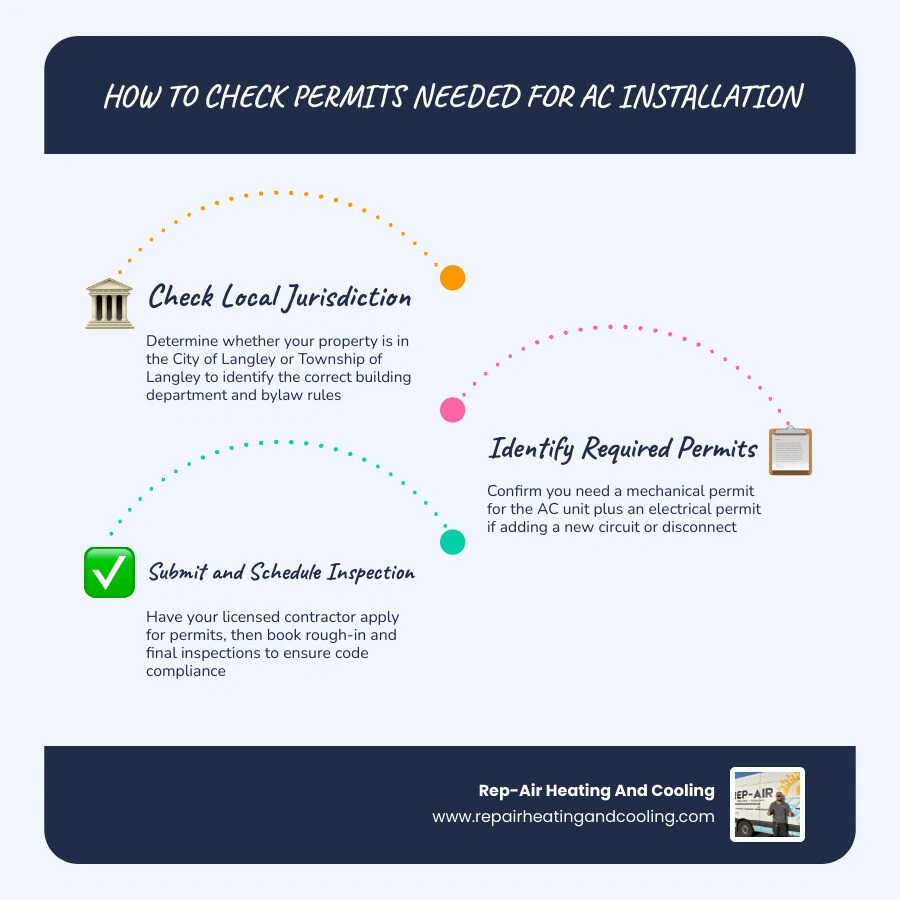
How to Check Permits Needed for AC Installation

What Permits Are Needed for AC Installation in Langley, BC — A Homeowner's Quick Guide
If you're planning a new or replacement air conditioning system, understanding what permits are needed for AC installation in Langley, BC is one of the most important first steps you can take. Skipping this step can lead to failed home inspections, insurance headaches, and costly correction orders down the road.
Here is a quick overview of the permits most homeowners in Langley, BC need before AC work begins:
• Mechanical Permit — When It's Required: Installing or replacing any permanent AC system (central air, heat pump, ductless mini-split)
• Electrical Permit — When It's Required: Any new circuit, dedicated breaker, or disconnect required for the new equipment
• Building Permit — When It's Required: Structural changes, wall penetrations, or ductwork modifications
• Strata/HOA Approval — When It's Required: Condo or townhome installations affecting exterior walls, balconies, or common property
• No Permit Needed — When It's Required: Window AC units and portable AC units that are not permanently installed
Most AC installations in the Lower Mainland — whether brand new or a straight swap — require at least a mechanical permit and often an electrical permit too. Even a like-for-like replacement must meet current building codes, which may have changed since your original system was put in.
The good news? A licensed HVAC contractor typically handles the permit process on your behalf. But as the homeowner, you are ultimately responsible for making sure the work is done legally and documented properly.
What permits are needed for ac installation terms at a glance:
• ac installation process explained step by step
• how ductwork evaluation affects your ac installation
• how load calculations determine your ac installation specs
What Permits Are Needed for AC Installation in Langley, BC?
For most homeowners in Langley, BC, the short answer is: if the air conditioner is permanent, assume permits or approvals are required until your local authority says otherwise.
In practice, permit needs often depend on:
• whether you live in the City of Langley or the Township of Langley
• whether the project is a new installation or a replacement
• whether electrical work is involved
• whether ductwork, drainage, or wall penetrations are being added or changed
• whether the property is a condo, townhome, or strata-managed building
For a typical central AC, ductless mini-split, or heat pump installation, the most common approvals are:
• a mechanical permit
• an electrical permit if the unit needs a new circuit, disconnect, or panel changes
• a building permit if structural or envelope changes are part of the job
• strata approval if exterior/common property is affected
Window and portable units are usually the main exception because they are not permanently installed. That said, strata bylaws may still limit or regulate them.
When a New AC Installation Usually Needs a Permit
A brand-new AC installation almost always needs review because it is not just "putting in a cold box." It usually includes several code-regulated parts:
• outdoor condenser placement
• indoor coil or air handler work
• refrigerant line routing
• condensate drainage
• electrical connection and disconnect
• wall or building envelope penetration
• airflow and duct compatibility
This is exactly why permanent cooling systems are commonly permitted. Safety, drainage, electrical load, structural support, and code compliance all matter. If you want to understand the work involved, this guide on the AC installation process explained step-by-step is a helpful companion.
When Replacing an Existing AC Still Requires Approval
A lot of homeowners hear "like-for-like replacement" and assume that means "no permit." Usually, it does not.
Even when you replace an existing unit with one of similar size, local rules may still require approval because:
• the replacement must comply with current code, not old code
• disconnects or breakers may need updating
• line sets may need inspection or replacement
• condensate drainage may need correction
• equipment clearances may need to meet today's standards
• the final installation may still require inspection
So if you are asking what permits are needed for AC installation when swapping an older unit for a new one, the safest answer is: check first, because replacements are often treated as regulated work.
Situations That May Be Exempt
Some cooling-related work is usually exempt from permits, especially when it is temporary or minor. Common examples include:
• portable AC units
• standard window AC units that are not permanently installed
• changing air filters
• routine maintenance
• thermostat replacement using existing low-voltage wiring
• small repairs that do not alter the system
But "minor" does not include installing a new condenser, running refrigerant lines, adding a dedicated electrical circuit, or cutting into the building envelope. Those are permit territory.
And if you live in a condo or strata property, even a window unit can run into separate building rules about appearance, drainage, noise, or safety. So permit-exempt does not always mean approval-exempt.
How to Check What Permits Are Needed for AC Installation
The easiest way to avoid surprises is to treat permit checking as part of the project planning, not the cleanup after someone has already started drilling holes in your wall.
Here is a practical permit-check list:
1. Confirm whether your home is in the City of Langley or Township of Langley.
2. Write down the project scope: new install, replacement, ductless, central AC, or heat pump.
3. Ask whether a new electrical circuit or disconnect is needed.
4. Ask whether ductwork will be modified.
5. Ask whether any wall, soffit, or exterior penetration is planned.
6. Check whether your property is in a strata, condo, or townhome development.
7. Contact the local building department or review the municipal permit portal.
8. Ask your HVAC contractor to confirm in writing which permits and approvals are included.
9. Keep copies of permits, inspection records, and final documentation.
Check Your Local Jurisdiction First
Langley has two local jurisdictions: the City of Langley and the Township of Langley. That matters because application methods, required forms, and review procedures can differ.
Before work starts, verify:
• which municipality your property falls under
• whether the project is mechanical only or also electrical/building
• whether online applications are available
• whether drawings, equipment details, or site plans are required
• whether final inspection sign-off is mandatory before the project is considered complete
Do not assume your neighbour's permit experience applies to your house. Different streets can fall under different local processes.
Ask These Questions Before Work Starts
A few smart questions up front can save a lot of frustration later:
• Will the new AC need its own dedicated circuit?
• Will the breaker panel need upgrades?
• Are we changing any ductwork?
• Is the outdoor unit moving to a new location?
• Are we drilling through an exterior wall?
• Are there setback or clearance rules for where the condenser sits?
• Is this a condo or strata property?
• Is any work going to be concealed behind walls or ceilings?
• Will an inspection be required before everything is closed up?
If your contractor gets awkward when you ask about permits, that is not a charming personality quirk. It is a warning sign.
Confirm Whether Strata or HOA Approval Is Also Required
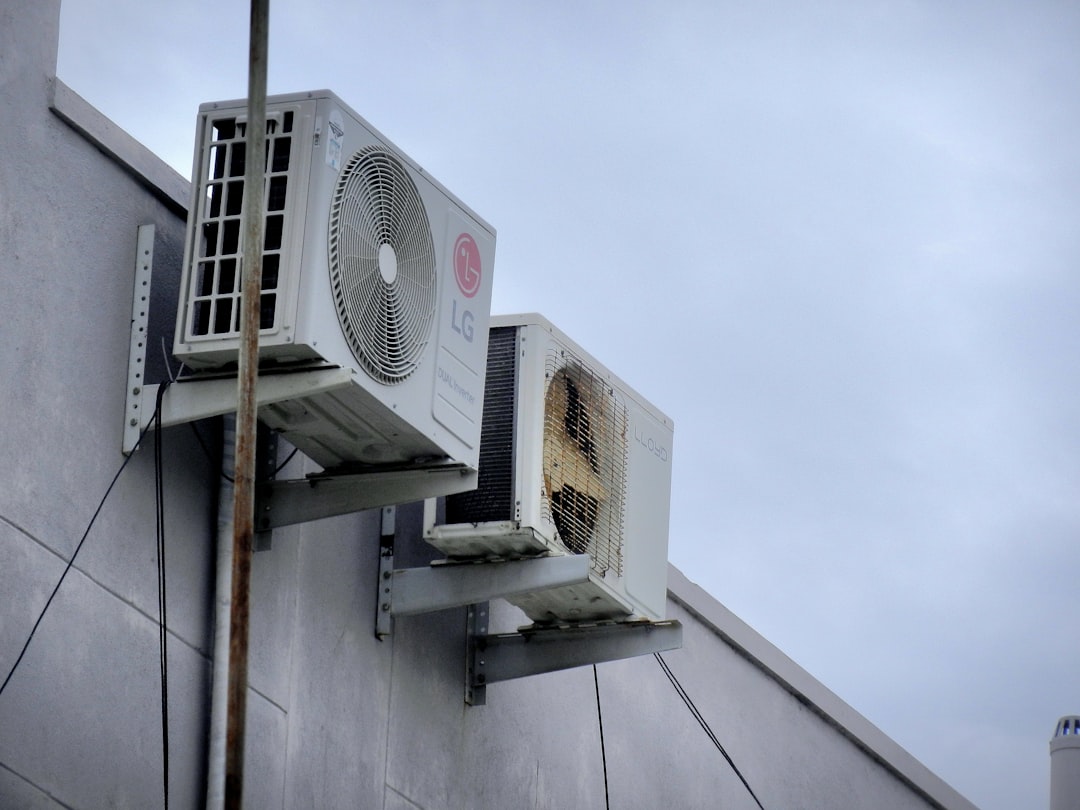
For condos, townhomes, and some planned communities, municipal approval may be only one part of the process. You may also need:
• strata council approval
• written permission for exterior changes
• approval for balcony or roof placement
• confirmation that the install does not affect common property
• review of wall penetrations through the building envelope
• compliance with noise or appearance bylaws
In Metro Vancouver-area properties, these issues come up often with ductless systems because outdoor units and line sets affect exterior surfaces. If you are planning this type of project, our page on AC installation in Langley, BC offers useful context.
Which Additional Approvals May Be Needed Alongside the AC Permit?
One of the biggest homeowner surprises is learning that "the AC permit" may actually involve more than one approval.
Depending on the project, additional approvals may be needed for:
• electrical work
• ductwork changes
• drainage modifications
• structural support
• exterior placement and setbacks
• envelope penetrations
• condo or strata review
Mechanical and Electrical Requirements Homeowners Often Miss
Even if the cooling equipment itself seems straightforward, supporting components often trigger additional review.
Common examples include:
• a dedicated electrical circuit
• a new breaker
• an outdoor disconnect within proper access range
• service clearance around the equipment
• properly supported refrigerant lines
• condensate drainage routed correctly
• wall sleeve or penetration sealing
• inspection of concealed rough-in work before it is covered
Electrical permits are especially easy to overlook, but they are often required whenever the installation adds or modifies power supply components.
Ductwork, Ventilation, and Location Rules
If the project changes how air moves through the home, that can affect permit scope too.
Duct-related issues may include:
• adding new supply runs
• resizing existing ductwork
• adjusting return air pathways
• correcting airflow imbalance
• sealing or insulating ducts
• verifying that the furnace or air handler can support the added cooling coil
Location rules matter as well. Outdoor equipment usually needs:
• adequate service access
• code-compliant clearances
• separation from vents and openings where required
• stable support
• proper drainage away from the home
Here is a simple comparison:
• Replace air filter — Usually Permit-Exempt: Yes — Usually Permit-Required: No
• Portable AC setup — Usually Permit-Exempt: Yes — Usually Permit-Required: No
• Window AC unit — Usually Permit-Exempt: Usually — Usually Permit-Required: No
• Thermostat swap on existing wiring — Usually Permit-Exempt: Usually — Usually Permit-Required: No
• Install ductless mini-split — Usually Permit-Exempt: No — Usually Permit-Required: Yes
• Replace central AC condenser — Usually Permit-Exempt: No — Usually Permit-Required: Yes
• Add new refrigerant lines — Usually Permit-Exempt: No — Usually Permit-Required: Yes
• Modify ductwork — Usually Permit-Exempt: No — Usually Permit-Required: Yes
• Add dedicated AC circuit — Usually Permit-Exempt: No — Usually Permit-Required: Yes
Condo, Townhome, and Suite-Specific Rules in Metro Vancouver
Attached housing brings extra layers of approval because cooling equipment can affect neighbours and common property.
Typical concerns include:
• common wall penetrations
• balcony loading and placement
• drainage discharge
• sound restrictions
• visual appearance rules
• access for maintenance
• engineer review for certain penetrations or supports
This is one reason condo installations need more planning than detached-home projects. For local homeowners comparing options, our AC installation Langley BC page can help frame what to expect from a properly organized installation.
What Documents and Inspections Are Usually Required?
Permit departments commonly want enough information to answer three questions:
1. What equipment is being installed?
2. Is it sized and located properly?
3. Can it be inspected safely and clearly?
Paperwork Commonly Requested for AC Permit Applications
Depending on the jurisdiction and scope, common documents include:
• permit application form
• property address and owner details
• equipment model information
• manufacturer specification sheets
• contractor licence details
• homeowner authorization if the contractor is applying
• site sketch or equipment location drawing
• notes about electrical scope
• notes about duct or structural changes
For larger or more complex projects, more documentation may be required. The goal is to show what is being installed and where.
Load Calculations and System Sizing
Good permitting and good HVAC design go together. One of the most important technical steps is the load calculation.
A load calculation helps determine:
• how much cooling the home actually needs
• whether the existing system is oversized or undersized
• whether ductwork can support the equipment
• whether different rooms have uneven cooling demands
Manual J is the widely recognized method for residential load calculations. Even where it is not explicitly demanded on every job, it is still best practice. Oversized systems can short-cycle and leave humidity behind. Undersized systems run forever and still make everyone grumpy.
If you want a homeowner-friendly explanation of this step, read What You Need to Know Before Having an Air Conditioner Installed.
Inspections During and After Installation
Inspection requirements vary by scope, but common checkpoints include:
• rough-in inspection if work is concealed
• electrical inspection where required
• condensate drainage review
• equipment support and clearance check
• refrigerant line support and protection
• final inspection after installation is complete
For a simple replacement, there may only be a final inspection. For more involved projects with concealed work or major changes, additional inspections may happen before walls or ceilings are closed.
The final sign-off is important because it creates a record showing the job was reviewed and completed properly.
What Happens If You Install AC Without the Required Permit?
This is the part nobody wants to learn the hard way.
Unpermitted AC installation can lead to:
• correction orders from the municipality
• failed inspections later during resale
• requests to expose concealed work
• insurance claim disputes
• delays in financing or home sales
• questions about warranty support
• safety issues that were never inspected
Research across multiple jurisdictions shows that unpermitted HVAC work can trigger fines, and in some places those penalties can add up daily until the issue is resolved. The exact local enforcement path varies, but the basic lesson is universal: skipping permits rarely saves trouble.
Risks for Homeowners
Homeowners often carry the risk even if they did not physically perform the work.
Potential problems include:
• buyers asking for permit records during a home sale
• home inspectors flagging unpermitted equipment
• insurers questioning claims tied to electrical or water damage
• lenders raising concerns about undocumented improvements
• missing municipal records for the installed system
Properly permitted and documented HVAC work also helps support resale value. Research consistently shows buyers place more confidence in upgrades that were installed legally and inspected.
How to Fix an Unpermitted Installation
If the system is already in and you discover no permit was obtained, act sooner rather than later.
Typical next steps may include:
1. Contact the local municipality.
2. Ask whether a retroactive or after-the-fact permit is possible.
3. Gather equipment details, installation records, and contractor information.
4. Be prepared for an as-built review.
5. Understand that some areas of concealed work may need to be opened for inspection.
6. Complete any corrections required for approval.
It is inconvenient, yes. But it is usually better than leaving the problem for a future buyer, insurer, or inspector to discover.
Red Flags Before You Hire for an Installation
A few warning signs should make you pause:
• "You do not need a permit" with no jurisdiction check
• asking you to pull the permit for the contractor's convenience
• no mention of inspections
• vague scope of work
• no paperwork or equipment details
• pressure to skip documentation
• cash-only arrangements tied to avoiding permit questions
A professional installation plan should include a clear timeline, scope, and permit discussion. For homeowners wondering what a properly managed project looks like overall, see How Long Does a New AC Installation Take.
Frequently Asked Questions About What Permits Are Needed for AC Installation
Do I need a permit to replace my air conditioner with the same size unit in Langley, BC?
Usually, yes or at least you should assume approval is needed until the local jurisdiction confirms otherwise. Like-for-like does not automatically mean permit-free. The replacement still has to meet current code, and electrical, drainage, or disconnect updates may be required.
Who is responsible for getting the permit: the homeowner or the HVAC contractor?
In many residential projects, the HVAC contractor handles the permit application on the homeowner's behalf. But the homeowner is still ultimately responsible for making sure permits were actually pulled and inspections completed. We recommend asking for permit numbers and final documentation before considering the project finished.
Do window AC units or small portable units need permits?
Usually no, because they are not permanent HVAC installations. However, condos and strata properties may still regulate them through bylaws or building rules, especially if they affect appearance, drainage, or safety.
Conclusion
If you are trying to figure out what permits are needed for AC installation in Langley, BC, the safest approach is simple: check first, install second.
For most permanent cooling systems, that means some combination of mechanical approval, electrical approval, and possibly building or strata sign-off too. New systems, replacements, ductless mini-splits, central air, and heat pumps all deserve a proper permit review before work begins.
The payoff is worth it:
• safer installation
• smoother inspections
• better documentation
• fewer resale issues
• less stress later
If you are planning a cooling upgrade in Langley or nearby Lower Mainland communities, we can help you understand the process and keep the project organized from the start. For a related local service page, visit AC installation Silver Valley BC.
hear what our satisfied clients have to say
Neighbourhoods in the Fraser Valley