The Definitive Guide to AC Problems That Get Worse if You Ignore Them
AC Problems That Get Worse if You Ignore Them: What Every Lower Mainland Homeowner Needs to Know
AC problems that get worse if you ignore them are more common than most homeowners realize, and the stakes are higher than a little discomfort on a warm day. Here are the most critical ones to watch for:
• Clogged air filters - Restrict airflow, freeze coils, and burn out blower motors
• Refrigerant leaks - Force the compressor to overwork until it fails completely
• Frozen evaporator coils - Cause water damage and compound into compressor damage
• Dirty condenser or evaporator coils - Make the system run longer, wasting energy and accelerating wear
• Leaky ductwork - Reduce cooling efficiency and drive up energy bills
• Strange noises (grinding, screeching, banging) - Signal failing motors or loose components heading toward breakdown
• Short cycling - Places extreme strain on the compressor with every start-up
• Unusual odors - May indicate mold growth or dangerous electrical issues
• Rising energy bills - Often the first sign a system is struggling under an unresolved fault
Most AC systems don't fail overnight. They send small signals first: a slightly longer run cycle, a faint rattling sound, a filter that seems to clog faster than usual. For homeowners across the Lower Mainland, BC, where summer heat can arrive quickly and peak demand on HVAC companies follows just as fast, those small signals are easy to put off. That's exactly how a minor issue becomes a major repair bill.
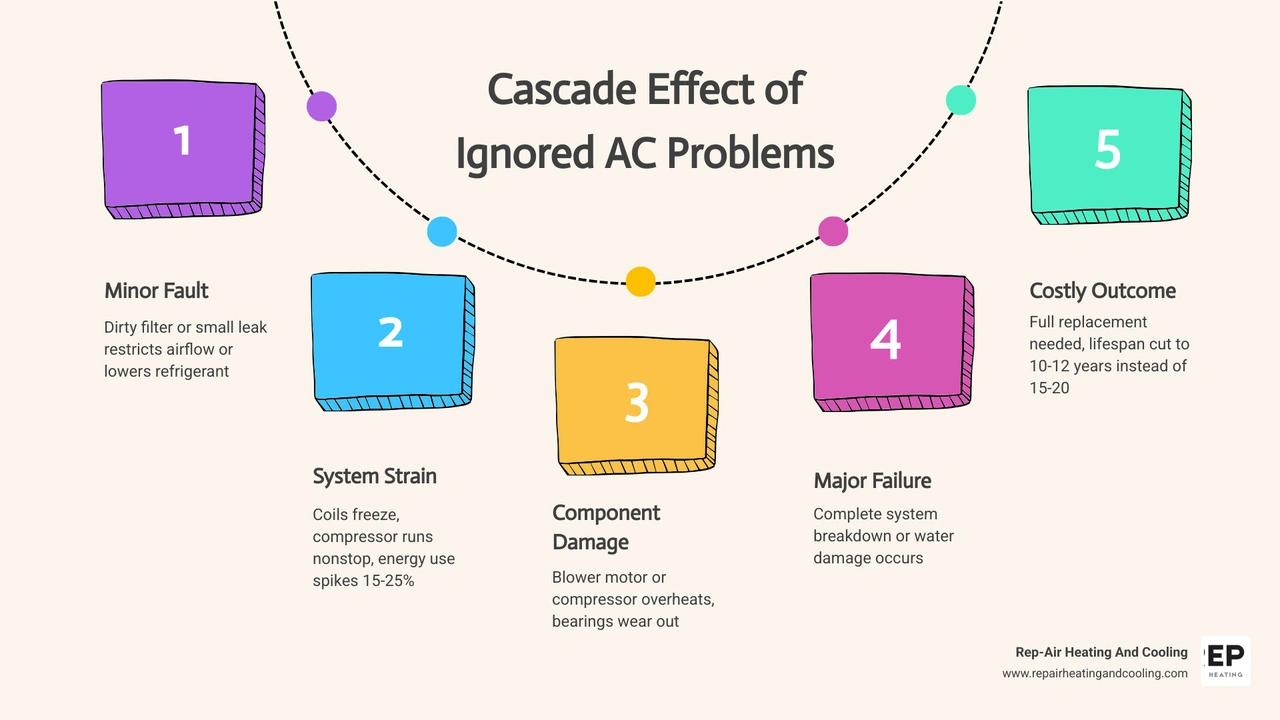
HVAC systems running with unresolved faults consume 15 to 25 percent more energy than properly maintained units. A well-maintained air conditioner can last 15 to 20 years, but a neglected one often gives out in 10 to 12. The gap between those two outcomes usually comes down to whether small problems were caught early or allowed to quietly snowball.
This guide covers the AC issues most likely to escalate, what they escalate into, and why acting sooner always costs less than waiting.
Why You Can't Afford to Ignore Constant AC Operation
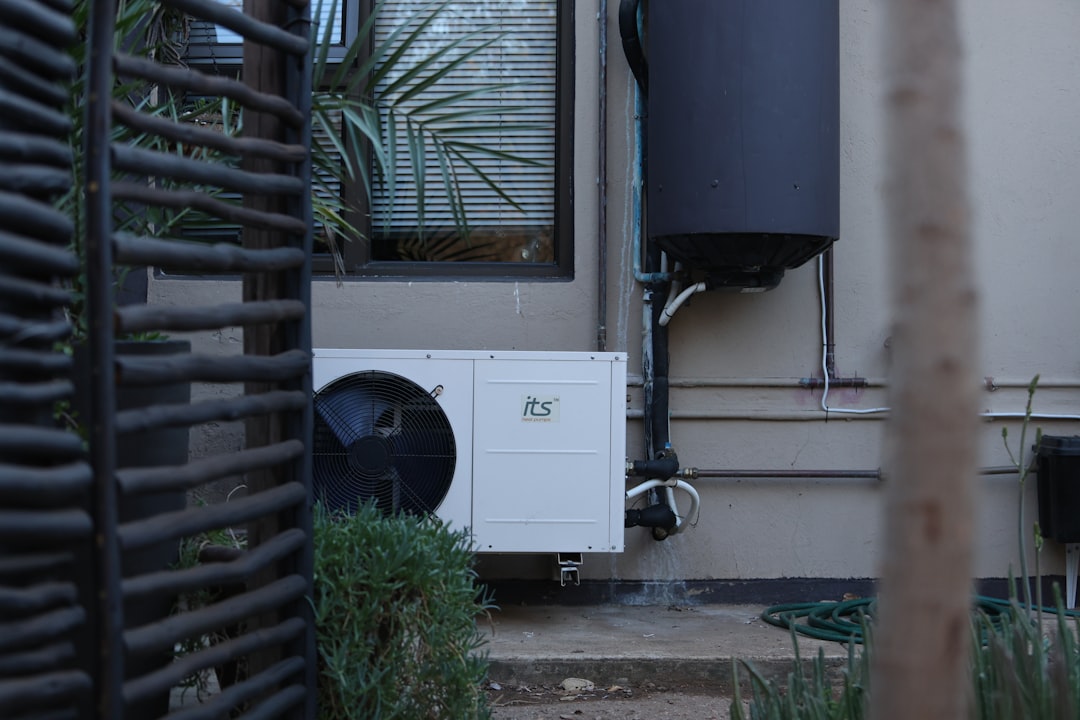
When summer temperatures climb in places like Abbotsford, BC, Mission, BC, or Maple Ridge, BC, your air conditioning system is designed to run in cycles. It turns on, cools your living spaces to the temperature set on your thermostat, and then shuts down. But what happens when that comforting silence never arrives?
An air conditioner that runs continuously without cycling off is a system in distress. Many homeowners assume that as long as the house feels cool, a constantly running AC is just doing its job. In reality, continuous cycling is a major warning sign. It accelerates wear and tear on critical internal components, pushing the system toward premature failure.
When your AC runs non-stop, it consumes electricity continuously. This leads to a massive waste of energy that reflects directly on your monthly utility bills. Over time, the strain of constant operation wears down fan motors, degrades electrical connections, and overheats the compressor. If your system runs constantly and then suddenly stops working altogether, you may find yourself dealing with a completely unresponsive unit. For a deeper look into this issue, check out our guide on Why Your AC Is Not Turning On.
Common Causes of Constant Running and How They Escalated
Continuous AC operation is rarely a mystery; it is almost always the result of a specific, unresolved fault that forces the system to work harder to achieve basic cooling.
• Dirty Condenser and Evaporator Coils: When the outdoor condenser coils are caked in dirt, dust, or lawn debris, they cannot release heat efficiently. Similarly, dirty indoor evaporator coils cannot absorb heat from your indoor air. This forces the system to run indefinitely to lower the temperature even a single degree.
• Leaky Ductwork: If your home's ductwork has gaps, tears, or loose connections, a significant portion of the cooled air escapes into your attic or crawlspaces. Your AC will run constantly because the thermostat never detects that the living areas have reached the target temperature.
• Thermostat Calibration Issues: A malfunctioning or poorly placed thermostat can fail to read indoor temperatures accurately, sending continuous "cool" signals to your AC unit even when the home is already chilled.
If these minor issues are left unaddressed, they quickly escalate. A system that runs constantly due to dirty coils or leaky ducts will eventually begin blowing warm air because the components are too exhausted or frozen to perform the heat exchange process. If you are experiencing this issue, learn more about what to do in our article on AC Blowing Warm Air: What Abbotsford, BC Homeowners Can Do.
The Cascade Effect: How Minor Faults Lead to Major System Failures
In a complex mechanical system like an air conditioner, no component operates in a vacuum. When one part of the system is compromised, other components must work harder to compensate. This is known as the "cascade effect." What starts as a simple, easily fixed issue can quickly create a chain reaction of component strain, leading to catastrophic compressor damage and a significantly shortened system lifespan.
When minor faults are neglected, the ultimate victim is usually the compressor, often referred to as the "heart" of the air conditioning system. Because the compressor is responsible for circulating refrigerant, any issue that alters pressure, restricts airflow, or causes temperature spikes will place immense physical strain on it. If you want to protect your system from these cascading failures, understanding the relationship between different components is essential. For more detailed information, read about AC Refrigerant Issues in Homes.
Clogged Air Filters and Frozen Coils
The humble air filter is your system's first line of defense, keeping dust and airborne debris out of the sensitive internal machinery. However, when a filter is ignored and becomes clogged with dirt, it restricts the volume of air passing through the system.
This restriction in airflow triggers a dangerous cycle:
1. Reduced Heat Absorption: Without a steady stream of warm indoor air passing over the cold evaporator coil, the refrigerant inside the coil cannot absorb enough heat.
2. Coil Freezing: The temperature of the evaporator coil drops below freezing, causing the condensation on the outside of the coil to turn to ice.
3. Blower Motor Strain: The restricted airflow forces the blower motor to work significantly harder to push air through the clogged filter and icy coil, leading to motor strain and eventual burnout.
4. Indoor Water Leaks: When the system finally shuts off or struggles to run, the thick layer of ice on the evaporator coil melts rapidly. This sudden rush of water can easily overwhelm the condensate drain pan, leading to water damage in your ceilings, walls, or flooring. If you notice pooling water, refer to our troubleshooting guide on what to do when your AC Unit Is Leaking Indoors.
Refrigerant Leaks and Compressor Burnout
Refrigerant is the lifeblood of your air conditioner. Unlike fuel, refrigerant is not consumed by the system; it cycles continuously through a closed loop. If your system is low on refrigerant, it means there is a leak somewhere in the copper lines or coils.
Ignoring a refrigerant leak is one of the quickest ways to destroy your air conditioner. When the refrigerant charge drops:
• The compressor has to work much harder to pump the remaining refrigerant, causing it to overheat.
• The lack of proper pressure prevents the compressor from being cooled by the returning refrigerant vapor, leading to internal mechanical friction.
• This constant overheating and friction eventually cause the compressor to seize up or burn out entirely.
Replacing a burned-out compressor is one of the most significant repairs an HVAC system can face, often forcing homeowners to consider a premature system replacement. To learn how to spot these critical warning signs before it is too late, read about AC Repair Red Flags That Mean You Need a New System.
The Financial and Comfort Consequences of Delaying AC Repairs
Putting off an AC repair might seem like a way to save money in the short term, but the financial reality is quite different. The longer a minor issue is allowed to linger, the more expensive the ultimate resolution becomes.
• Clogged Air Filter — Immediate Action Outcome: Optimal airflow, low energy bills, healthy system — Delayed Neglect Outcome: Frozen coils, blower motor burnout, water damage
• Minor Refrigerant Leak — Immediate Action Outcome: Quick leak repair, system recharged, compressor protected — Delayed Neglect Outcome: Overheated compressor, complete system breakdown
• Dirty Condenser Coils — Immediate Action Outcome: Regular cleaning, efficient heat exchange, normal utility bills — Delayed Neglect Outcome: Constant running, high energy bills, shortened lifespan
• Loose Electrical Connection — Immediate Action Outcome: Simple wiring adjustment, reliable operation, safe home — Delayed Neglect Outcome: Failed capacitor, tripped breakers, potential fire hazard
• Blocked Condensate Drain — Immediate Action Outcome: Simple line flush, dry home, mold prevention — Delayed Neglect Outcome: Overflowing drain pan, drywall damage, severe mold growth
When an air conditioner operates with unresolved faults, its energy efficiency plummets. The system must run longer and work harder to cool your home, which can cause your monthly utility bills to spike dramatically. Additionally, neglecting basic repairs can void your manufacturer's warranty, leaving you fully responsible for the cost of major component failures.
When the compounding costs of frequent repairs, high utility bills, and system inefficiency begin to pile up, it is important to evaluate whether a repair is truly the best financial decision. For guidance on this choice, read our article on When the Cost of AC Repair Exceeds the Value of Your System.
How Small AC Problems That Get Worse if You Ignore Them Impact Indoor Air Quality
Your air conditioner does more than just lower the temperature; it plays a critical role in managing the humidity and air quality inside your home. When small AC problems are ignored, your indoor environment can suffer in several ways:
• Dust and Allergen Circulation: A clogged filter or dirty internal cabinet allows dust, pollen, pet dander, and other allergens to bypass the filtration system and circulate continuously through your living spaces, triggering allergy and asthma symptoms.
• Inadequate Humidity Control: A struggling AC cannot effectively remove moisture from the air. High indoor humidity makes the home feel warmer than it actually is, tempting you to lower the thermostat even further and increase system strain.
• Mold and Mildew Growth: When condensate drains are blocked or evaporator coils freeze, excess moisture pools inside the system. In the dark, warm environment of your HVAC system, this standing water can quickly lead to mold growth, which then spreads spores through your ductwork and compromises your family's respiratory health.
Warning Signs of Urgent AC Problems That Get Worse if You Ignore Them
Recognizing the early warning signs of a failing air conditioner is key to preventing a complete system breakdown during the hottest days of the summer. While some issues develop slowly, others require immediate professional intervention to protect your home and safety.
If your system is short cycling (turning on and off rapidly every few minutes) or if you notice a sudden, drastic drop in airflow from your vents, these are clear indicators that your system is under extreme stress. Ignoring these signs will quickly lead to larger failures. To understand what these symptoms mean for your system, check out our guide on Signs Your AC Needs Professional Repair Services.
Strange Noises and Odors
Your air conditioner should operate relatively quietly. While you will hear the gentle hum of the fan and the compressor kicking on, any new, distinct, or loud noises are cause for concern:
• Grinding Sounds: This typically indicates worn-out bearings in the blower motor or condenser fan. If ignored, the motor will eventually seize, potentially causing the entire assembly to break apart.
• Screeching or Squealing: Often caused by a slipping belt or failing bearings. In severe cases, a high-pitched screaming sound can indicate dangerous pressure buildup within the compressor.
• Banging or Clanging: This suggests that a component has come loose inside the fan housing or compressor and is hitting other parts. Turn off the system immediately to prevent total destruction of the fan.
• Musty Odors: A strong, musty smell coming from your vents indicates mold or mildew growth inside the ductwork, evaporator coil, or drain pan.
If your system is making unusual sounds, it is vital to have it inspected before the damage spreads. Learn more by reading AC Making Strange Noises: What They Mean.
AC Breaker Tripping and Capacitor Failures
Electrical issues are among the most urgent AC problems because they carry inherent safety risks. If your air conditioner causes your circuit breaker to trip, do not simply flip the switch back on and ignore it. A tripping breaker is a safety mechanism designed to prevent electrical fires. It indicates that your system is drawing far more electrical current than it safely should, often due to a short circuit, a failing compressor, or a weakened capacitor.
The capacitor acts like a temporary battery, providing the high-voltage boost your compressor and fan motors need to start up. Over time, heat and electrical strain can cause capacitors to bulge, leak, or fail entirely. When a capacitor weakens, the motors must work much harder to start, leading to electrical strain, damaged wiring, and tripped breakers. If you are experiencing this issue, read our detailed guide on why your AC Breaker Keeps Tripping.
Preventing Summer Breakdowns with Regular Maintenance
The single most effective way to prevent minor AC issues from turning into major financial headaches is to establish a routine of regular, preventative maintenance. Just like changing the oil in your vehicle, proactive care ensures that all moving parts are lubricated, electrical connections are secure, and airflow remains unobstructed.
An annual professional maintenance checklist should include:
• Cleaning and clearing the outdoor condenser unit of leaves, dirt, and debris.
• Inspecting and cleaning the indoor evaporator coil to ensure optimal heat transfer.
• Checking and flushing the condensate drain line to prevent indoor leaks and mold.
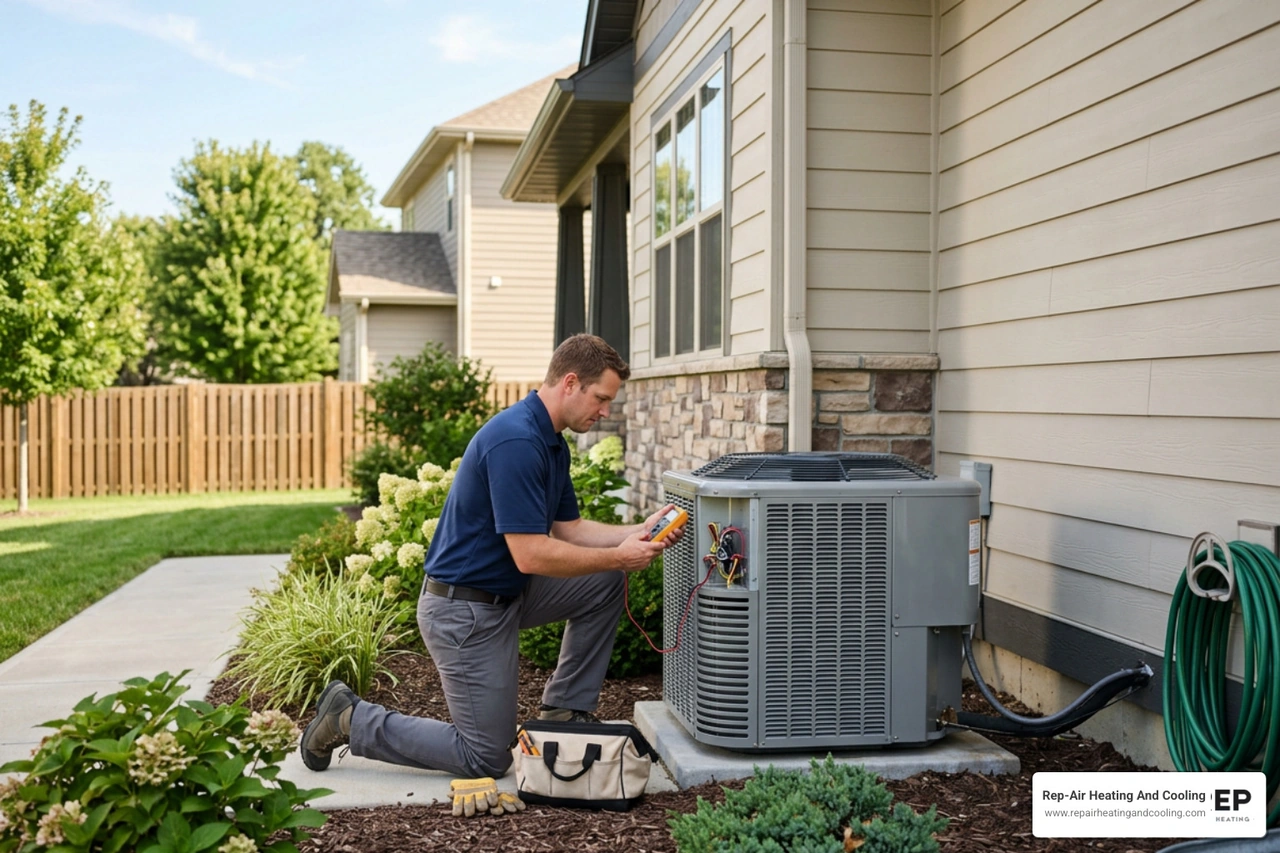
• Testing the electrical connections, measuring voltage, and inspecting the capacitor.
• Verifying that the refrigerant charge is at the manufacturer's exact specifications.
• Replacing the air filter and checking the overall airflow through the ductwork.
Taking these simple steps before the peak summer heat arrives protects your system from sudden breakdowns when you need cooling the most. It also extends the overall lifespan of your equipment, ensuring you get the maximum value out of your investment. To understand how regular care impacts the longevity of your system, read our guide on How to Know When It's Time to Replace HVAC Equipment.
Why Proactive Care Stops AC Problems That Get Worse if You Ignore Them
Proactive maintenance is all about early detection. During an annual tune-up, an experienced technician can spot a tiny refrigerant leak, a slightly weakened capacitor, or a worn motor bearing long before these issues cause a system breakdown.
By addressing these minor faults during a scheduled visit in the spring, you avoid the stress, long wait times, and emergency service fees that often come with a breakdown during a July heatwave. For homeowners in the Lower Mainland, BC, keeping your system optimized means reliable comfort all summer long and lower energy bills every single month.
Frequently Asked Questions About Neglected AC Issues
What happens if I ignore a refrigerant leak in my AC?
If you ignore a refrigerant leak, your air conditioner's cooling capacity will steadily drop, causing it to run longer and waste energy. Over time, the lack of proper refrigerant pressure will cause the compressor to overheat and seize. Because the compressor is highly expensive to replace, ignoring a simple leak can easily turn a straightforward repair into a complete system replacement.
Can a dirty air filter really cause my entire AC system to fail?
Yes, absolutely. A heavily clogged air filter restricts the airflow passing over your indoor evaporator coil. Without enough warm air to keep the coil warm, the moisture on the coil freezes solid. This ice blocks airflow entirely, strains the blower motor until it burns out, and can cause liquid refrigerant to flood back into the compressor, destroying it.
How do I know if my AC issue is an emergency or can wait?
An AC issue is an emergency if you experience a complete loss of cooling during extreme heat, smell burning plastic or electrical odors coming from your vents, hear loud screeching or clanging noises, or if your system repeatedly trips the circuit breaker. These symptoms indicate severe mechanical or electrical faults that can lead to safety hazards or total system failure if left running.
Conclusion
Ignoring minor air conditioning issues is a gamble that rarely pays off. What begins as a slightly higher utility bill, a faint clicking sound, or a dusty filter can quickly cascade into frozen coils, water damage, and a ruined compressor. Taking a proactive approach to your home's cooling system is the best way to protect your comfort, your indoor air quality, and your wallet.
At Rep-Air Heating And Cooling, we pride ourselves on treating our customers like family. We provide comprehensive HVAC maintenance and repair services to homeowners throughout the Lower Mainland, BC, including Abbotsford, BC, Mission, BC, Maple Ridge, BC, and the surrounding areas. Our expert technicians are dedicated to keeping your home safe, comfortable, and energy-efficient all year round.
Don't wait for a minor issue to become an expensive emergency. Schedule professional AC services with Rep-Air Heating And Cooling today to ensure your system is ready to keep you cool all summer long.
hear what our satisfied clients have to say
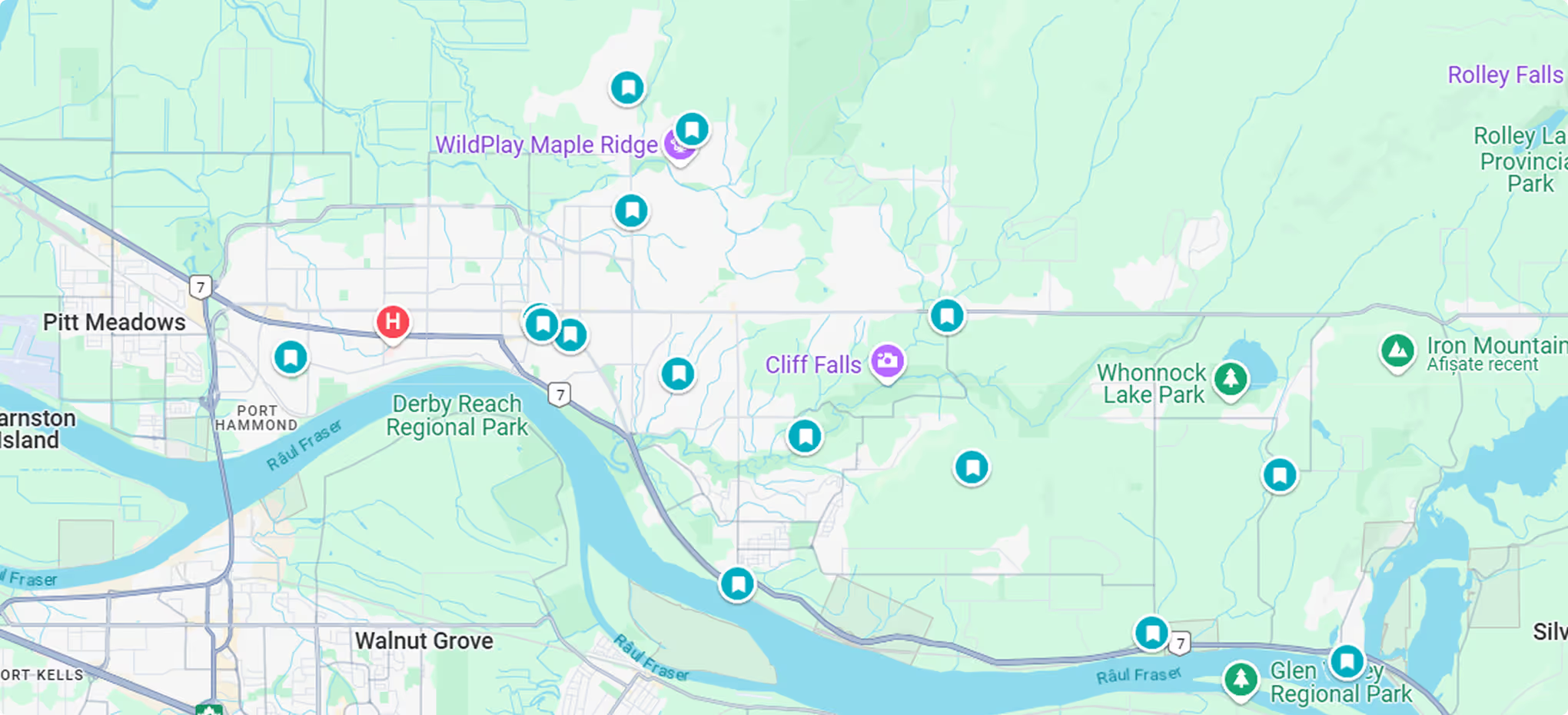
Neighbourhoods in the Fraser Valley