Mission Control for Noisy Boilers: Your Guide to Quiet Heating
Why Your Boiler Making Noise in Mission BC Demands Immediate Attention
If your boiler making noise in mission bc is disrupting your home, it's sending a distress signal. Sounds like loud banging, gurgling, or whistling aren't just annoying; they often indicate underlying problems with your hydronic heating system. These issues can compromise efficiency, raise energy costs, and even pose safety concerns. Mission homeowners rely on their boilers through our damp, chilly seasons, making it vital to understand what these noises mean.
Quick Answer: Common Boiler Noises and Their Likely Causes
• Banging/Knocking – Limescale buildup (kettling), delayed ignition, or water hammer.
• Gurgling/Bubbling – Trapped air in pipes or radiators.
• Whistling/Hissing – Steam escaping, limescale buildup, or system overheating.
• Rumbling/Clanking – Sediment buildup or loose internal components.
• Humming/Vibrating – Circulator pump issues or high water pressure.
For more on hydronic heating issues, see our hydronic heating noise troubleshooting guide. If your system needs immediate attention, our team is ready to help, schedule your boiler service today.
This guide will decode your boiler's noises, explain common causes in Mission homes, walk you through safe DIY diagnostics, and clarify when to call a professional to protect your investment and restore quiet comfort.
Decoding Your Boiler's Distress Signals: A Guide to Common Noises
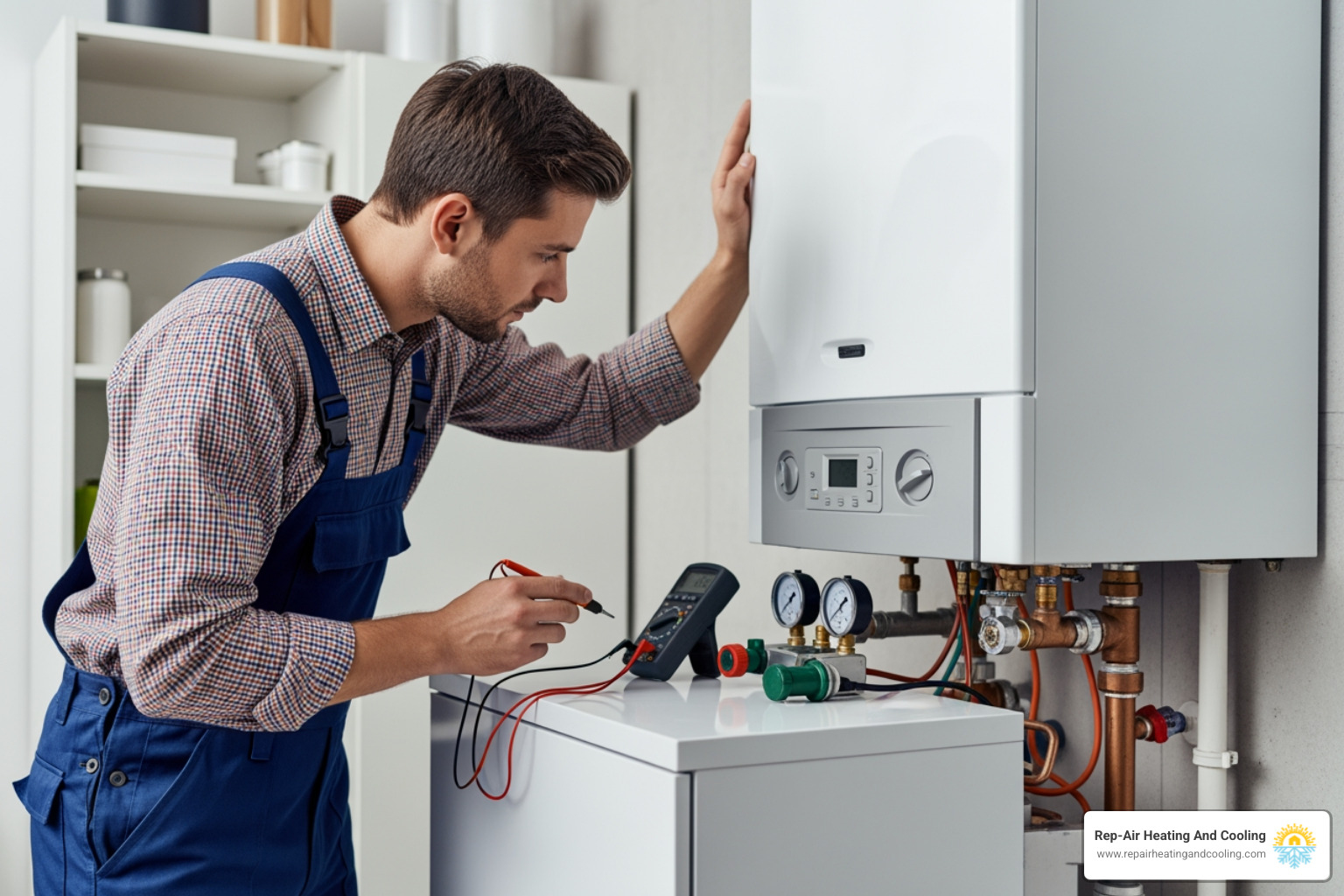
Think of your boiler as a communicator: when something's wrong, it speaks in clangs, whistles, and rumbles. Learning to translate these sounds is the first step to understanding what's happening inside your hydronic heating system and restoring peace to your Mission home.
Each noise tells a different story. A banging or knocking sound often points to trapped air, pipes expanding with heat, or zone valve problems. However, it can also signal more serious issues like delayed ignition (gas buildup) or pressure problems from limescale.
If your boiler is gurgling or bubbling, you're likely hearing trapped air moving through pipes or radiators. This disrupts the smooth flow of water, causing uneven heating and leaving some rooms chilly.
A high-pitched whistling or hissing often means limescale has built up inside the heat exchanger, restricting water flow and causing water to boil, a process called kettling. Hissing can also indicate a system leak, overheating, or air pressure issues.
A low, persistent rumbling or clanking usually means sediment has settled in your heat exchanger or the burner needs cleaning. Clanking might also suggest loose internal components or a problem with your expansion tank.
While a gentle humming or vibrating is normal, a loud or excessive hum points to a problem. You could be dealing with a seized circulator pump, worn bearings, high water pressure, or an electrical issue.
Finally, clicking or tapping is often just the natural expansion and contraction of metal pipes. However, if it's loud or persistent, it could mean pipe supports have loosened or zone valves are not operating smoothly.
Identifying the sound and its location is key. Does it happen constantly or only at startup? Is it coming from the boiler, pipes, or radiators? These details help narrow down the cause of your boiler making noise in Mission, BC.
For a deeper dive into hydronic heating problems, our comprehensive resource covers everything you need to know: Hydronic Heating Noises? Rep-Air's Fixes in 2025.
Common Causes for a Boiler Making Noise in Mission, BC
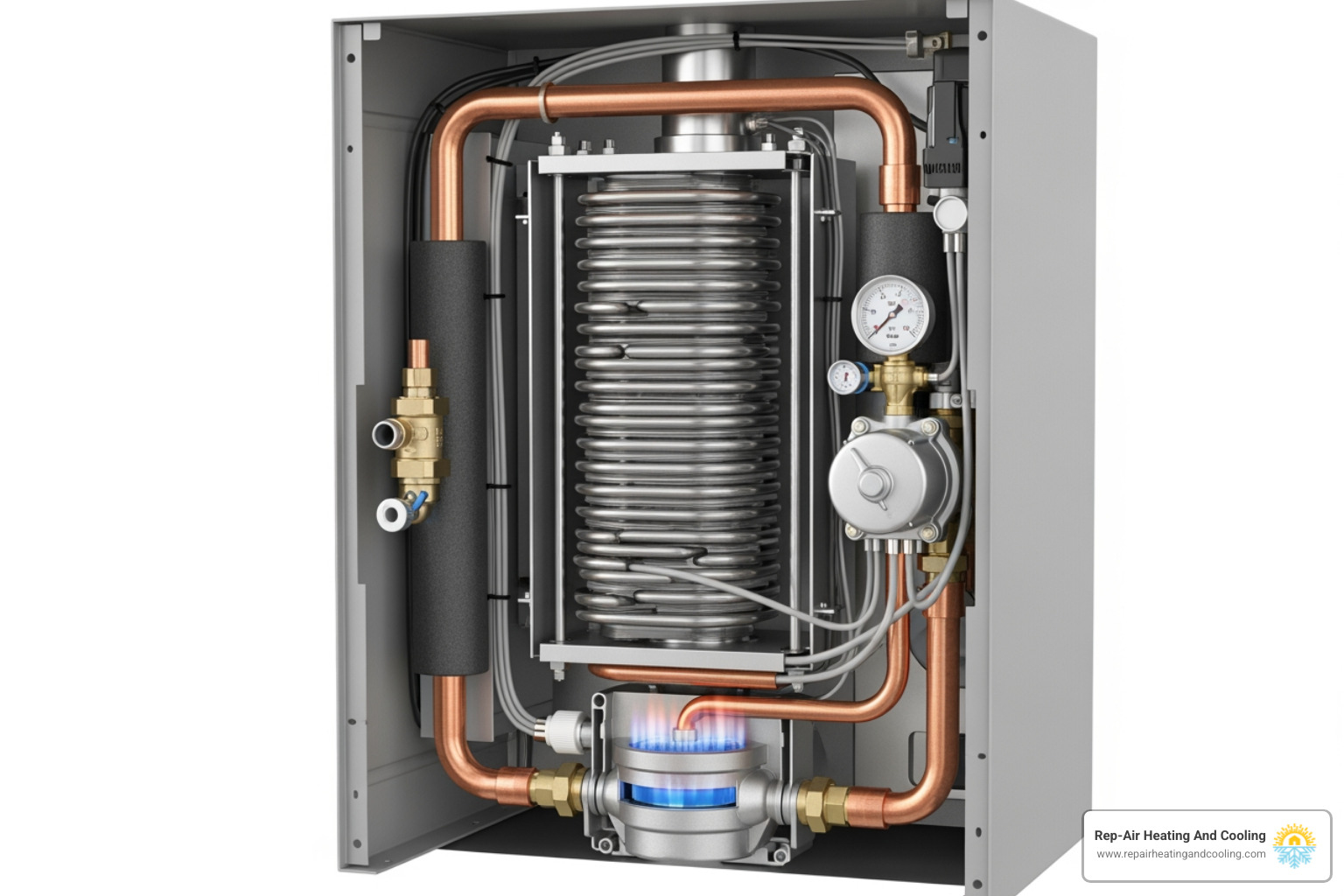
When your boiler starts making strange noises, it's often due to issues with water quality, mineral deposits, or simple mechanical wear. Understanding what causes your boiler making noise in Mission, BC is the first step toward a solution. Here are the most common culprits we see in local homes.
Kettling: The Sound of Limescale Buildup
If your boiler sounds like a boiling kettle, you're hearing kettling. This whistling or rumbling happens when the heat exchanger gets too hot, usually due to limescale buildup. Hard water, common in Mission and surrounding areas, contains minerals that settle on the heat exchanger, forming an insulating layer. This crust prevents efficient heat transfer, causing the water underneath to overheat and form steam bubbles. When these bubbles collapse, they create a popping or banging sound. Kettling forces your boiler to work harder, reducing energy efficiency by 15-30% and increasing stress on the system.
Air in the System: Gurgling and Banging Explained
When your boiler gurgles or sounds like water running through pipes, you're almost certainly dealing with trapped air. Air can enter the system and create airlocks that disrupt the circulation of hot water. This not only causes gurgling but can also lead to cold spots in your home, as radiators don't heat up properly. In some cases, trapped air contributes to a banging noise known as water hammer. This occurs when moving water hits an airlock or a closing valve, creating a shockwave that rattles the pipes. Releasing trapped air is often a straightforward fix. For persistent issues, our Boiler Repair Mission BC services can restore smooth operation.
Pump and Component Issues: Humming and Vibrating
A gentle hum from your boiler is normal; it's the sound of the circulator pump moving hot water. But when that hum becomes a loud vibration, it's time to pay attention. Worn bearings are a common cause of pump noise, creating grinding or squealing sounds as the motor struggles to turn. Sometimes, the pump may seize up entirely, producing an intense hum while becoming hot to the touch. Other causes of humming and vibrating include loose components, high water pressure, or electrical issues like a faulty transformer. Addressing these pump and component issues quickly prevents small problems from becoming expensive repairs. Our technicians handle all such challenges through our Heating Repair Mission BC services.
Banging or Knocking: What it Means When Your Boiler is Making Noise in Mission, BC
Banging and knocking noises are hard to ignore, and you shouldn't. These sounds often signal issues that need prompt attention. Delayed ignition is one of the most serious causes, especially in gas boilers. If gas builds up before igniting, it can create a small explosion, producing a loud bang. This can happen with dirty burners or pilot light issues and poses a safety risk. Water hammer also creates dramatic banging when water flow changes direction suddenly, causing pipes to knock against their surroundings. Severe limescale buildup (kettling) can also progress from whistling to banging. These sounds are warning signs that your boiler is struggling, similar to the warning signs your furnace needs work in Mission, BC. Addressing them protects your system from damage.
Your First Response: DIY Boiler Noise Diagnostics
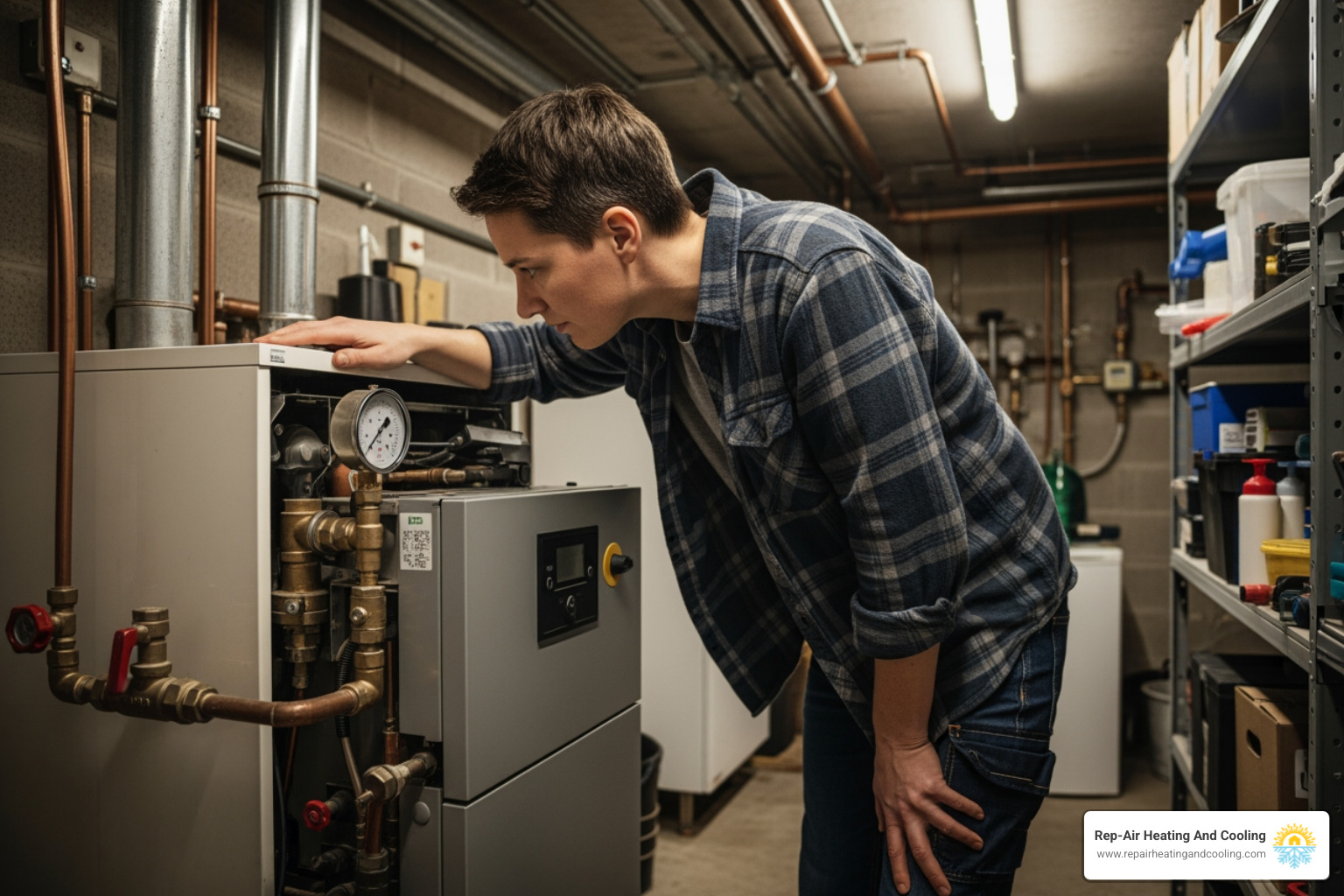
When your boiler making noise in mission, bc starts up, a few simple DIY checks can help diagnose the problem. These steps might even solve the issue, or at least provide valuable information for a technician.
Safety first: Always turn off your boiler and let it cool completely before touching anything to prevent burns or other injuries.
Checking the System Pressure
Your boiler's pressure gauge is a key health indicator. Most hydronic systems in Mission operate best between 12-20 PSI (pounds per square inch) when cold. Locate the gauge on the front of your boiler and check the reading.
If the pressure is below 10-12 PSI, it's too low. This can happen after bleeding radiators or may indicate a slow leak. Low pressure makes the pump work harder and can cause gurgling or banging. If the pressure is above 25-30 PSI, it's too high, which puts stress on the entire system and can also cause banging noises. High pressure may signal an issue with your expansion tank. If you find low pressure, you can often repressurize the system using the filling loop, but always consult your boiler's manual first.
Bleeding Your Radiators to Release Trapped Air
If you hear gurgling or notice some radiators are cold, you likely have trapped air. Bleeding your radiators is a satisfying DIY fix that can resolve both the noise and the uneven heating.
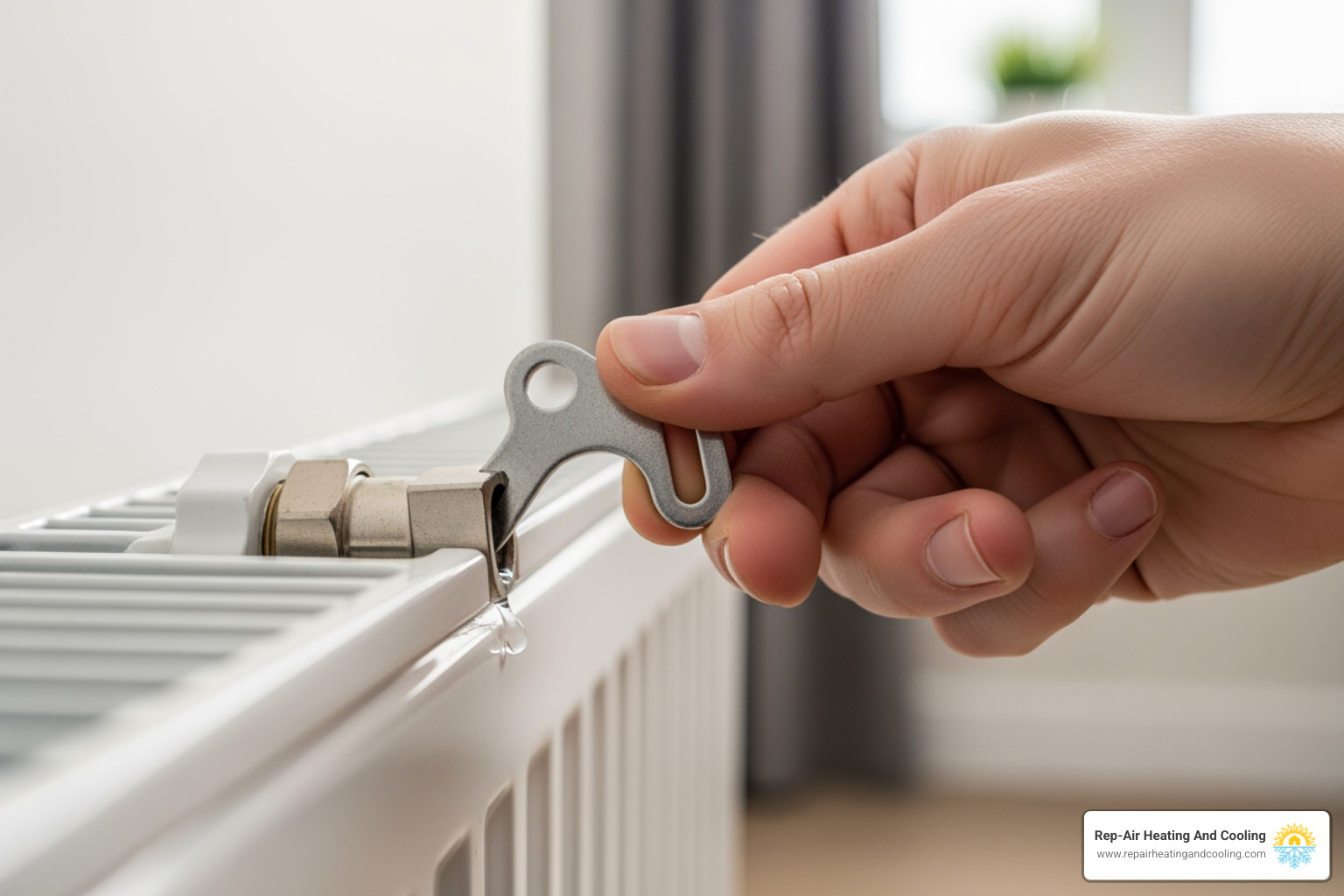
First, turn off your heating system and let the radiators cool. Grab a radiator bleed key and a cloth. At the top corner of each radiator, you'll find a small bleed valve. Place the cloth underneath to catch water and slowly turn the valve counter-clockwise. You should hear a hissing sound as air escapes. Once water trickles out steadily, close the valve by turning it clockwise until snug.
Work your way through your home systematically, starting with the lowest floor and moving up. After bleeding all radiators, check your boiler's pressure gauge again. You may need to add a little pressure back into the system. If noises persist after these checks, it's time to call a professional.
When to Call a Professional in Mission, BC
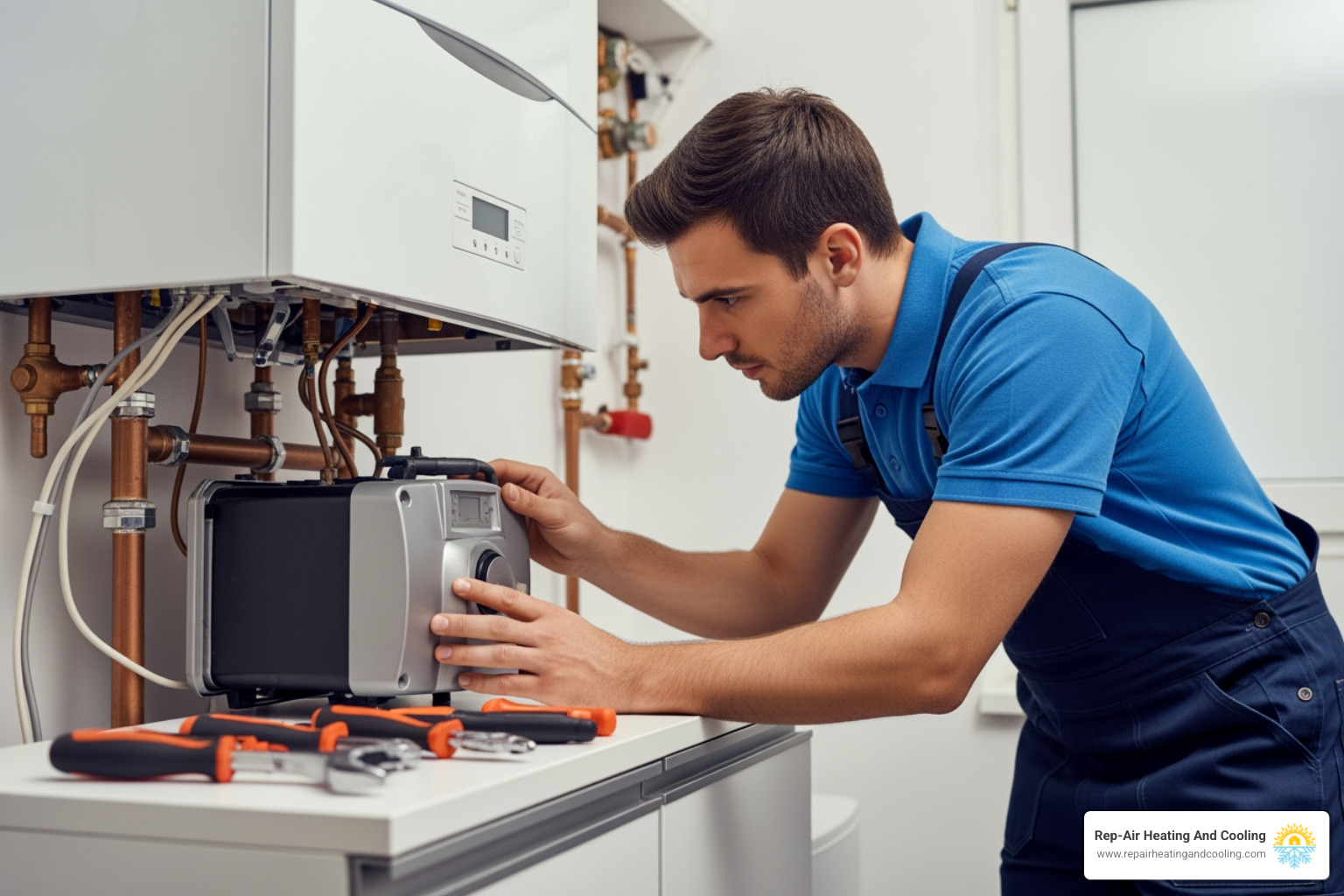
While some issues can be fixed with DIY methods, there comes a point when your boiler making noise in Mission, BC requires a professional. Calling an expert ensures your heating system works quietly and safely, giving you peace of mind.
The Risks of Ignoring Boiler Noises
Ignoring persistent boiler noises is risky. The consequences can range from frustrating to dangerous.
• Decreased Efficiency and Higher Bills: A struggling boiler works harder, which can reduce energy efficiency by 15-30% and lead to higher energy bills.
• Component Damage: What starts as a minor hum can escalate into serious damage. Vibrations stress bearings and seals, while overheating can crack heat exchangers, leading to complete system failure.
• Water Damage: A small hiss could be a leak that grows over time, causing significant water damage, mold, and structural issues.
• Safety Risks: Combustion issues, especially those causing banging from delayed ignition, can pose a carbon monoxide risk. This odorless gas is deadly, making any strange sounds or smells an emergency.
• Shortened Lifespan: Neglect can cut a boiler's 15-20 year lifespan in half.
Signs You Need an Expert for Your Boiler Making Noise in Mission, BC
Some situations are clear signals that DIY troubleshooting has reached its limit. Call a professional if you notice:
• Loud, persistent noises: Banging, rumbling, or continuous whistling that doesn't stop after checking pressure and bleeding radiators indicates a deeper issue.
• Visible leaks: Any hissing accompanied by water requires immediate attention to prevent property damage.
• Strange odors or scorch marks: If you smell gas, burning, or see scorch marks, turn off your boiler and call for emergency service. A gas smell requires you to evacuate, call 911 or FortisBC, and then contact us once it's safe.
• Pilot light issues: A pilot light that keeps going out or burns yellow instead of blue signals a combustion problem that needs professional repair.
• Error codes: While your manual may identify an error code, fixing the underlying issue usually requires an expert.
• Persistent problems: If you've tried DIY fixes and the noise or lack of heat continues, it's time for a professional diagnosis.
Our team provides comprehensive Boiler Service Mission BC and Heating Service Mission BC to resolve these issues safely. We have the tools and experience to find the cause and provide a lasting solution.
Frequently Asked Questions about Noisy Boilers
We understand a noisy boiler can be a source of concern for Mission homeowners. Here are answers to some of the most common questions we receive.
Is it normal for my boiler to make some noise?
Yes, some noise is normal. A quiet clicking as parts expand and contract, a gentle hum from the circulator pump, or the faint sound of water moving through pipes are all typical operational sounds. You should only be concerned when new, loud, or sudden noises appear. A change in sound often signifies an emerging issue that needs attention.
How can regular maintenance prevent boiler noises?
Regular boiler maintenance in Mission is the best way to prevent disruptive noises. During an annual tune-up, our technicians address the root causes of most boiler sounds before they start. We perform system flushing to remove sediment and limescale, check and adjust system pressure, and inspect components like the pump and valves for wear. This preventative care reduces strain on your system, minimizes noise, extends your boiler's lifespan, and keeps energy bills down. Learn more about our Boiler Maintenance Mission BC services.
What is the most common cause of a noisy boiler?
The most common cause of a boiler making noise in mission, bc depends on the sound, but we frequently find that trapped air (causing gurgling), limescale buildup (causing kettling), and low water pressure are at the top of the list. Each sound points to a specific issue, which is why professional diagnosis is crucial for an accurate and lasting solution. Our technicians are trained to service a wide range of boiler brands, addressing the underlying problem regardless of the manufacturer.
Restore Quiet and Comfort to Your Mission Home
When your boiler makes unusual noises, it's telling you that something needs attention. Taking prompt action isn't just about silencing a sound; it's about protecting your home's heating system. By addressing these warning signs early, you ensure your boiler's longevity, save on energy costs, and maintain the reliable comfort your Mission family deserves.
Acting on your boiler making noise in Mission, BC prevents minor issues from becoming expensive repairs and avoids potential safety hazards. You'll extend the life of your heating system and enjoy peace of mind.
Our team at Rep-Air Heating And Cooling understands how crucial a quiet, efficient boiler is. We offer comprehensive maintenance plans and expert service to homeowners throughout Mission and the Lower Mainland. Whether your boiler needs descaling, air purging, or component repair, we have the expertise to get it running smoothly again.
Don't let a noisy boiler disrupt your home or lead to a costly emergency. For expert diagnostics and reliable solutions, schedule your Boiler Service in Mission, BC today. Let us restore the quiet comfort you deserve.
hear what our satisfied clients have to say
Neighbourhoods in the Fraser Valley