How to Calculate the Right HVAC Size for Fraser Valley Homes
Why Getting the Right Size HVAC for Fraser Valley Homes Is the Most Important Decision You'll Make
Getting the right size HVAC for Fraser Valley homes is one of those decisions that quietly shapes your comfort, your energy bills, and your equipment's lifespan for the next 15 to 20 years. Too big, and your system short-cycles — turning on and off constantly without ever properly removing humidity from your air. Too small, and it runs nonstop, struggling to keep up on the coldest days near Maple Ridge or the wettest winters in Abbotsford, BC.
The Fraser Valley's climate makes this especially tricky. With annual rainfall between 1,500 and 1,700 mm, high humidity year-round, and winter temperatures that can dip well below freezing in areas like Websters Corners or the Alouette River corridor, a system sized on square footage alone will almost always steer you wrong.
A proper Manual J load calculation — the industry standard developed by the Air Conditioning Contractors of America — looks at more than just floor space. It factors in your insulation levels, window orientation, ceiling height, occupancy, local design temperatures, and more. Older homes in Hammond or Haney built in the 1960s and 70s, for example, can have 40–60% higher heating loads per square foot than a newer build in Albion or Silver Valley, simply because of the difference in insulation and air sealing.
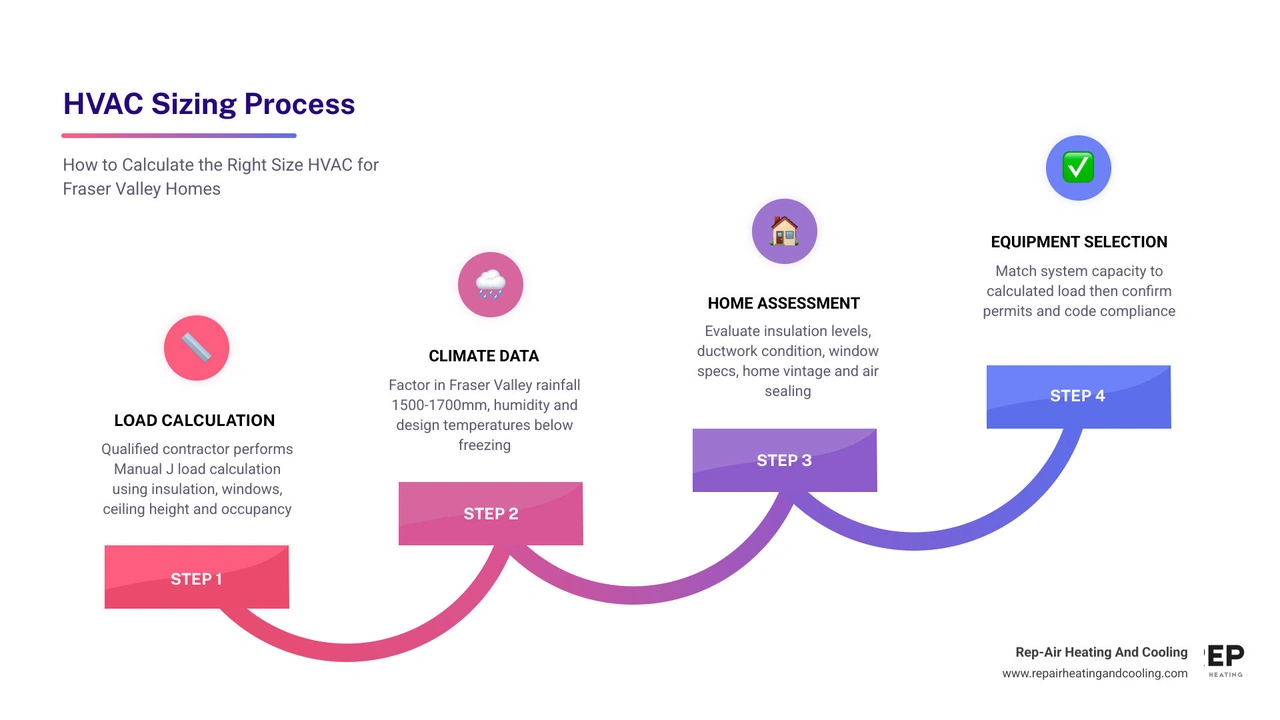
Here's a quick overview of what proper HVAC sizing for a Fraser Valley home involves:
1. Manual J load calculation performed by a qualified contractor before any equipment is selected
2. Local climate data factored in, including Fraser Valley design temperatures and humidity levels
3. Home-specific factors assessed: insulation, ductwork condition, window specs, ceiling heights, and home vintage
4. Equipment matched to the calculated load, not to a square-footage rule of thumb
5. System type selected based on your home's layout, existing ductwork, and fuel source
6. Permits and code compliance confirmed through Technical Safety BC before installation begins
Why Sizing Matters: Getting the Right Size HVAC for Fraser Valley Homes
When we talk about getting the right size HVAC for Fraser Valley homes, we are dealing with a delicate balancing act. Many homeowners assume that "bigger is always better" when buying a new furnace or heat pump. After all, won't a larger system heat or cool the house faster?
In reality, an oversized system is one of the worst things you can install in your home. It leads to a phenomenon called short-cycling. This occurs when a massive unit blasts hot or cold air into your living space, rapidly satisfies the thermostat, and shuts off before it can complete a full cycle.
Because it shuts down so quickly, the system never runs long enough to pull moisture out of the air. In a damp climate like Abbotsford or Mission, BC, this leaves you with a cold, clammy indoor environment. Over time, that lingering moisture can lead to indoor air quality issues, including mold growth and dust mites.
Conversely, an undersized system will run continuously without ever reaching your thermostat's setpoint. This puts immense wear and tear on the compressor or heat exchanger, drastically shortening its lifespan and causing your utility bills to skyrocket.
Whether you live in a sprawling property in Salmon River Uplands or a cozy home in Hammond, matching the system's capacity to your home's actual heat loss and heat gain is critical. You can read more about how proper sizing protects your investment in our guide on The Importance of Properly Sized HVAC Mission BC.
The Science of Sizing: Manual J Load Calculations vs. Rules of Thumb
Historically, many contractors relied on simple rules of thumb to size HVAC systems, such as allocating one ton of cooling for every 500 square feet of living space. Today, we know that these rules of thumb are outdated and highly inaccurate. Modern building materials, improved insulation, and tight building envelopes mean that two homes with the exact same square footage can have completely different heating and cooling requirements.
To get an accurate measurement, we perform a Manual J load calculation. This scientific methodology determines exactly how much heat your home loses in the winter (heat loss) and how much heat it gains in the summer (heat gain).
A proper load calculation evaluates:
• The R-value of your attic, wall, and floor insulation
• The total number of windows, their framing materials, and their solar heat gain coefficient (SHGC)
• Local climate patterns and regional wind exposure
• The orientation of your home relative to the sun
• Heat generated by indoor occupants and appliances
To understand the engineering behind these measurements, take a look at our detailed breakdown of How HVAC Load Calculations Work.
Why Square Footage Alone Fails When Getting the Right Size HVAC for Fraser Valley Homes
Relying solely on square footage completely ignores the architectural nuances of your home. For example, a home in Silver Valley with vaulted ceilings contains a much larger volume of air to heat and cool than a rancher in Aldergrove with standard eight-foot ceilings, even if they share the exact same footprint.
Window orientation is another massive factor. If your living room features large, south-facing windows looking out toward the Fraser River, it will experience significant solar heat gain during hot July afternoons. A home of the same size with north-facing windows shaded by mature trees will require far less cooling capacity. To see how these variables directly impact your air conditioning needs, read our article on How Load Calculations Determine Your AC Installation Specs.
Local Climate Factors and Getting the Right Size HVAC for Fraser Valley Homes
The Fraser Valley's unique geography creates distinct microclimates. While winters are generally mild and wet, cold outflows from the valley can cause temperatures to plunge rapidly, especially in higher-elevation areas like Websters Corners or rural Whonnock.
Sizing a system for this region requires designing for the local ASHRAE (American Society of Heating, Refrigerating and Air-Conditioning Engineers) design temperatures. These represent the temperatures that the area stays above for 99% of the winter and below for 99% of the summer. Rather than sizing a system for a rare, historic cold snap, we size it to operate at peak efficiency during the weather conditions your home actually experiences nearly all year round.
Choosing the Right System Type for Your Fraser Valley Property
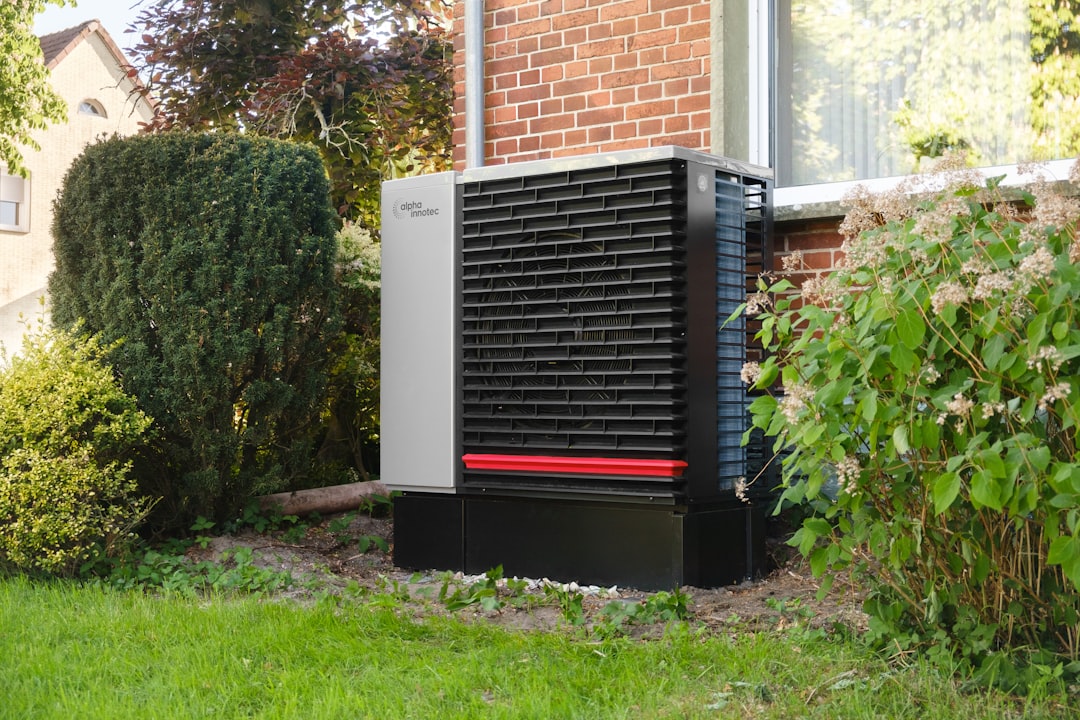
Once we have established your home's heat load, the next step is choosing the right system type. The Fraser Valley's moderate climate makes heat pumps incredibly efficient options, but the layout of your home and your existing infrastructure will dictate the best configuration.
• Ducted Heat Pumps: Perfect for newer homes in Albion or properties in Coquitlam that already have central ductwork in good condition. They offer quiet, balanced, whole-home heating and cooling.
• Ductless Mini-Splits: Ideal for older homes in Haney that rely on baseboard heating, or homes with awkward layouts, suites, and additions. They allow you to control the temperature of individual zones or rooms independently.
• Dual-Fuel Systems: These combine an electric heat pump with a high-efficiency gas furnace. The heat pump handles the heating for 90% of the Fraser Valley winter, and the gas furnace kicks in as a backup only during extreme cold snaps.
Before making a final choice, it is helpful to look at the structural and electrical prep work required. Learn more about these preparatory steps in our guide on What You Need to Know Before Having an Air Conditioner Installed.
• Ducted Heat Pump — Best Suited For: Homes with existing, well-insulated central ductwork — Key Sizing Consideration: Blower motor must match ductwork capacity to prevent noise and static pressure issues.
• Ductless Mini-Split — Best Suited For: Homes without ducts, heritage properties, or zoned additions — Key Sizing Consideration: Requires room-by-room Manual J calculations to size individual indoor heads correctly.
• Dual-Fuel System — Best Suited For: Cold-climate areas or older homes with high heat loss — Key Sizing Consideration: Sized to ensure the heat pump handles the bulk of the seasonal load before switching to gas.
Home Vintage, Ductwork, and Code Requirements in British Columbia
Your home's age plays a massive role in both system sizing and installation complexity. Older homes in neighborhoods like Hammond often have original, uninsulated ductwork. If you install a modern, high-velocity heat pump on leaky, undersized ducts, you will likely experience noisy registers and cold drafts. In some cases, ductwork repairs or modifications are required to handle the airflow demands of a new system.
Furthermore, British Columbia has adopted strict energy standards. New constructions and major renovations must comply with the BC Energy Step Code and utilize CSA F280-12 compliant heat loss calculations. These high-performance envelopes require much smaller heating and cooling capacities than older, draftier homes.
Your electrical system is another critical check. Older homes with 100-amp electrical service may require a panel upgrade or a smart load-management device to safely accommodate the 240V circuit needed for a central heat pump. When preparing for an installation, working with licensed professionals ensures all local electrical and mechanical permits are pulled through Technical Safety BC. For residents in Abbotsford, you can explore our specialized services here at Professional HVAC Installation in Abbotsford.
Frequently Asked Questions About Fraser Valley HVAC Sizing
What are the consequences of an oversized HVAC system?
An oversized system will short-cycle, meaning it turns on and off rapidly. This prevents the system from removing humidity, leaving your home feeling damp and clammy. It also causes uneven temperatures throughout the house, increases wear on critical components, and leads to premature equipment failure.
How do BC rebates impact my HVAC sizing decisions in 2026?
While provincial fuel-switching rebates transitioned in early 2025, significant financial incentives remain available in 2026. Income-qualified households can access substantial rebates through the CleanBC Energy Savings Program. To qualify for these rebates, your system must be sized properly by a registered contractor and selected from approved product lists that meet specific efficiency standards.
How do I choose a qualified contractor to size my system?
Always look for a contractor who is a member of the Home Performance Contractor Network (HPCN) and employs Red Seal certified technicians. They should always perform a comprehensive home assessment and a Manual J load calculation rather than offering a quick estimate over the phone. You can find detailed advice on selecting a trustworthy team in our articles on How to Choose a Reliable HVAC Company in Mission BC and the Benefits of Hiring a Red Seal Certified HVAC Company.
Conclusion
Getting the right size HVAC for Fraser Valley homes is not something that should be left to guesswork. By moving away from outdated rules of thumb and embracing precise Manual J load calculations, you protect your home from humidity issues, high utility bills, and premature system breakdowns.
At Rep-Air Heating And Cooling, we treat your home and family like our own. Our expert, certified technicians are dedicated to ensuring your new system is sized perfectly for your specific property, providing you with whisper-quiet, energy-efficient comfort all year long. Once your system is installed, keeping it running at peak performance is easy with our comprehensive maintenance packages, which you can read about in our HVAC Maintenance Plans Complete Guide.
Ready to experience true, worry-free home comfort? Schedule your professional home assessment with Rep-Air Heating And Cooling today, and let us take the guesswork out of your HVAC upgrade.
hear what our satisfied clients have to say
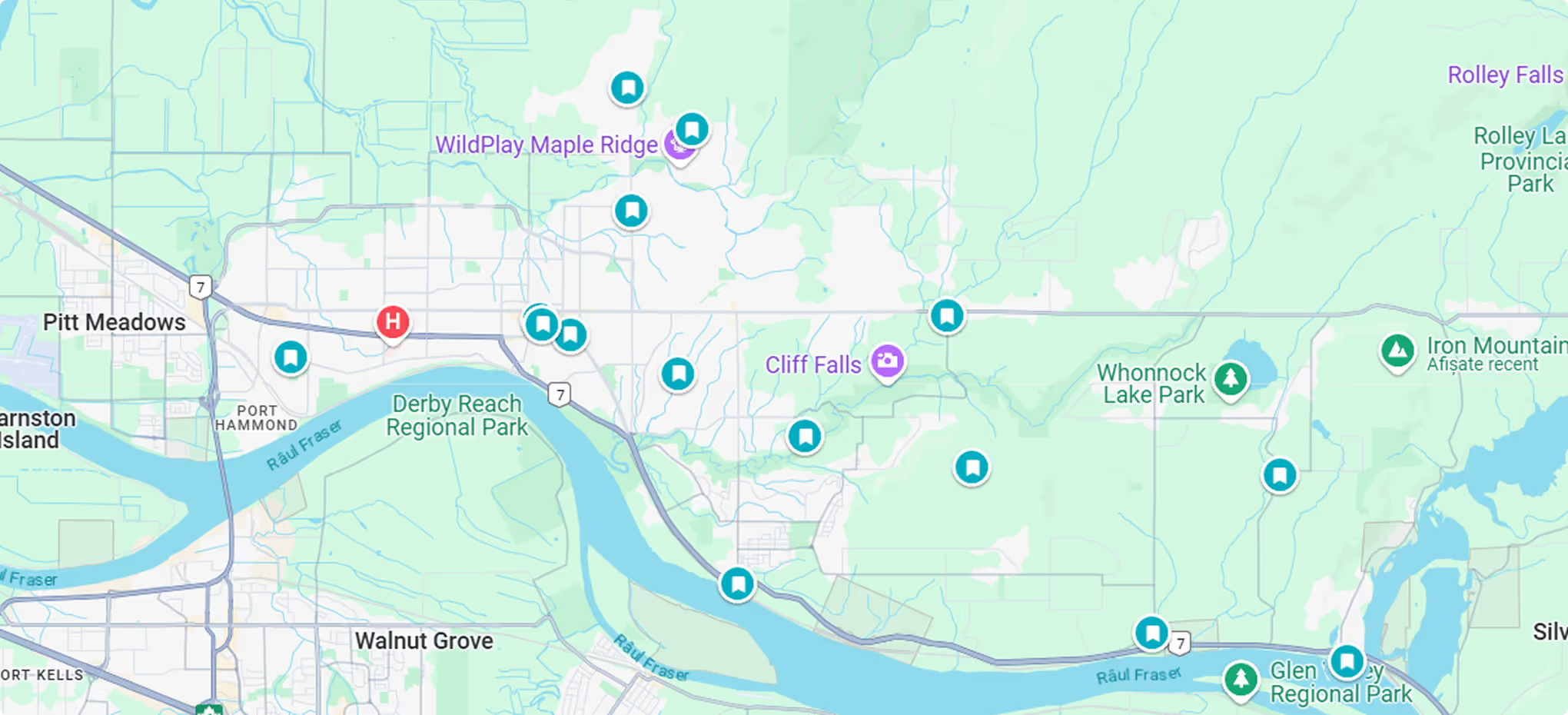
Neighbourhoods in the Fraser Valley