How to Prevent AC Breakdowns During Heat Domes

Why an AC Tune-Up Is Your Best Defense Against Heat Dome Breakdowns
Understanding how an AC tune-up prevents breakdowns during heat domes could be the difference between a cool home and a sweltering one when temperatures refuse to drop — day or night.
When a heat dome settles over the Lower Mainland, your air conditioner stops being a convenience and becomes a necessity. These prolonged, extreme heat events push AC systems far beyond their normal operating limits, turning small, unnoticed problems into complete failures — often on the hottest day of the year, when every HVAC technician in the region is already fully booked.
The hard truth? Up to 80% of peak-season AC failures are predictable from inspection data collected 60 to 90 days earlier. Most breakdowns are not random. They are the result of ignored warning signs and skipped maintenance.
Here is a quick summary of how a professional tune-up protects your system before extreme heat hits:
How an AC Tune-Up Prevents Heat Dome Breakdowns
• Catches failing capacitors and contactors before they quit under electrical and thermal stress
• Verifies correct refrigerant charge so the compressor is not overworked during long run cycles
• Cleans condenser and evaporator coils to restore heat transfer and prevent system shutdown
• Clears condensate drain lines to avoid water backup and safety switch trips
• Restores airflow by replacing clogged filters and checking blower performance
• Tests electrical connections that loosen over time and create failure points under heat stress
• Calibrates the thermostat so the system responds accurately and does not short cycle
Systems that receive annual maintenance experience up to 30% fewer breakdowns during peak summer months. A neglected AC, on the other hand, can lose 5% to 15% efficiency from dirty filters alone — and that is before factoring in fouled coils, worn capacitors, or low refrigerant.
For homeowners in Burnaby, Surrey, Coquitlam, and across the Fraser Valley, the 2021 heat dome was a wake-up call. Temperatures that historically lasted a few hours pushed into days, and AC systems that had never been truly tested simply gave out.
This guide walks you through exactly what happens to your AC during a heat dome, what a professional tune-up addresses, and why scheduling service in spring — not July — is the smartest move you can make for your home comfort and your family's safety.

What is a Heat Dome and Why Does It Stress Your Air Conditioner?
A heat dome is a meteorological phenomenon that occurs when a strong, slow-moving high-pressure system traps hot air over a geographic region. Like a lid on a pot, this high-pressure cap pushes hot air down, compressing and heating it further. Because the system is static, it prevents cooler marine air or weather fronts from moving in to break the cycle.
For communities across the Lower Mainland, including Surrey, Abbotsford, and Maple Ridge, heat domes create a continuous loop of rising temperatures. Buildings, concrete, and the earth itself absorb heat throughout the day, acting as thermal sponges. When the sun goes down, temperatures remain high, leaving homes with zero natural cooling relief overnight.
This sustained high temperature completely changes how your air conditioner has to operate. To understand why, we have to look at the physics of cooling and the limits of residential AC systems:
• The 20-Degree Cooling Rule: Residential air conditioning systems are generally engineered to maintain an indoor temperature that is roughly 15°F to 20°F (8°C to 11°C) cooler than the outdoor temperature. When outdoor temperatures climb well past 35°C (95°F) during a heat dome, your system has to work significantly harder to keep your indoor spaces at a comfortable 21°C or 22°C.
• Continuous Runtime: In moderate summer weather, an air conditioner runs in cycles, turning on to cool the home and then shutting off once the thermostat setting is reached. During a heat dome, the heat gain of your home is so rapid and continuous that your AC may run continuously for 12, 18, or even 24 hours straight just to keep up.
• Thermal Cycling: The extreme swing between cooler morning temperatures and blazing afternoon heat causes metal components to expand and contract rapidly. This thermal cycling puts physical stress on copper refrigerant lines, electrical connections, and mounting brackets.
• Elevated Refrigerant Pressures: As outdoor temperatures rise, the pressure within your outdoor condenser coil increases. High pressure forces the compressor to draw more electrical current to pump refrigerant through the system, dramatically accelerating wear and tear.
This extreme environment instantly exposes any hidden weaknesses in your cooling system. A minor issue that goes unnoticed in June—like a slightly dirty coil or a weak capacitor—will quickly escalate into a complete system failure during a multi-day heat event. This is why understanding the Importance of Regular AC Maintenance for Mission Homeowners is so critical before the summer heat arrives.
How an AC Tune Up Prevents Breakdowns During Heat Domes
Preventative maintenance is not just about keeping your system running; it is about preparing it to survive a mechanical marathon. An air conditioner that has not been serviced is like a runner entering a marathon without training. It might make it through the first few miles, but it will eventually collapse under the strain.
By scheduling a professional tune-up, you ensure that every critical component is clean, calibrated, and operating at peak efficiency. This reduces the overall mechanical load on the system, keeping operating pressures and temperatures within safe limits.
Taking a proactive approach prevents the dreaded "breakdown cascade"—a common scenario where one small, neglected issue causes a chain reaction that destroys major components. For instance, a dirty coil forces the compressor to run longer and hotter, which degrades the run capacitor, eventually causing the compressor itself to overheat and burn out.
Investing in preventative care ensures your cooling system is fully optimized to handle the heavy workload of a heat wave. You can read more about how this works in our article on How a Pre-Season Tune-Up Prevents Mid-Summer Failures.
Catching Weak Capacitors and Electrical Failures Before They Stop Your Cooling
The single most common heat-triggered failure point in an air conditioner is the run capacitor. The capacitor acts like a temporary battery, delivering the electrical boost needed to start and run the compressor and fan motors.
As outdoor temperatures soar, electrical resistance in your system's wiring naturally increases. This resistance causes a slight voltage drop, forcing the motors to draw more electrical current to do the same amount of work. This extra current generates intense heat within the electrical control box of your outdoor unit.
Capacitors are highly sensitive to heat. Over time, thermal stress causes them to degrade, lose their electrical storage capacity (measured in microfarads), and physically swell. A weak capacitor will force the compressor to experience "hard starts," drawing massive amounts of power and overheating the motor windings. Eventually, the capacitor fails completely, leaving you with a system that hums but cannot start the compressor or outdoor fan.
During a professional tune-up, our technicians use specialized meters to test capacitors under load. If a capacitor is operating below its rated tolerance, we can replace it on the spot. This simple step prevents an unexpected shutdown and protects your expensive compressor from severe electrical damage. We also inspect and tighten all electrical connections and check the contactor—the high-voltage switch that turns your system on—for pitting or burn marks that could cause a system failure.
How an AC tune up prevents breakdowns during heat domes by optimizing refrigerant levels
Refrigerant is the lifeblood of your air conditioning system. It does not actually "create" cold; instead, it absorbs heat from inside your home and carries it to the outdoor unit to be released into the outside air.
For this heat transfer process to work efficiently, the refrigerant charge must be precise. An air conditioner is a sealed system, meaning it should never lose refrigerant. If the level is low, it always indicates a leak.
Running an undercharged system during a heat dome is highly damaging. When refrigerant is low:
• The system cannot absorb heat effectively, leading to long runtimes and a warm home.
• The evaporator coil inside your home can drop below freezing, causing condensation to turn to ice. This ice blocks airflow completely, choking the system.
• The compressor relies on the returning cool refrigerant gas to keep its motor cool. Without enough refrigerant, the compressor will overheat, cycle off on its internal thermal overload switch, and eventually seize.
During a tune-up, we measure subcooling and superheat using precise manifold gauges to verify the refrigerant charge. If we detect a discrepancy, we can locate the leak, repair it, and recharge the system to manufacturer specifications. Keeping your refrigerant levels optimized is a core reason why Preventative AC Service is Essential for preventing catastrophic compressor failures.
How an AC tune up prevents breakdowns during heat domes by restoring airflow and coil efficiency
Airflow is the foundation of the cooling process. If air cannot move freely through your indoor evaporator coil and your outdoor condenser coil, heat cannot be transferred out of your home.
Inside your home, a dirty air filter or a dusty evaporator coil increases static pressure within your ductwork. This forces the blower motor to work much harder, drawing more power and generating extra heat. Restricted indoor airflow also causes the temperature of the evaporator coil to plunge, leading to ice buildup that blocks all cooling.
Outside your home, the condenser coil is exposed to dust, pollen, cottonwood seeds, and lawn debris. In communities like Mission and Chilliwack, outdoor coils can easily become caked in dirt over the spring. When a dirty condenser coil is insulated by a layer of grime, the heat absorbed from your home cannot escape into the outdoor air. This forces the compressor to run at dangerously high pressures and temperatures, rapidly accelerating wear and leading to an automatic safety shutdown.
A professional tune-up addresses these issues thoroughly. We clean both the indoor and outdoor coils, clear away debris from the condenser fins, and ensure your air filters are fresh. This restores proper heat transfer and airflow, allowing your system to cool your home faster while consuming less energy. For actionable steps you can take at home, check out our Summer AC Maintenance Tips for Mission Homes.
The Anatomy of a Professional AC Tune-Up Checklist
A professional AC tune-up is a comprehensive, measurement-based service that goes far beyond a simple visual check. While there are several maintenance tasks that homeowners can safely perform themselves, the most critical electrical and thermodynamic tests require specialized tools and expert training.
The table below outlines the difference between DIY upkeep and the precise tasks performed during a professional service:
• Airflow & Filtration — DIY Homeowner Tasks: Check and replace 1-inch filters monthlyKeep supply vents open and unblockedClear grass and leaves from around the outdoor unit — Professional Technician Procedures: Measure static duct pressureClean blower motor and wheel assemblyVerify fan belt tension and alignment
• Coil Maintenance — DIY Homeowner Tasks: Gently rinse outdoor condenser coil with a garden hose (no high pressure) — Professional Technician Procedures: Perform deep chemical cleaning of condenser coilsInspect and clean indoor evaporator coilStraighten bent coil fins
• Electrical Systems — DIY Homeowner Tasks: Replace thermostat batteries annually — Professional Technician Procedures: Test capacitor microfarad output under loadInspect contactor points for pitting or wearTighten all electrical connections and measure amperage draw
• Refrigerant System — DIY Homeowner Tasks: Monitor for visible ice on copper lines — Professional Technician Procedures: Measure subcooling and superheat levelsCheck for refrigerant leaks using electronic detectorsVerify operating pressures
• Drainage & Safety — DIY Homeowner Tasks: Pour warm water or vinegar down the condensate drain access point — Professional Technician Procedures: Flush and clear condensate drain linesTest safety float switches and condensate pumpsCalibrate thermostat settings
By ensuring that every item on this list is addressed, you can significantly Extend the Life of Your AC with Maintenance, helping you avoid premature system replacements and enjoy consistent comfort for years to come.
Frequently Asked Questions About Preventing AC Failures in Extreme Heat
What are the warning signs that my AC is about to fail during a heat wave?
An air conditioner rarely fails without warning. In the days leading up to a breakdown, your system will often show subtle signs of distress. Homeowners should watch for these key indicators:
• Weak Airflow: If the air coming from your vents feels weak or barely moving, it could point to a failing blower motor, a severely clogged filter, or an evaporator coil that is starting to freeze.
• Warm Air: If the air blowing from your supply registers feels room-temperature or warm, your compressor may have shut down on thermal overload, or you may have a critical refrigerant leak.
• Short Cycling: If your AC turns on and off rapidly every few minutes without completing a full cooling cycle, it is a sign of system stress. This is often caused by a malfunctioning thermostat, electrical issues, or safety switches tripping due to high pressures.
• Unusual Noises: Squealing, grinding, rattling, or loud buzzing noises from either the indoor air handler or the outdoor condenser indicate mechanical or electrical strain. A loud buzz from the outdoor unit often points to a weak capacitor or a failing contactor.
• Ice Buildup: Visible ice on the brass refrigerant lines connected to your outdoor unit or on the indoor evaporator coil is a major warning sign. This indicates restricted airflow or low refrigerant, both of which require immediate professional attention.
Is it safe to run my air conditioner continuously during a heat dome?
Yes, it is completely safe for a well-maintained, properly sized air conditioning system to run continuously during extreme heat. In fact, during a heat dome, continuous operation is often necessary to prevent your home from absorbing massive amounts of heat.
Turning your AC off during the hottest part of the day to "save" it actually makes the system work much harder later. Once your home's walls, floors, and furniture absorb heat, your AC must run for hours under extreme load just to remove that stored thermal energy.
To help your system manage continuous runtime efficiently:
• Set your thermostat to a reasonable temperature, such as 24°C (75°F) or 25°C (78°F). Trying to force your AC to cool your home to 18°C when it is 40°C outside will keep the system running under high pressure indefinitely.
• Close blinds and drapes on sun-facing windows to block solar heat gain.
• Avoid using heat-producing appliances, like ovens or dryers, during the hottest hours of the afternoon.
When is the best time to schedule my annual AC maintenance in the Fraser Valley?
The absolute best time to schedule your AC tune-up is in the early spring—typically between March and May.
Scheduling your maintenance early offers several major advantages:
• Avoid the Summer Rush: Once the first major heat wave hits the Lower Mainland, HVAC companies experience a massive spike in emergency service calls. Booking in the spring ensures you can get an appointment that fits your schedule without waiting weeks.
• Full Predictive Value: A spring tune-up catches marginal components—like a weakening capacitor—before they are subjected to summer heat stress. This allows you to address minor repairs proactively on your own terms.
• Peace of Mind: You can head into the summer months with confidence, knowing your cooling system has been fully inspected, cleaned, and optimized by an expert.
Conclusion
When extreme weather events like heat domes occur, your air conditioner is your home's most important defense system. Ensuring that it is prepared for the challenge is essential for your comfort, your safety, and your peace of mind.
At Rep-Air Heating And Cooling, we have spent years helping homeowners across the Lower Mainland—from Abbotsford and Mission to Surrey, Maple Ridge, and Coquitlam—prepare their homes for the summer heat. We treat our customers like family, delivering top-tier service and comprehensive maintenance plans designed to keep your systems operating reliably all year long.
Do not wait for the next heat wave to test the limits of your air conditioner. Protect your home and keep your family cool this season. Schedule your professional AC service today with our experienced team of home comfort experts.
hear what our satisfied clients have to say
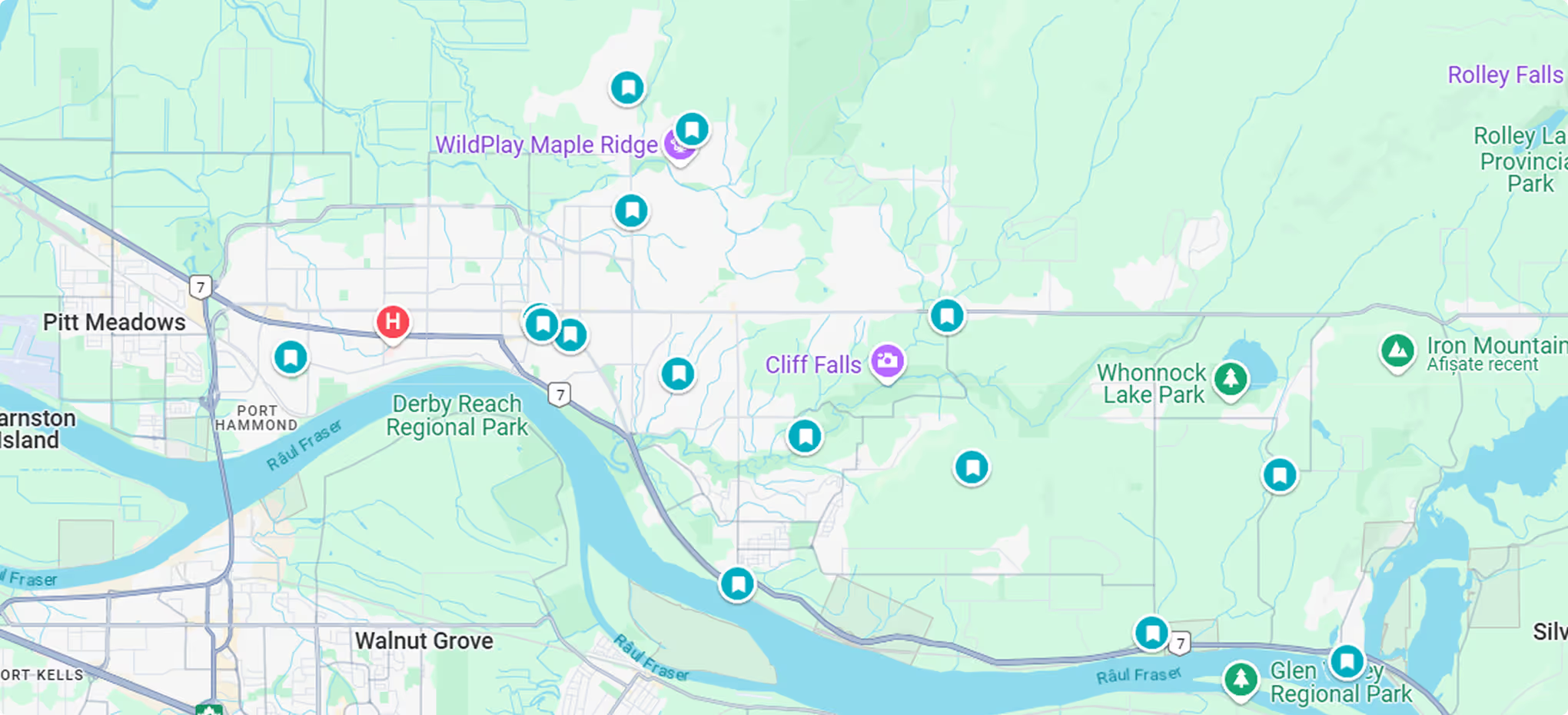
Neighbourhoods in the Fraser Valley