All About Why Compressor Replacement Often Means Full AC System Replacement

Why Compressor Replacement Often Means Full AC System Replacement in Abbotsford, BC
How compressor replacement often means full system replacement is one of the most important things Abbotsford, BC homeowners can understand before approving a costly repair. When your AC compressor fails — especially during a hot Lower Mainland summer — the instinct is to fix just that one part and move on. But in many cases, replacing only the compressor can lead to more breakdowns, higher costs, and a system that still underperforms. Here's why that single repair decision is rarely as simple as it sounds.
Quick Answer: When Compressor Replacement Leads to Full System Replacement
• System is 10–15+ years old — Compressor failure at this age usually signals that other components are also worn out
• Refrigerant is outdated — Systems using R-22 or older R-410A face limited refrigerant availability and rising costs
• Repair cost approaches 50% of a new system — At that point, full replacement delivers better long-term value
• Other components show wear — A new compressor in a tired system often exposes the next weak link
• No warranty coverage — Without a manufacturer warranty, compressor-only repair carries significant financial risk
• System uses mismatched components — Replacing only the compressor can create efficiency and compatibility problems with the rest of the system
The AC compressor is often called the heart of your cooling system — it pressurizes refrigerant and drives the entire heat transfer process. When it fails, the ripple effects throughout the system are often bigger than they first appear. For homeowners in Abbotsford and across the Lower Mainland, understanding those ripple effects can save thousands of dollars and prevent a repeat breakdown within just one or two seasons.

How compressor replacement often means full system replacement word guide:
• AC repair red flags that mean you need a new system
• When the cost of AC repair exceeds the value of your system
• When your technician recommends replacement over repair
Understanding the Critical Role of Your AC Compressor
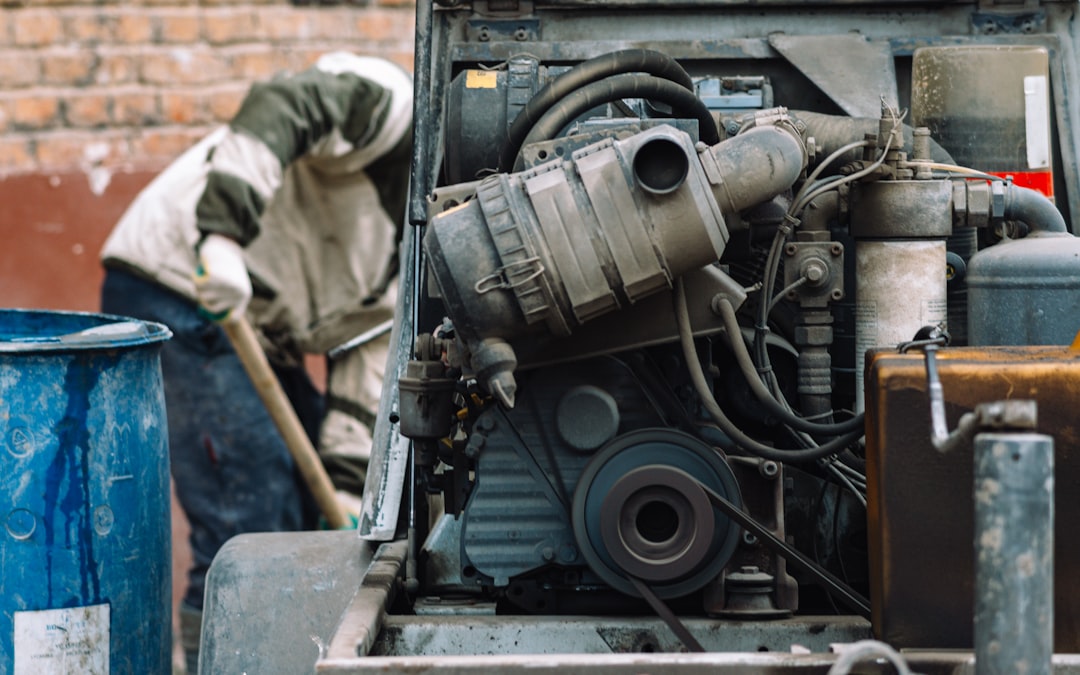
To understand why a failed compressor is such a big deal, we first have to look at what it actually does. Think of your air conditioner as a heat mover. It doesn't "create" cold; it pulls heat out of your home and dumps it outside. The compressor is the engine that makes this entire process possible.
Located inside your outdoor unit, the compressor's job is to pressurize the refrigerant gas. This pressurization raises the temperature of the refrigerant, allowing it to release the heat it gathered from inside your home into the outdoor air. Once the heat is gone, the refrigerant cools down, turns back into a liquid, and heads back inside to start the cycle all over again.
When we perform AC Condenser Unit Repair, the compressor is the most complex and powerful component we deal with. Because it's under constant pressure and deals with high levels of electricity, it's prone to significant wear and tear over a decade of service.
Common Signs of Compressor Failure
In our experience serving the Lower Mainland, compressors rarely just "quit" without warning. Usually, they send out a few distress signals first:
1. Loud Humming or Grinding Noises: This often indicates the internal motor is struggling to turn or that mechanical parts are grinding against each other.
2. Tripped Circuit Breakers: A failing compressor often "hard starts," drawing way more electricity than your home's electrical panel is designed to handle. If you find yourself resetting the AC breaker frequently, the compressor might be drawing excessive amperage.
3. Warm Air from Vents: If the compressor isn't pressurizing the refrigerant properly, the heat transfer cycle breaks down. Your fans might still be blowing, but the air won't be cool.
4. Hard Starting: You might notice the outdoor unit shaking or stuttering when it tries to kick on.
How compressor replacement often means full system replacement
Deciding whether to swap out a single part or invest in a brand-new unit is a major crossroads for any homeowner. As of May 2026, the technology in HVAC systems has advanced so rapidly that a "simple" part swap isn't always the smartest path forward.
Below is a breakdown we often share with our customers to help them visualize the choice:
• Upfront Cost — Compressor Replacement: Lower — Full System Replacement: Higher
• Warranty — Compressor Replacement: Typically 1–2 years on part only — Full System Replacement: 10+ years on the entire system
• Efficiency — Compressor Replacement: Remains at the old system's rating — Full System Replacement: Significant jump (SEER2 standards)
• Refrigerant — Compressor Replacement: Uses existing (often expensive/outdated) — Full System Replacement: Uses modern, eco-friendly R-32 or R-454B
• Reliability — Compressor Replacement: Old parts (fan, coils) remain at risk — Full System Replacement: All-new, reliable components
• Home Value — Compressor Replacement: Minimal impact — Full System Replacement: Increases resale value and buyer confidence
The reality is that compressors typically last 10–15 years. If your compressor fails at year 12, it's not failing in a vacuum. The fan motor, the contactors, and the indoor evaporator coil have all been working just as hard for those 12 years. Replacing the compressor is like putting a brand-new engine into a car with 300,000 kilometers and a rusted-out transmission. It might run for a while, but the next breakdown is usually just around the corner.
This is exactly when your technician recommends replacement over repair. We aren't just looking at the broken part; we're looking at the "cumulative wear" of the entire machine. In Abbotsford, where humidity can put extra strain on systems during peak summer, a reliable system is a necessity, not a luxury.
How compressor replacement often means full system replacement due to refrigerant incompatibility
One of the biggest hurdles in May 2026 is the shift in refrigerants. For decades, R-22 was the standard, followed by R-410A. However, environmental regulations have phased out R-22 entirely and are now strictly limiting R-410A.
If your system is older, it likely uses a refrigerant that is becoming increasingly scarce and expensive to source. When a compressor fails, the system must be drained and recharged. If you have an R-22 system, the cost of the refrigerant alone can sometimes rival the cost of the compressor itself.
Furthermore, you can't just put modern refrigerant into an old compressor. The oils used in modern systems are incompatible with older seals and components. This often necessitates an AC Indoor Unit Repair or a full coil swap just to make the new parts work together. When you add up the labor and the parts needed to bridge that gap, how compressor replacement often means full system replacement becomes very clear from a financial perspective.
How compressor replacement often means full system replacement to ensure component matching
In the HVAC world, "matching" is everything. Your outdoor condenser and your indoor evaporator coil are designed to work as a team. They are calibrated for a specific SEER2 (Seasonal Energy Efficiency Ratio) rating and airflow volume.
If you replace an old compressor with a new, high-efficiency model but leave the old, dirty indoor coil in place, you create a performance bottleneck. The new compressor will have to work twice as hard to push refrigerant through an inefficient, aged coil. This leads to:
• Premature failure of the new compressor.
• Voided warranties, as many manufacturers require a matched indoor coil for the warranty to remain valid.
• Poor humidity control, which is a major concern for us here in the Lower Mainland.
Before you make a decision, review what you need to know before having an air conditioner installed. A matched system ensures that every part is operating at peak efficiency, protecting your investment for the next 15 to 20 years.
Technical Risks and Necessary Steps for Compressor Repairs
If you do decide to go ahead with just a compressor replacement, it is not a "plug and play" job. It is a highly technical surgical procedure for your HVAC system. When a compressor fails, it often suffers what we call an "acid burnout."
As the motor windings inside the compressor burn up, they release acid and soot into the refrigerant lines. If a technician simply swaps the compressor without cleaning the lines, that acid will eat through the new compressor's insulation within weeks.
To do the job right, we must perform several critical steps:
1. System Flush: Using specialized solvents to scrub the copper lines clean of acid and burnt oil.
2. Nitrogen Purge: Using dry nitrogen to push out contaminants and prevent oxidation during the brazing (welding) process.
3. New Filter-Drier Installation: This acts as a final "trash can" for the system, catching any remaining moisture or debris.
4. Deep Vacuum: Using a micron gauge to ensure the system is completely free of air and moisture. Even a tiny amount of moisture can combine with refrigerant to create new acid.
Interestingly, even something as simple as furnace filter replacement plays a role here. Poor airflow from a clogged filter causes the indoor coil to freeze, which can send liquid refrigerant back to the compressor (slugging). This is a leading cause of compressor failure. If we replace your compressor but the underlying airflow issues aren't addressed, the new part won't last.
Why Homeowners in Abbotsford, BC Prioritize Long-Term Reliability
In the Lower Mainland, our weather can be unpredictable. We go from damp, chilly springs to sweltering, humid summers very quickly. Homeowners in areas like Mission, Langley, and Chilliwack are increasingly choosing full system replacements because they prioritize peace of mind.
A new system offers:
• Energy Efficiency Gains: Modern SEER2 systems can reduce cooling-related electricity usage by 20% to 40% compared to units from the early 2010s.
• Smart Tech Integration: Newer units are designed to work seamlessly with smart thermostats, allowing for better zone control and remote monitoring.
• Reduced Emergency Repairs: There's a certain stress that comes with an aging AC unit. Will it die during the first heatwave of July? A new system removes that "repair anxiety."
Once you understand what happens after you say yes to a new HVAC system, you'll see that the process is streamlined to get your home back to a comfortable temperature as quickly as possible—often in just a single day.
Essential Questions for Your HVAC Professional
Before you sign off on any major AC work, you should have a detailed conversation with your technician. At Rep-Air Heating And Cooling, we believe in total transparency. We want you to feel like family, which means giving you the same advice we'd give our own parents.
Here are the questions to ask before committing to AC replacement or a major compressor repair:
• "What was the root cause of the failure?" If the compressor died because of a leak or an electrical issue that isn't fixed, the new one will die too.
• "What is the amperage draw on the current motor?" This confirms if the motor is truly failing or if it's just a bad capacitor (a much cheaper fix!).
• "Is there a short to ground?" This is a definitive test that proves the internal insulation of the compressor has failed.
• "What is the cost of the refrigerant needed for the recharge?" In 2026, this can be a significant part of the bill.
• "How much life is left in the indoor coil and the outdoor fan motor?" If they are near the end of their life, a full replacement is likely the better math.
Frequently Asked Questions about AC Compressor Failure
How long does a typical AC compressor last in British Columbia?
On average, a well-maintained compressor in the Lower Mainland lasts between 12 and 18 years. However, if the system hasn't had regular tune-ups or if it has been running with dirty coils and clogged filters, that lifespan can drop to under 10 years.
Is it possible to replace just the compressor on a 12-year-old system?
It is possible, but we rarely recommend it. At 12 years old, the system is likely using older refrigerant and is nearing the end of its expected life. The labor required to properly flush and vacuum an old system often makes the repair a poor "dollars and cents" investment compared to a new unit with a 10-year warranty.
Will a new AC system really lower my energy bills in Abbotsford?
Yes! If you are moving from an older 10 or 13 SEER unit to a modern SEER2-compliant system, the efficiency gains are substantial. In our humid climate, modern systems also do a much better job of dehumidifying the air, which allows you to feel comfortable at a slightly higher temperature setting, further saving you money.
Conclusion
At the end of the day, how compressor replacement often means full system replacement comes down to long-term value versus a short-term patch. While a compressor swap might get the cold air blowing today, it often leaves you vulnerable to the next expensive breakdown tomorrow.
At Rep-Air Heating And Cooling, we pride ourselves on providing the most thorough diagnostics in Abbotsford and the surrounding areas. Whether you are in Langley, Pitt Meadows, or Chilliwack, our team is dedicated to treating you like family. We won't just tell you that you need a new system; we'll show you the data, explain the "why," and help you choose the solution that fits your home and your budget.
Don't let a failed compressor leave you sweltering this summer. Trust the experts who know the Lower Mainland climate best.
Schedule your professional AC evaluation with Rep-Air Heating And Cooling today
hear what our satisfied clients have to say
Neighbourhoods in the Fraser Valley