The Complete Guide to Proper HVAC Sizing and Comfort

Why Proper HVAC Sizing Affects Comfort More Than Any Other Factor
How proper HVAC sizing affects comfort is one of the most important things a Lower Mainland homeowner can understand before buying or replacing a heating and cooling system. Get the size right, and your home stays comfortable year-round, your energy bills stay manageable, and your equipment lasts. Get it wrong, and no brand name or efficiency rating in the world will save you from sticky summers, uneven temperatures, and a system that breaks down too soon.
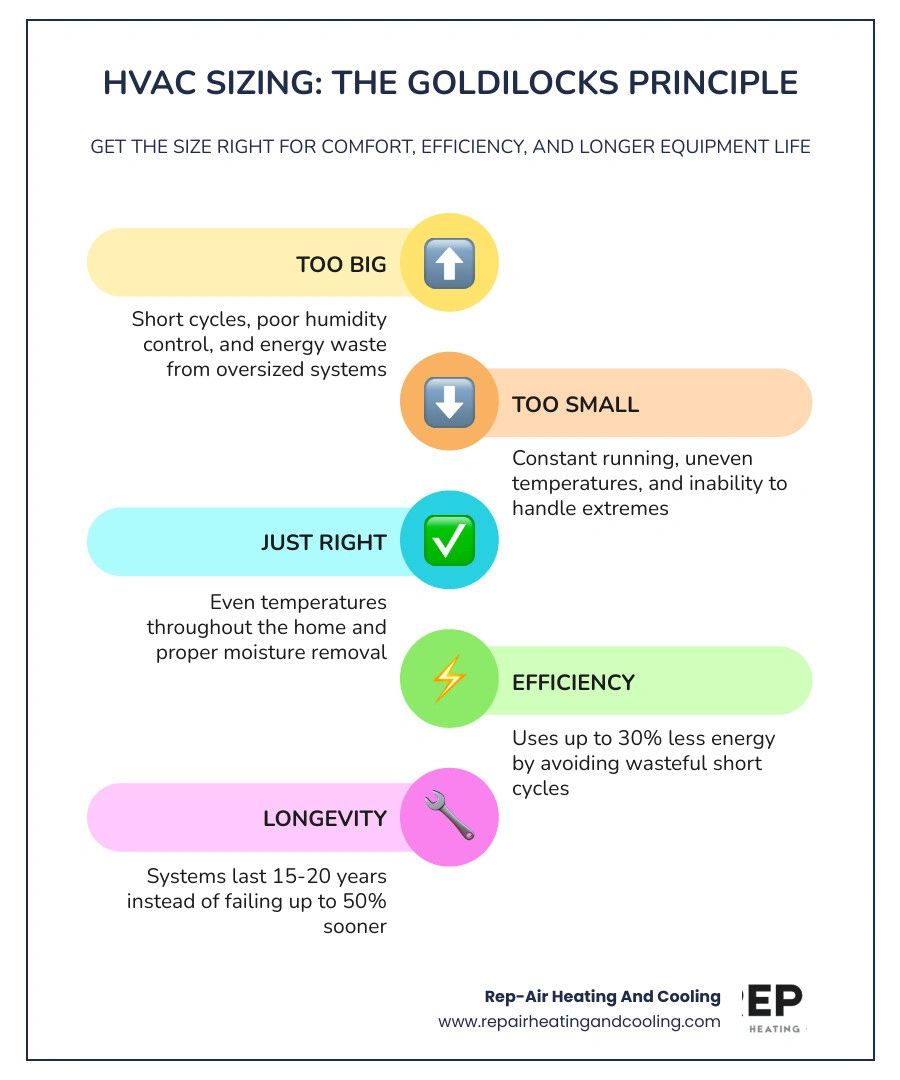
Here is a quick summary of how sizing directly impacts your comfort:
• Even temperatures - A correctly sized system runs long enough to distribute air evenly through every room.
• Humidity control - Only a properly sized system runs long enough to pull moisture out of the air, keeping indoor humidity in the healthy 30-50% range.
• Energy efficiency - Right-sized systems can use up to 30% less energy than oversized units by avoiding wasteful short cycles.
• Longer equipment life - Systems that aren't forced to short-cycle or run nonstop can last 15-20 years; improperly sized ones can fail up to 50% sooner.
• Better air quality - Longer run cycles mean more air passes through your filter, reducing dust, allergens, and pollutants indoors.
More than half of homes in the U.S. and Canada have HVAC systems that are either too big or too small. Many homeowners assume that a bigger unit means faster cooling or a more powerful unit means better heating. Neither is true. A system that's too large blasts on and off before it can do its job. A system that's too small runs nonstop and still can't keep up on the hottest or coldest days.
In British Columbia's Lower Mainland — where summers are growing warmer, winters stay damp, and humidity is a constant challenge — getting your system sized correctly isn't just about comfort. It's about protecting your home, your health, and your investment.
This guide from Rep-Air Heating And Cooling walks you through everything you need to know: what sizing actually means, what goes wrong when it's off, and what a proper professional assessment looks like.
How proper hvac sizing affects comfort terms you need:
• getting the right size hvac for the fraser valley homes
• how hvac load calculations work
• how improperly sized systems shorten equipment life
What is HVAC Sizing and Why Does It Matter?
When we talk about HVAC sizing, we are not talking about the physical dimensions of the outdoor condenser or the indoor furnace cabinet. Instead, "sizing" refers to the system's heating and cooling capacity—its ability to add or remove heat from your home.
This capacity is measured in British Thermal Units (BTUs) and tons:
• BTU (British Thermal Unit): This is the basic unit of heat energy. One BTU is roughly the amount of energy released by burning a single wooden match. In HVAC, BTUh (BTUs per hour) measures how much heat a system can add to or remove from a space in one hour.
• Tonnage: In residential cooling, capacity is often measured in tons. One ton of cooling capacity equals 12,000 BTUs per hour. This term dates back to the early days of refrigeration when cooling power was compared to the cooling capacity of a literal one-ton (2,000-pound) block of ice melting over 24 hours.
If you are looking to replace your heating and cooling setup, understanding these metrics is the first step toward getting the right size hvac for the fraser valley homes. A system that is accurately matched to your home's thermal needs will operate within its sweet spot, maximizing both comfort and energy efficiency.
How Proper HVAC Sizing Affects Comfort Beyond Temperature
Most homeowners think of their thermostat as a simple volume dial for temperature. If it is too hot, the AC turns on; if it is too cold, the furnace kicks in. However, true indoor comfort involves a complex balance of temperature, relative humidity, and air circulation.
When your heating and cooling system is correctly sized, it runs in steady, moderate cycles. This extended run time is crucial for several reasons:
1. Dehumidification: Air conditioners and heat pumps do not just cool the air; they remove moisture (latent heat) from it. As warm indoor air passes over the cold evaporator coil, water vapor condenses on the coil and drains away. It takes about 10 to 15 minutes of continuous operation for the coils to get cold enough to start pulling significant moisture out of the air. A properly sized system runs long enough to achieve this, keeping your indoor relative humidity within the ideal 30% to 50% range.
2. Air Filtration and Indoor Air Quality (IAQ): Your HVAC system cannot filter your air if the blower motor is not running. A right-sized system that runs in longer, more consistent cycles continuously pulls air through your home's return vents and filtration system. This constant movement reduces airborne dust, pet dander, and allergens.
3. Preventing Mold and Moisture Damage: High indoor humidity is a recipe for mold growth, musty odors, and structural issues. In places like Abbotsford, BC or Mission, BC, damp outdoor conditions can easily seep indoors. Ensuring your system is sized correctly keeps indoor moisture levels low, protecting your walls, wood flooring, and overall health.
To dive deeper into how capacity affects your indoor living conditions, read about the importance of properly sized hvac mission bc.
The Consequences of Incorrect Sizing: Oversized vs. Undersized Systems
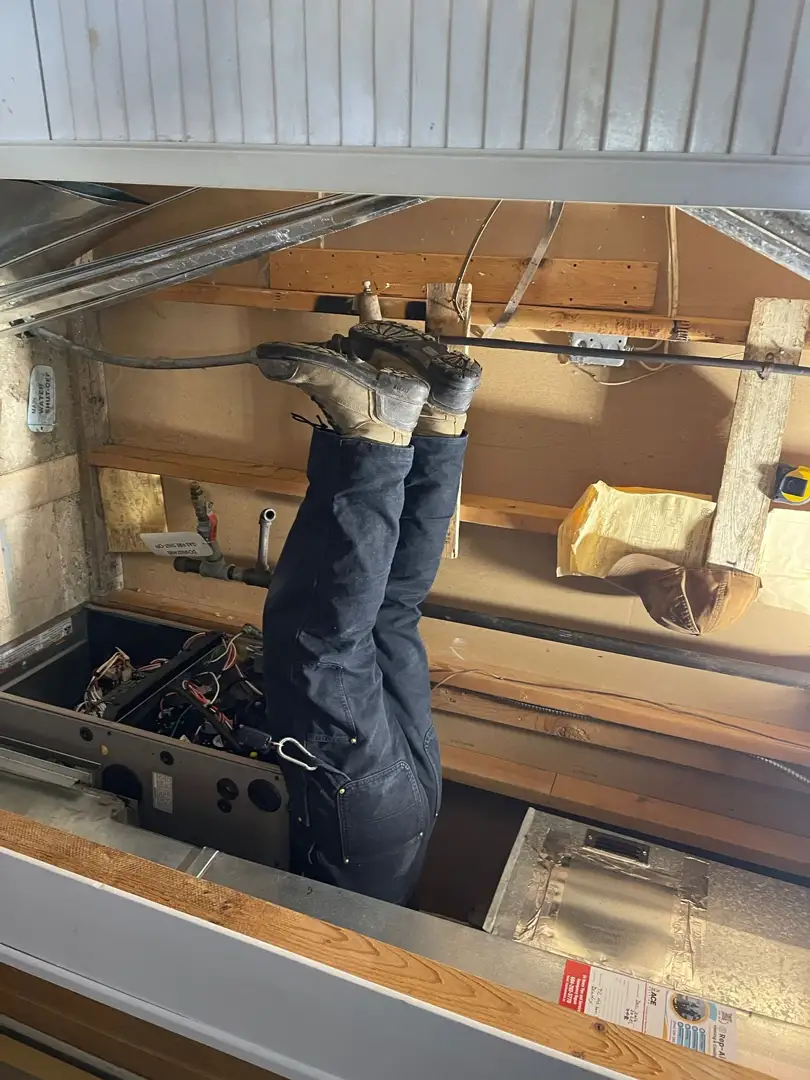
Installing the wrong size HVAC system creates immediate and long-term comfort issues. Many contractors fall into the trap of oversizing "just to be safe," while others install undersized units to cut corners. Both approaches lead to system stress, high utility bills, and persistent discomfort.
To help you visualize the differences, here is a quick breakdown of how oversized and undersized systems behave:
• Cycle Length — Oversized HVAC System: Very short (5-8 minutes), frequent starts — Undersized HVAC System: Runs almost constantly without stopping — Properly Sized HVAC System: Moderate, steady cycles (15-20 minutes)
• Indoor Humidity — Oversized HVAC System: High; air feels cold, damp, and "clammy" — Undersized HVAC System: Normal to high; system struggles to cool — Properly Sized HVAC System: Ideal (30% to 50% relative humidity)
• Temperature Consistency — Oversized HVAC System: Hot and cold spots; 3-5°F swings — Undersized HVAC System: Up to 10°F room-to-room variances — Properly Sized HVAC System: Highly consistent across all rooms
• Energy Consumption — Oversized HVAC System: High due to frequent startup power spikes — Undersized HVAC System: High because the system rarely shuts off — Properly Sized HVAC System: Low; operates at peak designed efficiency
• Equipment Lifespan — Oversized HVAC System: Cut by up to 50% due to component wear — Undersized HVAC System: Shortened due to continuous thermal stress — Properly Sized HVAC System: Longest lifespan (typically 15-20 years)
When a system is improperly sized, the financial consequences extend far beyond your monthly utility bills. To understand the long-term impact on your equipment, check out our guide on how improperly sized systems shorten equipment life.
How Proper HVAC Sizing Affects Comfort by Preventing Short Cycling
Short cycling is the most damaging and expensive pattern an HVAC system can fall into. It occurs when an oversized unit blasts a large volume of heated or cooled air into your home, rapidly satisfying the thermostat in a matter of minutes. The thermostat registers that the target temperature has been reached and shuts the system down. Minutes later, as the air settles and temperatures fluctuate, the system kicks back on, repeating the cycle.
This rapid on-and-off cycling ruins your comfort and destroys your equipment in several ways:
• Startup Energy Spikes: Electric motors and compressors draw the most electrical current during the first few seconds of startup. Because an oversized system is constantly starting up, it consumes significantly more electricity than a smaller unit running a single, continuous cycle.
• Severe Temperature Swings: Oversized units dump a massive amount of conditioned air into the rooms closest to the equipment, while distant rooms remain unreached. This creates rapid temperature swings of 3°F to 5°F between cycles, leaving you constantly adjusting the thermostat.
• Accelerated Component Wear: The constant starting and stopping places immense mechanical stress on the compressor, fan motors, and heat exchanger. This frequent friction and thermal expansion can cut your system's operating life in half, forcing premature replacements and expensive repairs.
The Science of Sizing: Why Manual J Load Calculations Are Essential
How do we avoid the guesswork of choosing an HVAC system? The answer lies in engineering. The only reliable, industry-approved method for determining the heating and cooling load of a home is a Manual J load calculation, developed by the Air Conditioning Contractors of America (ACCA).
A Manual J calculation is a scientific evaluation of your home's "thermal envelope"—the boundary that separates your indoor living space from the outdoor elements. Instead of relying on lazy estimates, a true professional load calculation evaluates how your home holds and loses heat.
We look at:
• Insulation R-Values: The thickness and quality of insulation in your attic, walls, and crawlspaces.
• Window Types and Orientation: Double-pane vs. single-pane glass, and which direction those windows face (south-facing windows bring in substantial solar heat gain during summer afternoons).
• Air Leakage and Infiltration: How tightly sealed your home is against outdoor drafts.
To see how these variables are calculated, read our article on how hvac load calculations work.
Beyond Square Footage: How Load Calculations Determine Your AC Installation Specs
A common mistake in the HVAC industry is sizing a system based entirely on floor square footage (for example, assuming "one ton of cooling per 500 square feet"). This rule of thumb is outdated and highly inaccurate.
Consider two identical 2,000-square-foot homes in Langley, BC. The first is a 1970s bungalow with single-pane windows, poor wall insulation, and vaulted ceilings that increase the overall air volume by 20% or more. The second is a modern, tightly sealed 2026 build with high-efficiency triple-pane windows and thick R-40 attic insulation.
Despite having the exact same floor footprint, the older home will require a significantly larger heating and cooling capacity to maintain comfort. A simple square footage calculation would result in an undersized system for the older home, or an oversized system for the newer home.
By analyzing ceiling heights, local weather design temperatures, solar heat gain, and even the heat generated by your family and appliances (each occupant adds about 250 to 400 BTUs of heat per hour), we can select the exact equipment specifications your home needs.
For a detailed look at this process, explore how load calculations determine your ac installation specs.
How Proper HVAC Sizing Affects Comfort in British Columbia's Climate
The climate of the Lower Mainland presents a unique set of challenges for HVAC design. Unlike regions with dry heat or consistent freezing temperatures, areas like Maple Ridge, BC and Pitt Meadows, BC experience a mixed-humid, marine climate.
Our summers are increasingly warm and humid, while our winters are long, damp, and relatively mild. This means your HVAC system must be highly versatile:
• Summer Dehumidification: Because our summer temperatures rarely reach the extreme dry heat of desert climates, our air conditioners must run long, slow cycles to pull moisture out of the air. An oversized AC unit will quickly cool the home down but leave the indoor air feeling sticky, damp, and clammy.
• Winter Heat Pump Efficiency: Many homeowners in British Columbia are transitioning to electric heat pumps. Sizing a heat pump is a delicate balancing act. It must be large enough to handle our winter heating demands without being so oversized that it short-cycles during the milder spring and autumn shoulder seasons.
When you invest in a new comfort system, understanding these regional factors is vital. Learn more about preparation and planning by reading what you need to know before having an air conditioner installed.
The Role of Ductwork in System Sizing and Airflow
Your HVAC equipment is only as good as the duct system carrying the air. You can install a perfectly sized heat pump, but if your ductwork is leaky, undersized, or poorly designed, your home will still suffer from comfort issues.
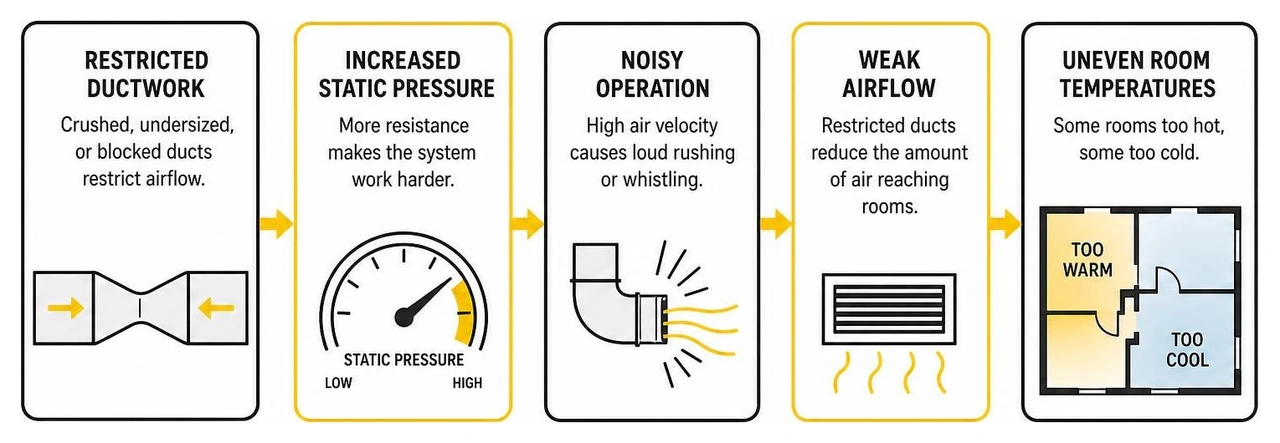
When we evaluate a home for a new system, we must measure the "static pressure" of the ductwork. Static pressure is the resistance to airflow within the ducts—think of it like blood pressure in your veins.
If a contractor installs a powerful 4-ton system on a duct network designed for a 2-ton system, the air will be choked. This restriction causes:
• Excessive Noise: High air velocity through small ducts creates a loud rushing or whistling sound, often forcing you to turn up the TV volume when the system kicks on.
• Frozen Evaporator Coils: Insufficient airflow across the indoor cooling coil causes its temperature to drop below freezing, leading to ice buildup and system shutdowns.
• Weak Airflow: Rooms at the end of the duct run will receive almost no heating or cooling, creating temperature differences of up to 10°F between rooms.
Before upgrading your heating and cooling equipment, a thorough evaluation of your existing air distribution system is essential. Find out how this affects your setup by reading how ductwork evaluation affects your ac installation.
Frequently Asked Questions About HVAC Sizing
Navigating the technical details of heating and cooling can feel overwhelming. Here are answers to some of the most common questions we hear from homeowners in the Lower Mainland.
What are the signs that my current HVAC system is the wrong size?
If your current system is the wrong size, it will usually let you know through several clear warning signs:
• Your system turns on and off every few minutes (Oversized): If your unit runs for less than 10 minutes at a time, it is likely short cycling.
• High indoor humidity (Oversized): If your home feels cold but clammy, or if you notice condensation on your windows during the summer, your system isn't running long enough to dehumidify.
• It runs constantly but never reaches the set temperature (Undersized): On very hot summer afternoons or freezing winter nights, an undersized system will run for hours without catching up.
• Unusually high energy bills: Both oversized systems (due to starting up constantly) and undersized systems (due to running nonstop) waste considerable amounts of electricity.
• Significant room-to-room temperature differences: If your living room is freezing but your upstairs bedrooms are sweltering, your system capacity and ductwork are likely mismatched.
Can I use a simple square footage rule of thumb to size my new system?
No. While a rule of thumb (like 1 ton per 500-600 square feet) can be a rough starting point for a preliminary estimate, it should never be used to purchase equipment.
Modern building codes, advanced insulation materials, window orientations, ceiling heights, and local micro-climates all dramatically change your home's actual heat load. Relying on a simple square footage calculation almost always results in an oversized system, leading to high upfront costs, poor comfort, and a shorter equipment lifespan.
What steps do professionals take during a sizing and installation assessment?
A professional HVAC assessment is a thorough, data-driven process. When our technicians visit your home, they will perform several key steps:
1. Detailed Home Walkthrough: We measure every room, document ceiling heights, and evaluate window sizes, types, and frame materials.
2. Insulation and Envelope Check: We inspect your attic insulation, wall construction, and overall home airtightness.
3. Ductwork Inspection: We check the physical size, layout, and insulation quality of your ducts, looking for leaks or restrictions.
4. Manual J Load Calculation: We input all of this data, along with local Lower Mainland climate design temperatures, into specialized software to calculate your exact heating and cooling loads.
5. Equipment Selection (Manual S): We select a system that precisely matches those calculated loads, ensuring it operates at peak efficiency.
To learn more about what to expect during this process, read about the steps our professionals take during hvac installation and the ac installation process explained step-by-step.
Conclusion
At the end of the day, how proper HVAC sizing affects comfort comes down to finding the perfect balance for your home. Buying a high-efficiency system from a premium brand won't deliver the comfort you deserve if the unit is too big or too small for your living space.
At Rep-Air Heating And Cooling, we treat our customers like family. We pride ourselves on delivering unmatched customer service and precise, scientific load calculations to ensure your home stays perfectly comfortable through every season. Whether you live in Abbotsford, Langley, Maple Ridge, Mission, or Pitt Meadows, our expert technicians are here to help you find your home's comfort sweet spot.
Ready to experience the difference a perfectly sized system makes? Schedule a professional HVAC assessment with Rep-Air Heating And Cooling today, and let us help you keep your home comfortable, efficient, and reliable for years to come.
hear what our satisfied clients have to say
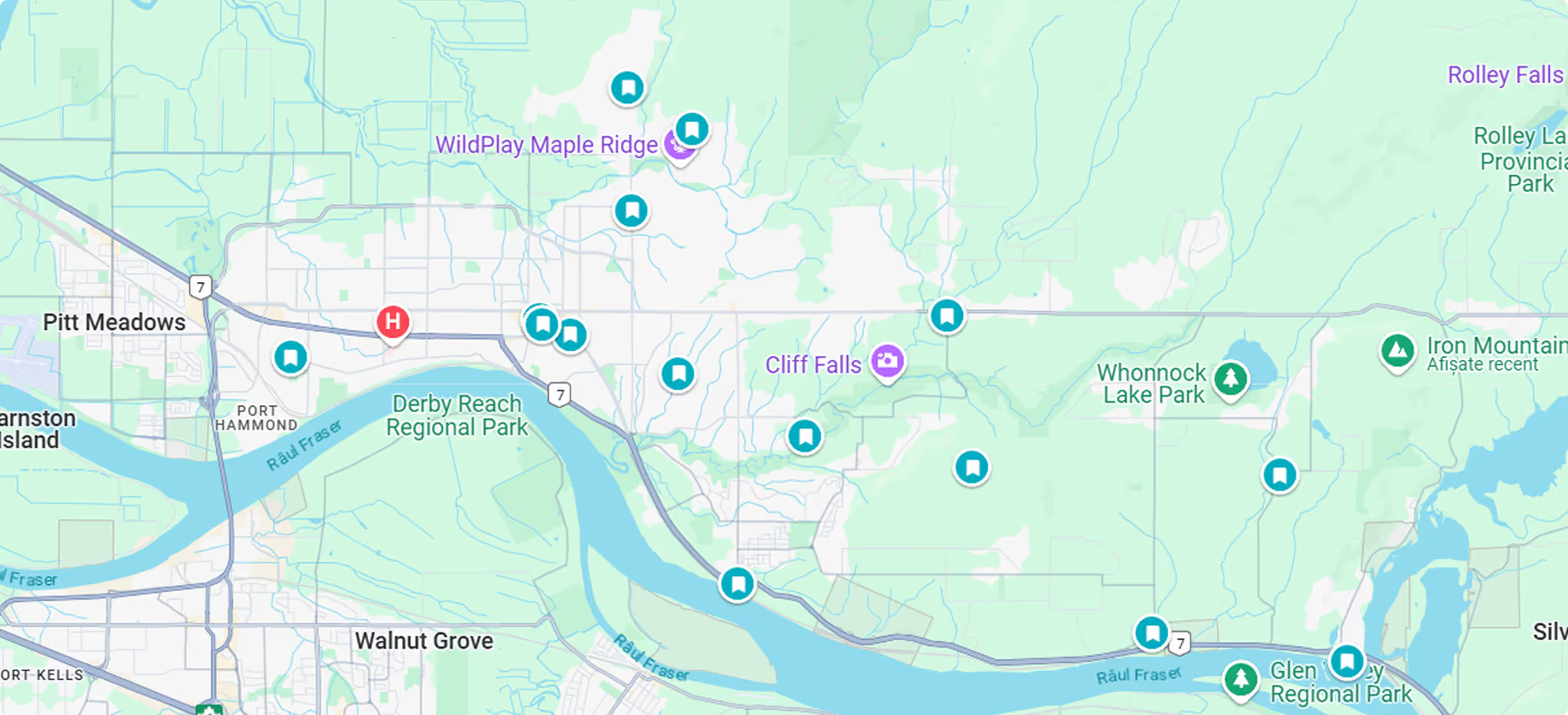
Neighbourhoods in the Fraser Valley