How to Fix AC Blowing Warm Air with These Easy Changes

Why Is My AC Blowing Warm Air? Troubleshooting Steps for Lower Mainland Homeowners
If you're asking why is my ac blowing warm air troubleshooting steps you can take right now, here's a quick answer before we dive deeper:
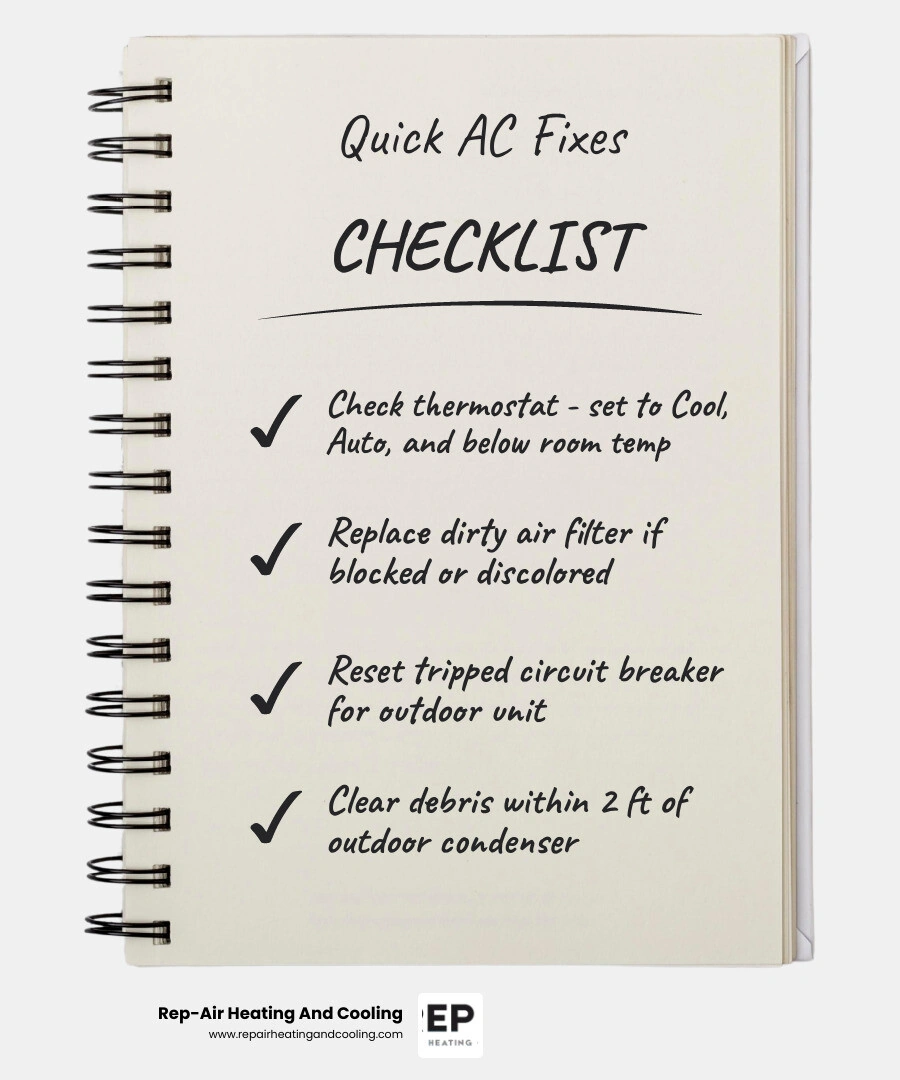
Quick Troubleshooting Checklist:
1. Check your thermostat - Set it to "Cool" mode and "Auto" fan, with the temperature below the current room temp
2. Inspect your air filter - Replace it if it's visibly dirty or blocks light passing through
3. Check your circuit breaker - Reset a tripped breaker to the outdoor unit once only
4. Look at the outdoor unit - Clear any debris, leaves, or obstructions within 2 feet of the unit
5. Look for ice buildup - If you see ice on the coils or refrigerant lines, turn the system off immediately
6. Check for unusual sounds - Hissing or bubbling near the unit may signal a refrigerant leak
You walk through the door on a warm Lower Mainland afternoon expecting cool relief, and instead feel a wave of warm, stale air from your vents. Your AC is running — but it's clearly not cooling. This is one of the most common HVAC complaints homeowners across Burnaby, BC, Coquitlam, BC, Surrey, BC, and the rest of British Columbia experience every summer, and about 70% of the time it comes down to just three issues: thermostat settings, a dirty air filter, or a problem with the outdoor unit. The good news? Many of these causes are something you can check yourself in under 15 minutes.
For a deeper look at your system's overall health, explore our complete AC service guide, or if you're ready for expert help right now, book a repair with Rep-Air Heating And Cooling.
Easy why is my ac blowing warm air troubleshooting steps glossary:
• ac circuit breaker keeps tripping what it means
• ac troubleshooting tips before calling a pro
How Your Air Conditioner Works to Cool Your Lower Mainland Home
To understand why your air conditioner is suddenly acting like a space heater, it helps to know how it is supposed to work. Many homeowners believe that air conditioners create cold air from scratch. In reality, your AC is a heat-transfer system. It works by absorbing the heat inside your home and moving it outdoors.
This heat-removal process relies on a continuous loop known as the refrigeration cycle, which involves several key components:
• The Refrigerant: This is the specialized fluid that travels between your indoor and outdoor units, absorbing and releasing heat as it changes states from liquid to gas.
• The Evaporator Coil: Located inside your home (usually near your furnace or air handler), this coil becomes extremely cold as liquid refrigerant expands inside it. As warm indoor air is blown across this coil, the refrigerant absorbs the heat, leaving the air beautifully chilled.
• The Compressor: Often called the heart of your AC, this outdoor component pumps and pressurizes the warm refrigerant gas, preparing it to release its heat.
• The Condenser Coils: Located in your outdoor unit, these coils dissipate the heat collected from your home into the outdoor air with the help of a large exhaust fan.
In the coastal climate of British Columbia—from the humid summer afternoons in Delta, BC and Richmond, BC to the warmer valley temperatures in Abbotsford, BC and Chilliwack, BC—your system has to work hard to manage both temperature and humidity. If any part of this delicate refrigeration cycle is interrupted, the heat-exchange process breaks down. Airflow efficiency drops, pressure levels fluctuate, and instead of cool relief, your system simply circulates uncooled, warm air back into your living spaces.
Why Is My AC Blowing Warm Air Troubleshooting Steps to Try First
Before you pick up the phone to call in our professional team, there are several straightforward homeowner diagnostics you can perform. Taking a systematic approach to inspecting your system can save you time and help you identify if the issue is a simple fix or a mechanical failure requiring professional tools.
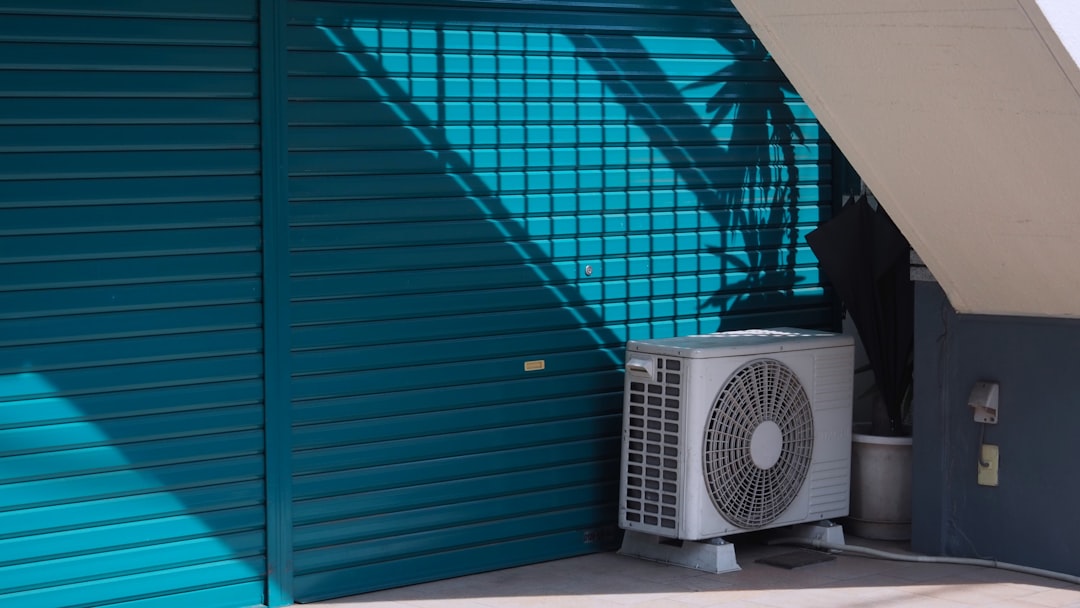
Start with a visual inspection of your entire system. Make sure all of your supply vents throughout the house are open and unblocked by furniture, rugs, or drapes. Next, head outside to check the outdoor condenser unit. For your AC to shed heat effectively, it needs a clear buffer zone. Ensure there is at least two feet of clearance around the outdoor unit, removing any overgrown landscaping, weeds, leaves, or stacked items.
For a complete breakdown of what you should inspect first, read our guide on AC Troubleshooting Tips Before Calling a Pro.
Why Is My AC Blowing Warm Air Troubleshooting Steps for Thermostat and Power Issues
It might sound overly simple, but thermostat setting errors account for a surprising number of cooling service calls. If a family member, guest, or child accidentally adjusted the settings, your system could be behaving exactly as instructed—even if that instructions isn't what you want!
First, check that your thermostat is set to "Cool" rather than "Heat" or "Off." Next, look at the fan setting. If your fan is set to "On," the indoor blower motor will run continuously, even when the outdoor cooling cycle is resting. This means the system will blow uncooled, room-temperature air through your vents between cooling cycles, making it feel like the AC is blowing warm air. Switching the fan setting to "Auto" ensures the fan only blows when the system is actively cooling.
If the thermostat settings are correct, look into power supply issues. Your central air conditioning system uses two separate power sources: one for the indoor air handler and another for the outdoor condenser unit. If the circuit breaker for your outdoor unit trips, the indoor fan will continue to blow warm air because the outdoor compressor and fan are not running to remove the heat.
Go to your home's electrical panel and locate the breakers labeled for your AC or outdoor compressor. If a breaker is tripped, reset it once by flipping it completely to the "Off" position and then back to "On." If it trips again immediately, do not attempt to reset it a second time, as this indicates a serious electrical fault. Additionally, check the outdoor disconnect switch located in a metal box near your outdoor unit to ensure it hasn't been turned off.
For more details on these quick power and control checks, refer to our article on AC Blowing Warm Air 5 Essential Fixes.
Why Is My AC Blowing Warm Air Troubleshooting Steps for Airflow and Filter Problems
Airflow is the lifeblood of your cooling system. When airflow is restricted, the entire heat-transfer process stalls. The leading cause of restricted airflow—and the number one cause of all AC cooling problems—is a dirty air filter. In fact, clogged filters account for about 40% of all HVAC service calls.
When an air filter becomes heavily loaded with dust, pet dander, and debris, the indoor blower fan can no longer pull enough air across the cold evaporator coil. Without enough warm indoor air passing over it to keep it warm, the evaporator coil drops below freezing. Moisture from the air quickly condenses on the coil and freezes solid, turning your air handler into a block of ice. Once the coil is frozen, it acts as a physical barrier, blocking air from passing through and causing the system to blow warm, weak air.
To troubleshoot this:
1. Turn off your AC system at the thermostat immediately to prevent compressor damage and allow the ice to thaw.
2. Pull out your air filter and inspect it. Hold it up to a light source. If light cannot pass through the filter, it is clogged and needs to be replaced.
3. Check your filter's MERV (Minimum Efficiency Reporting Value) rating. While high-MERV filters capture smaller particles, they can also restrict airflow if your system's blower motor isn't designed to handle the high static pressure. Stick to the MERV rating recommended by your system's manufacturer.
4. Keep the system off for several hours to let any ice melt completely before inserting a clean filter and restarting the unit.
To learn more about how restricted airflow impacts your home's comfort, check out our AC Blowing Warm Air Troubleshooting Guide.
Common Mechanical Issues That Cause Warm Air
If your thermostat is set correctly, your breakers are on, and you have a fresh air filter, but your vents are still blowing warm air, you are likely dealing with a mechanical or electrical component failure.
About 90% of the time, the root cause of an AC blowing warm air traces back to a malfunction in the outdoor condenser unit. Here are the most common mechanical culprits:
• Refrigerant Leaks: Refrigerant runs through a closed, sealed system and should never run low or need to be "topped up" under normal conditions. If your system is low on refrigerant, there is a leak. Low refrigerant levels mean the system cannot absorb enough heat from your home, leading to weak cooling, frozen coils, and warm air. For more on this, read about AC Refrigerant Issues in Homes and Solving AC Refrigerant Leaks.
• Failing Capacitor: The capacitor acts like a large starter battery for your outdoor unit, delivering the electrical surge needed to start the compressor and condenser fan motor. Over time, summer heat can cause capacitors to swell, leak, or fail entirely. If the capacitor fails, the outdoor fan or compressor won't run, leaving your indoor blower to circulate warm air.
• Bad Contactor: The contactor is an electrical relay switch that closes to send power to your compressor and fan when the thermostat calls for cooling. If the contactor contacts burn out or get pitted, power won't reach the outdoor components.
• Compressor Failure: As the heart of the system, a failing or seized compressor can no longer pump refrigerant through the cycle. If you hear a loud clicking or grinding noise from your outdoor unit, or if the outdoor fan runs but the unit doesn't hum, the compressor may be failing.
• Clogged Condensate Drain Line: When your AC removes humidity from the air, the moisture collects in a drain pan and flows outside. If this line becomes clogged with algae or debris, a safety float switch will trigger, shutting down the outdoor cooling components while leaving the indoor fan running. If you suspect water issues, read about what to do when your AC Unit Is Leaking Indoors.
To help you determine your next steps, use this quick comparison table:
• Incorrect Thermostat Settings — Can I Fix This Myself? (DIY): Yes - Adjust mode to Cool and fan to Auto — Requires Professional HVAC Service: No
• Clogged Air Filter — Can I Fix This Myself? (DIY): Yes - Replace with a clean, correctly sized filter — Requires Professional HVAC Service: No
• Tripped Circuit Breaker — Can I Fix This Myself? (DIY): Yes - Reset once; if it trips again, call a pro — Requires Professional HVAC Service: Yes (if tripping repeats)
• Blocked Outdoor Condenser — Can I Fix This Myself? (DIY): Yes - Clear debris and hose down gently — Requires Professional HVAC Service: No
• Frozen Evaporator Coils — Can I Fix This Myself? (DIY): Partial - Turn off system to thaw; replace filter — Requires Professional HVAC Service: Yes (if ice returns quickly)
• Refrigerant Leak — Can I Fix This Myself? (DIY): No - Handling refrigerant requires EPA certification — Requires Professional HVAC Service: Yes - Must be leak-tested and repaired
• Failed Capacitor or Contactor — Can I Fix This Myself? (DIY): No - High-voltage electrical hazard — Requires Professional HVAC Service: Yes - Parts must be diagnosed and replaced
• Seized Compressor — Can I Fix This Myself? (DIY): No - Complex mechanical repair — Requires Professional HVAC Service: Yes - Requires professional replacement
When to Turn Off Your AC and Call a Professional
Knowing when to shut down your system is critical to preventing minor issues from turning into catastrophic failures. If your air conditioner is blowing warm air, running it continuously can destroy your compressor—the most expensive component in the entire system.
If you notice any of the following warning signs, turn your system off at the thermostat immediately and call an HVAC technician:
• Ice on the Refrigerant Lines: If you see ice forming on the copper lines leading to your outdoor unit or on the indoor coil, keep the system off. Running it with ice can cause liquid refrigerant to flood back into the compressor, ruining it.
• Hissing or Bubbling Noises: These sounds usually indicate a high-pressure refrigerant leak. To learn more about what these sounds mean, read AC Making Strange Noises What They Mean.
• A Burning Odor: A distinct electrical burning smell coming from your vents or the outdoor unit suggests failing wiring, a short circuit, or a motor burnout.
• Repeatedly Tripping Breakers: If the AC breaker trips a second time after being reset, there is an electrical short or a seizing motor drawing too much current. Continuing to reset it is a serious fire hazard.
For homeowners in Mission, BC, Pitt Meadows, BC, and across the Lower Mainland, diagnosing these complex issues safely requires specialized training and diagnostic tools. If you are experiencing cooling failures, read our localized guide on AC Not Blowing Cold Air Mission, BC HVAC Troubleshooting or check out our comprehensive overview of AC Not Cooling Common Problems and Solutions. For any signs of mechanical distress, check the Signs Your AC Needs Repair to protect your investment.
Frequently Asked Questions About AC Cooling Issues
Can a dirty air filter cause my AC to blow warm air?
Yes, absolutely. A heavily clogged air filter restricts the volume of air passing through your HVAC system. When airflow is choked, the evaporator coil becomes too cold, causing the condensation on it to freeze. This ice buildup blocks all cooling airflow, forcing your system to work harder, strain its motors, and eventually blow warm air. To prevent this, we recommend inspecting your air filter every 30 days during peak summer use and replacing it every 1 to 3 months.
Should I turn off my AC if it is blowing warm air?
Yes, you should turn off your AC immediately if it is blowing warm air and simple troubleshooting steps (like checking the thermostat) do not quickly resolve the issue. Running a malfunctioning AC can cause the compressor to overheat or burn out, turning a straightforward repair into a costly system replacement. If the issue is a frozen coil, turning the system off is also necessary to allow the ice to thaw before a technician can safely work on it.
How often should I schedule professional AC maintenance in British Columbia?
We highly recommend scheduling a professional AC tune-up once a year, ideally in the spring before the summer heat arrives. Regular preventative maintenance keeps your system running at peak energy efficiency, prevents up to 90% of common cooling failures, and extends the overall lifespan of your equipment. During a maintenance visit, our technicians will clean your condenser coils, check electrical connections, test safety controls, and verify your refrigerant levels are correct.
Conclusion
A home cooling system blowing warm air can turn your comfortable sanctuary into an unbearable space. Fortunately, by following these simple troubleshooting steps—checking your thermostat, replacing dirty filters, resetting your breaker once, and clearing outdoor debris—you can resolve many common issues on your own.
However, when those quick fixes aren't enough, or if you suspect a refrigerant leak or electrical failure, it's time to call in the experts. At Rep-Air Heating And Cooling, we treat our customers like family. We pride ourselves on providing friendly, honest, and unmatched customer service to homeowners throughout the Lower Mainland, including Abbotsford, BC, Langley, BC, Maple Ridge, BC, Mission, BC, and Surrey, BC.
Let us restore comfort and energy efficiency to your home. Contact Rep-Air Heating And Cooling today to schedule your AC repair or maintenance!
hear what our satisfied clients have to say
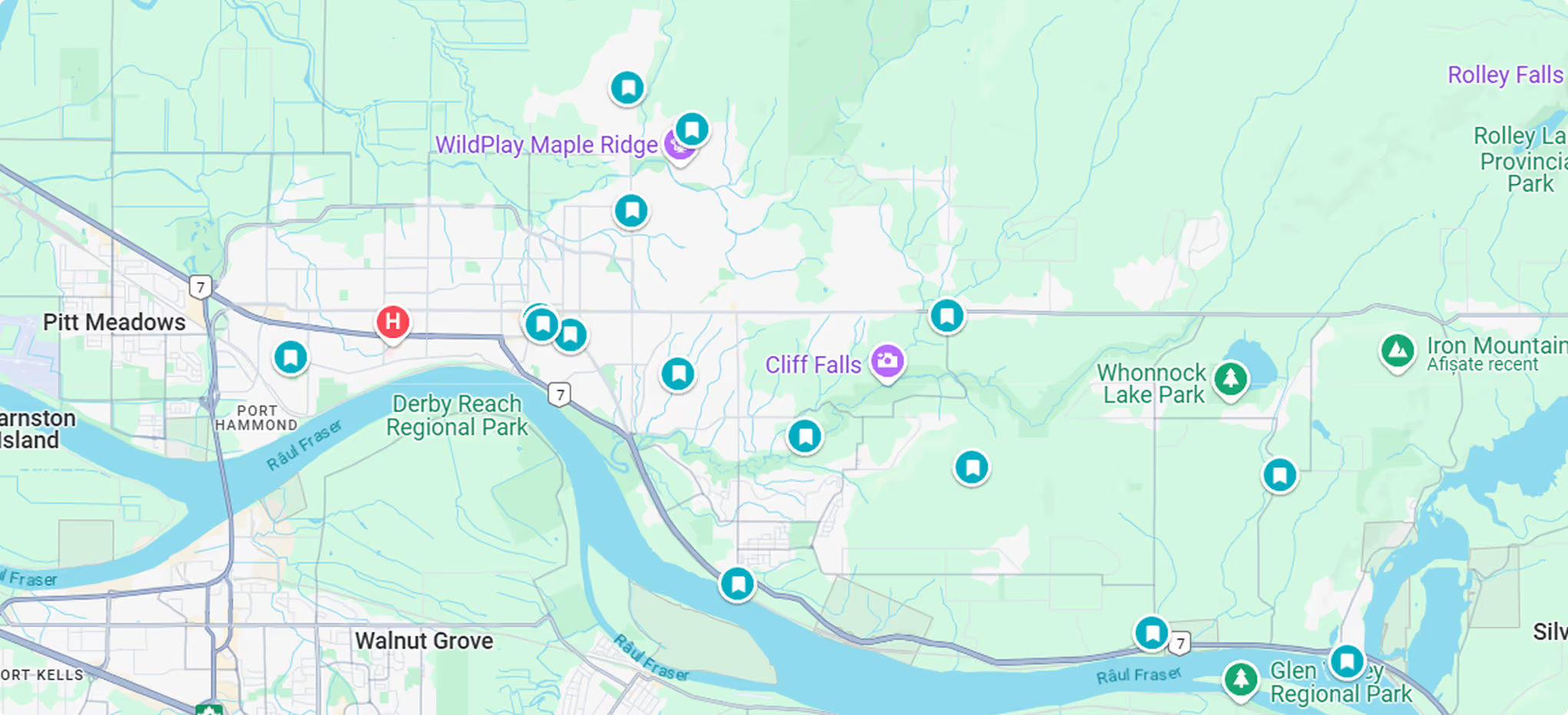
Neighbourhoods in the Fraser Valley